“The shower barely runs” can describe a clogged showerhead, a weak second-floor branch, a filter restriction, a pressure-system problem, or a well that cannot keep up with current demand. The office should resist naming the cause. Start by locating the symptom.
For a useful low water pressure well service call, record whether the problem affects one fixture, one area, or every outlet. Ask whether hot and cold behave the same way, what happens when a second fixture opens, when the change began, whether water ever stops completely, and whether the caller noticed an outage, leak, unusual pump cycling, sediment, or recent treatment work. Those observations give the technician a workable starting point without turning reception into remote diagnosis.
Locate the complaint before discussing the pump
Ask the caller to name the exact outlet where the problem is easiest to reproduce. “Upstairs bathroom” is still broad. Is it the shower, sink, toilet refill, or every fixture in that room? Then compare one nearby fixture and one elsewhere in the home.
This quick map matters because weak flow at one faucet may stay local to that fixture or branch. A whole-house change points farther upstream. A complaint that appears only when the washing machine fills or two showers run at once adds a demand pattern that a static “low pressure” note misses.
Ask about hot and cold separately. If cold water is normal at a sink but hot water is weak there, record that split exactly. If both are weak at every fixture, record that too. Do not tell the caller which valve, cartridge, heater, filter, tank, switch, or pump has failed. Similar symptoms can arise in different parts of the system.
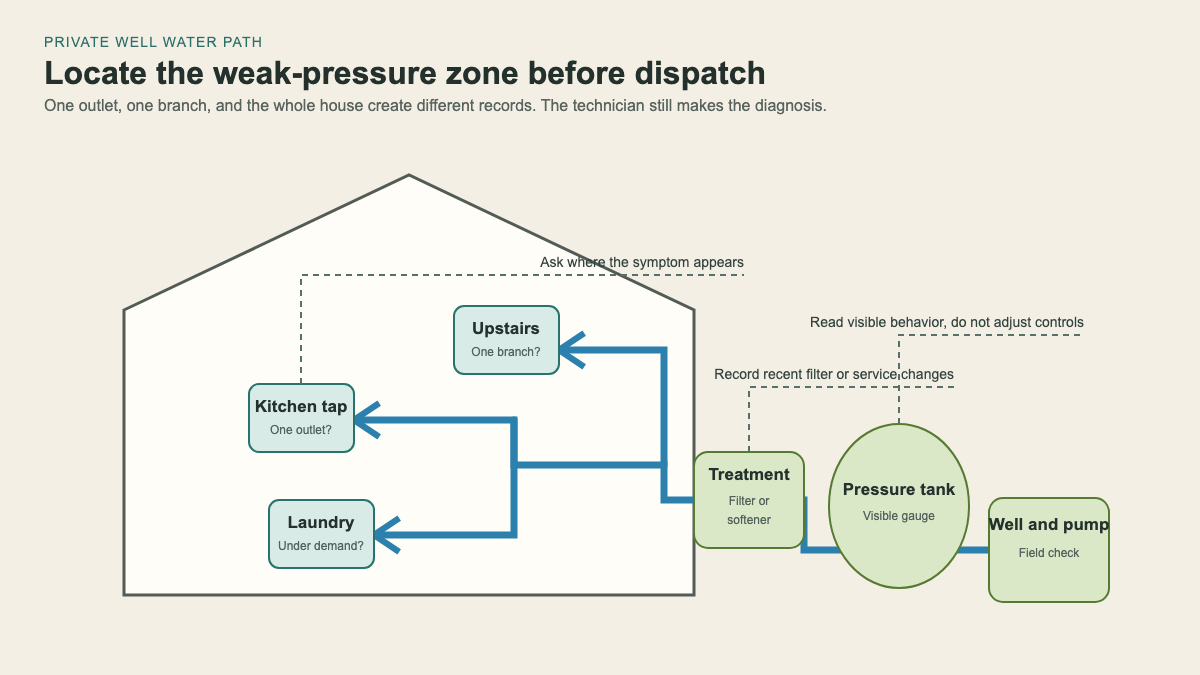
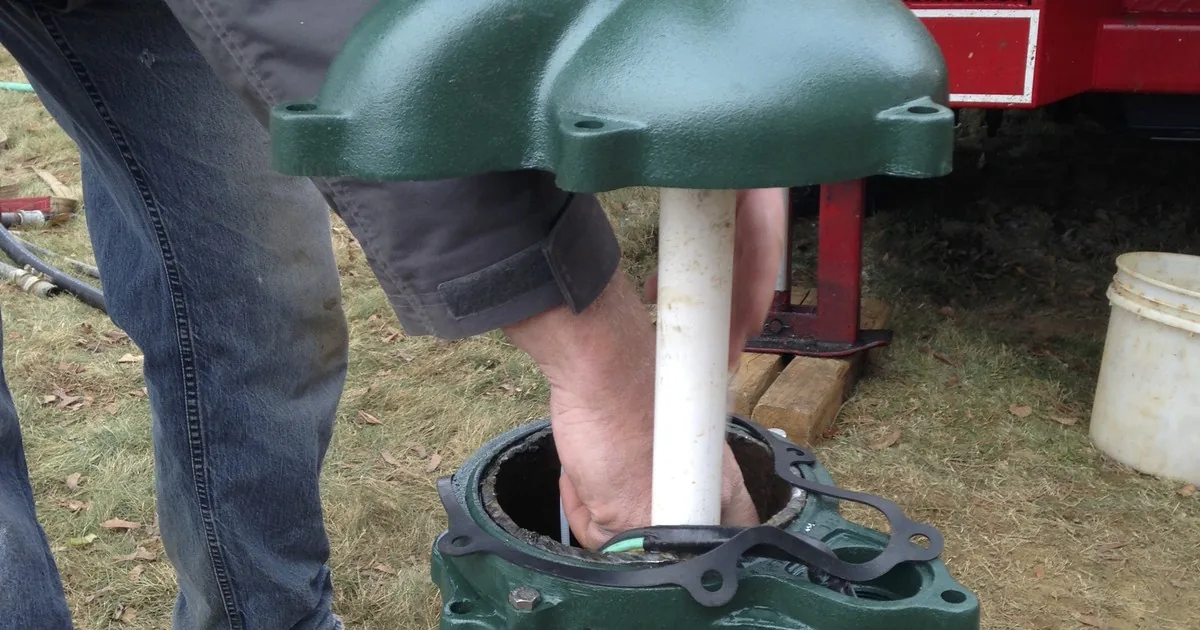
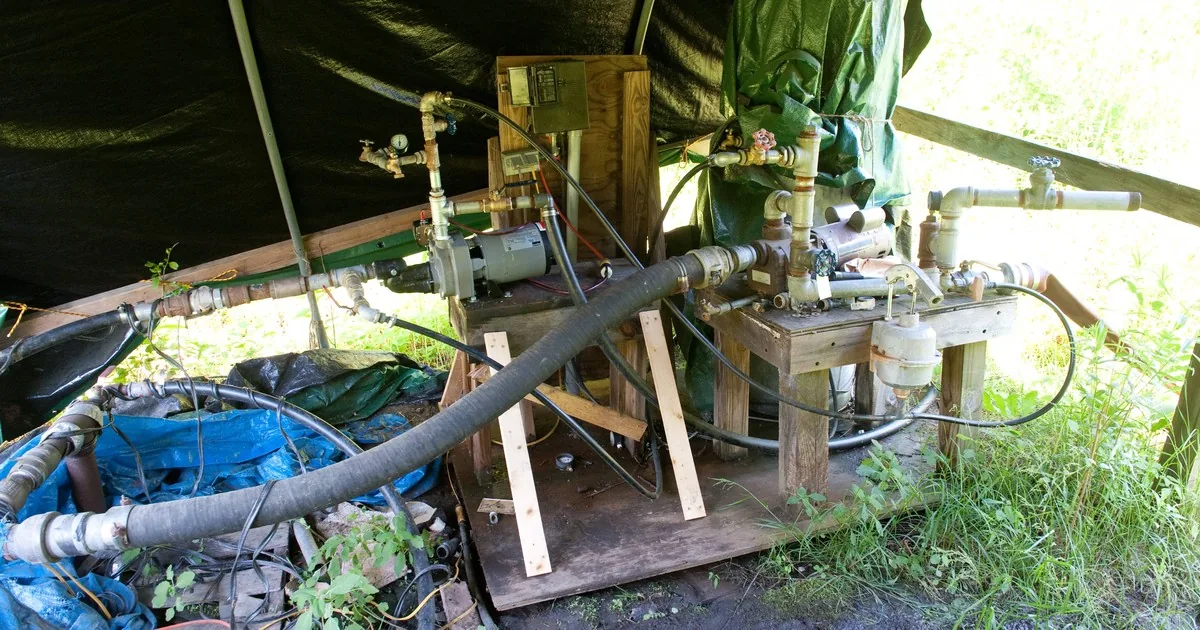
The EPA's private well overview describes a system with a pump, casing, screen, piping, and related components. Inside the house, pressure equipment, treatment devices, branches, shutoffs, and fixtures add more possible boundaries. The diagram is a call map, not a fault chart.
Compare one fixture with simultaneous demand
Pressure and available flow are related, but callers often experience them as one thing. WellOwner.org's water pressure guide explains that a pressure tank keeps reserve water available for small demands. It also notes that a tank cannot compensate when demand exceeds pump capacity. That distinction makes simultaneous demand worth recording.
Ask the caller to describe ordinary, safe use. What happens at the kitchen faucet by itself? What changes when a toilet refills or the washing machine starts? Does pressure return soon after the second demand stops? Does it begin strong and fade, remain weak from the first second, or pulse?
Use observations the caller already makes during normal water use. Do not direct anyone to remove electrical covers, adjust a pressure switch, drain a tank, change air charge, bypass treatment, or handle wiring. A visible gauge reading can be recorded if the caller can see it from a dry, safe position. Treat the number as a field note, never a diagnosis.
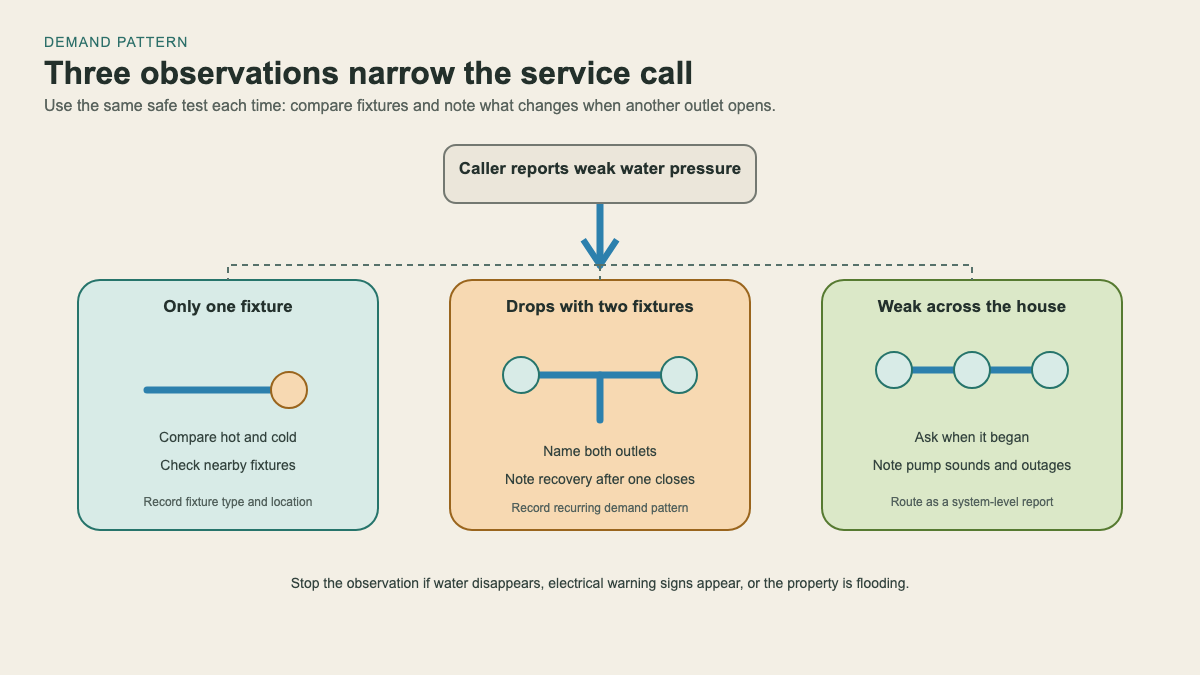
A practical read-back sounds like this: “The upstairs shower is weak on hot and cold. The upstairs sink is normal by itself. When the washing machine fills, both upstairs fixtures slow down, then recover after the fill stops.” That note carries more information than “bad pressure upstairs.”
Capture timing and recent changes
Ask when the caller first noticed the problem and whether it began suddenly or built over time. Then ask what changed around the same time. Useful context includes a power outage, plumbing repair, filter change, softener service, irrigation use, guests in the home, a visible leak, construction near the well, or a dry-weather period.
Avoid forcing those details into a cause. A power outage may simply establish timing. A filter change may be unrelated. Dry weather does not prove the well is going dry. The intake record should preserve sequence and let the field technician test the system.
Penn State Extension's guidance on low-yielding wells describes storage and a separate pressure pump as one way to manage situations where well yield and household demand do not line up. That is useful background for an office because it shows why “the pump runs” does not settle the capacity question. The site's equipment, well recovery, storage, and use pattern have to be evaluated together.
Record whether the home has treatment equipment such as a sediment filter, cartridge filter, iron treatment system, neutralizer, or softener. Ask when it was last serviced and whether the caller sees a bypass position, alert, leak, or unusual sound without touching controls. If the company installed or services that equipment, attach the equipment record to the call.
Separate loss of pressure from loss of water
A weak shower scheduled for next Tuesday is a different call from a house that suddenly has no water. Ask whether any fixture still produces water. If water stops and returns, note the timing and what else was running. If the property has livestock, medical needs, sanitation needs, or another time-sensitive dependence on water, record that operational impact under company policy.
Escalate active flooding, water around electrical equipment, smoke, sparking, a burning odor, or a hot or damaged electrical component through the company's safety procedure. Reception should not coach the caller through electrical tests. Tell the caller to remain in a safe location and follow the company's emergency guidance.
Water appearance and odor deserve their own note. Low pressure accompanied by sediment, discoloration, or a new odor may require water-quality follow-up as well as equipment service. Do not assure the caller that water is safe to drink based on a phone description. State and local private-well programs, laboratories, and qualified professionals handle testing advice for the address.
Build the technician's field note
The WellOwner.org annual inspection guide says a professional check may include a flow test, water-level observations where possible, pump motor performance, and inspection of the pressure tank and pressure switch. The front desk does not perform those checks. It gathers the details that help the technician arrive with the right record and service context.
A strong intake note should include:
- Service address, caller, callback number, and access window
- Exact fixtures and floors affected, with hot and cold compared
- Behavior with one fixture and with simultaneous demand
- Start time, sudden or gradual onset, and any complete loss of water
- Recent outage, repair, filter service, irrigation, occupancy, or weather context
- Visible leaks, sediment, discoloration, odor, pump sounds, cycling pattern, or gauge reading
- Known well, pump, pressure tank, treatment, and prior service details
- Safety or urgent water-dependence concerns
Read the details back before ending the call. “Whole house is weak” becomes: “Hot and cold are weak at the kitchen and both bathrooms. Flow starts weak and drops further when the washing machine fills. The change began after yesterday's outage. Water has not stopped completely. No leak or electrical warning sign is visible. The sediment filter was changed two weeks ago.”
Give the call one owner
Tell the caller whether the next step is a scheduled diagnostic visit, an urgent technician callback, or another route under company policy. Give a real callback or arrival window only after the person responsible has accepted it. If the caller sends photographs, gauge readings, equipment labels, or a short video of visible behavior, keep them with the same service record.
An AI receptionist can capture the same location and demand questions after hours, then route the note according to the contractor's rules. The script still needs a boundary: it records symptoms and urgency but does not choose a failed component.
The cleanest closing note names the pattern and the owner: “Casey has the whole-house pressure report, the outage timing, and the two-fixture test. Casey will call Maria by 2 p.m. to confirm the service window.” That gives the caller certainty while leaving the diagnosis where it belongs, in the field.