A property manager calls about a house that has been empty since January. A buyer takes possession Friday, the lockbox code changed last week, and nobody knows whether the well pump was left energized. The manager wants the water “turned back on and checked.” That request hides several jobs.
A useful vacant-property well service call starts with authority, access, and history. Record who can admit the crew, who can approve diagnosis or repairs, how the system was shut down, what changed while the house was empty, and when water use will resume. Keep mechanical service and water-quality testing as separate scopes. Water at a faucet proves that water reached the faucet. It does not establish that the water is suitable to drink.
Vacancy creates gaps in the service history
An occupied house produces witnesses. Someone notices a breaker trip, a new odor, a pressure change, standing water near the casing, or a treatment alarm. At a vacant house, months can pass between observations. The first intake job is to rebuild that missing timeline.
Ask for the last date the water system was used normally. Then identify the last person who saw it operate. Those may be different dates. A winterization contractor may have drained the building plumbing while leaving the well equipment untouched. A former owner may have switched off the pump breaker. A property manager may know only that the heat stayed at 50 degrees.
Capture the intended next use too. A technician visiting an empty listing has a different handoff from one preparing a house for tenants tomorrow. Record the occupancy or closing date as scheduling context, not as a promise that the water will be cleared by then.
If the caller reports no water now, use a symptom-specific no-water well call process. Do not assume vacancy caused the failure. The pump, controls, pressure equipment, buried line, building plumbing, and power supply still need diagnosis.
Confirm entry and repair authority separately
The person with the lockbox code may lack authority to approve work. The person who owns the house may be traveling. A lender, estate representative, listing agent, preservation company, tenant-placement firm, or local caretaker can each control a different part of the visit.
Record these roles by name:
- Work authorizer: approves the diagnostic charge and any repair threshold under the contractor's terms.
- Access contact: supplies keys or codes, secures animals, opens outbuildings, and confirms the crew may enter.
- Site-history contact: knows how the property was winterized, maintained, or altered.
- Results contact: receives the service report and any laboratory report, then makes occupancy decisions with the appropriate professionals.
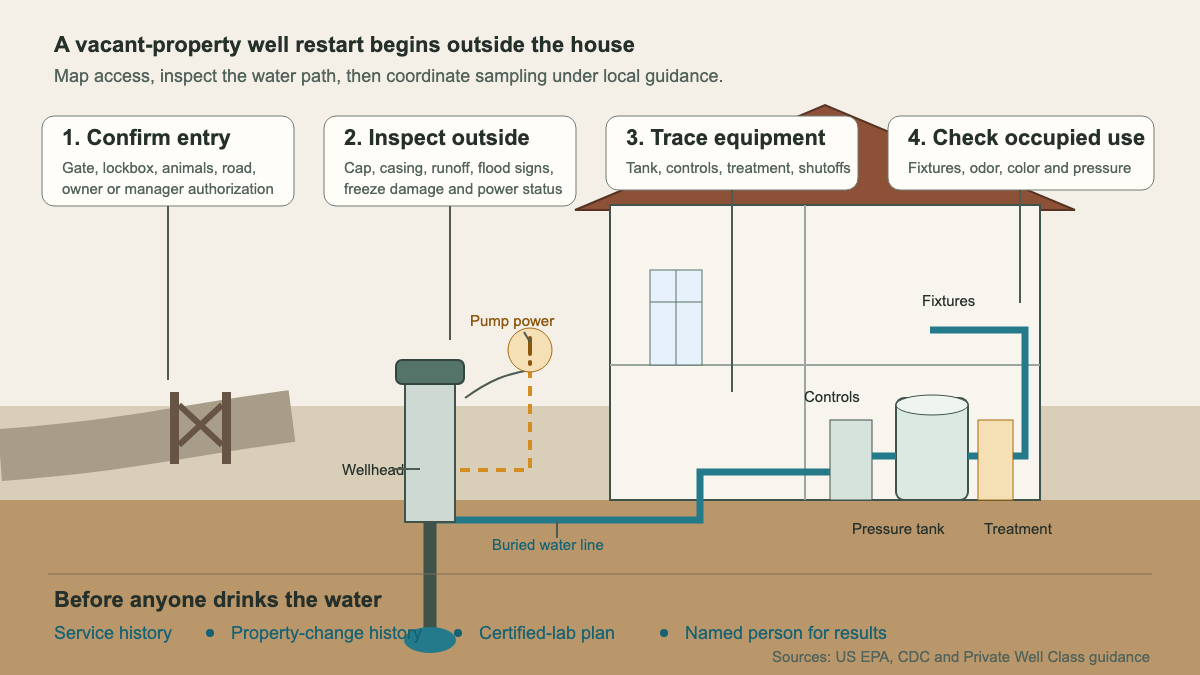
Ask whether the wellhead, pressure tank, control box, treatment equipment, and electrical panel are all accessible. A crew can enter the house and still find the well equipment behind a second locked gate or inside a padlocked pump house. Note driveway condition, snow, overgrowth, low branches, soft ground, and whether a service truck can get close enough for the planned work.
The ticket should state what has actually been confirmed. “Agent says code should work” is different from “manager tested code 1842 at 3:15 p.m.” Small wording differences prevent a long drive from ending at a locked door.
Rebuild the shutdown and property-change timeline
Ask how the water system was left. Was the pump breaker switched off? Were building lines drained? Was heat maintained? Were exposed pipes insulated? Did anyone disconnect treatment equipment, open bypass valves, drain a pressure tank, or remove filters? If the caller does not know, write “unknown.” Do not fill the blank with a likely story.
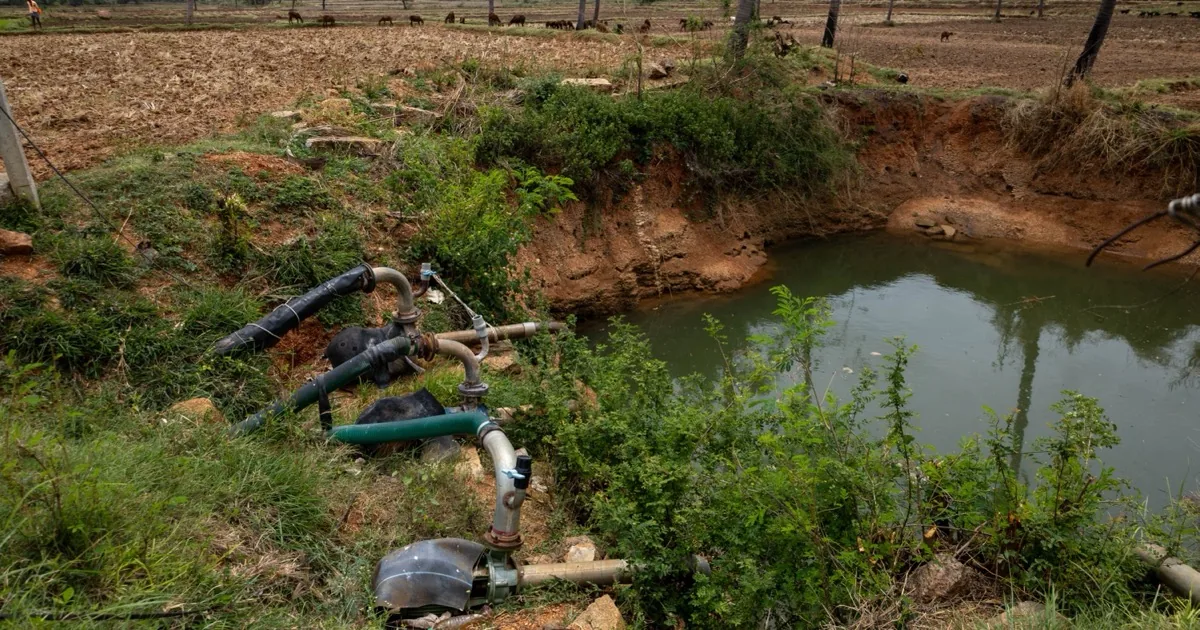
Next, ask what happened around the property during the vacancy. Relevant events include flooding, freeze conditions, extended power loss, excavation, septic work, fuel spills, vandalism, storm damage, pest activity, and new construction. Request safe, wide photographs of the wellhead, equipment room, panel area, treatment train, and visible leaks. Nobody should remove electrical covers, open the well cap, enter a pit, or touch wet equipment for a photo.
The EPA's private-well guidance tells owners to inspect exposed well parts for damaged casing, a broken or missing cap, and settlement or cracks around surface seals. It also recommends testing when nearby conditions change significantly, after well-system repair, or when odor, color, or taste changes. Those points translate into good intake questions. They do not support a remote diagnosis.
If the caller already sees casing or cap damage, use the more specific well cap and casing repair intake. Keep people away from damaged or flooded electrical equipment and escalate under the contractor's safety policy.
Separate pump restart from drinking-water decisions
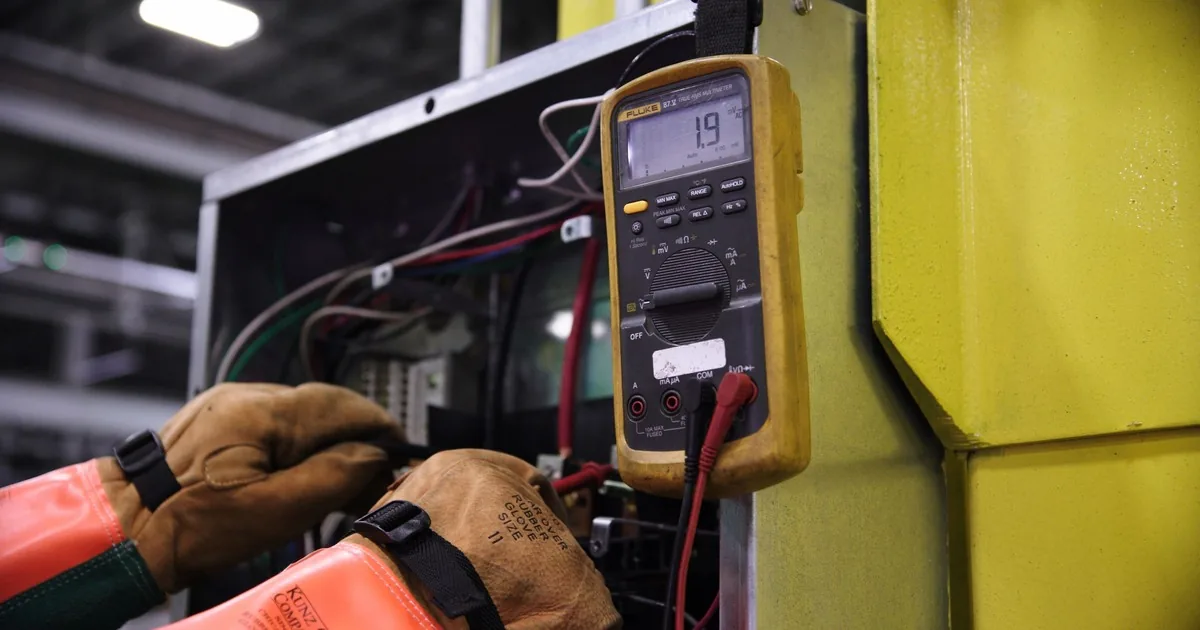
A well contractor can inspect equipment, test electrical and hydraulic operation within the job scope, diagnose faults, and document what was found. A certified laboratory tests a sample for specified contaminants. A health or environmental department can advise which additional contaminants matter locally and how to respond to results. Put those scopes on the ticket instead of compressing them into “check the water.”
The CDC's well-testing guidance recommends testing private well water at least once a year for total coliform bacteria, nitrates, total dissolved solids, and pH. It directs owners to local officials for other germs or chemicals of concern and says to use a state-certified laboratory. CDC also lists well-system repair and changes in taste, color, or smell as reasons to test.
That annual baseline is useful, but reception should not choose a property-specific panel from a national webpage. Ask for the latest laboratory report, the sample date, the lab name, and any treatment records. Then identify who will confirm the current panel with the local health department or laboratory.
The New York State Department of Health advises well owners to test for E. coli and coliform bacteria after disinfection and flushing or after system maintenance. It also tells owners to keep maintenance and testing records. Requirements and recommendations vary by location, so use the guidance to define questions, not to prescribe the same process everywhere.
Do not tell a caller to smell, taste, or drink water as a quick test. Clear water can still require laboratory evaluation. If contamination is suspected, follow local health guidance on water use while results are pending.
Give the crew a property map and a restart objective
A strong dispatch note lets the technician understand the site before turning into the driveway. Include the well location, equipment location, power source, treatment sequence, visible shutoffs, and where the buried line enters the house if known. Attach the well log, pump record, prior invoices, winterization invoice, laboratory reports, and photographs.
Write the objective in operational terms. For example: “Inspect visible well and system condition, determine whether pump equipment can be safely energized, diagnose mechanical faults, document treatment status, and leave sampling coordination with Morgan Lee at the property-management office.” That is far better than “turn water on.”
For properties reopened seasonally, Private Well Class guidance begins with inspection and water testing and points owners toward professional help and local requirements. A vacant property may not have been deliberately closed as a seasonal system, which makes the history questions even more important.
Ask the caller where discharged water may go if flushing or testing requires flow. Confirm occupied neighboring areas, drainage concerns, and septic limitations with the technician before work begins. The office should never promise a flushing duration or disinfection procedure without the property's system details and the contractor's approved protocol.
Write the handoff so nobody mistakes it for clearance
The completion note should separate observed condition, mechanical findings, work performed, unresolved items, and laboratory status. Useful language is plain: “Pump reached operating pressure during today's service. Sample collected by Green County Lab; results pending.” Avoid “well passed” unless a defined inspection standard and report support that exact conclusion.
Before ending the booking call, repeat the appointment window, entry plan, authorizer, initial scope, occupancy date, and testing owner. Name every unknown that remains. If the last laboratory report cannot be found, say so. If nobody can confirm whether the system was winterized, the technician should see that uncertainty before arrival.
An AI receptionist can collect this same intake after hours, but the script needs the same boundaries as a trained office employee. It should capture facts and route urgent hazards. It should not approve repairs, prescribe treatment, or declare the water safe.
The best vacant-property ticket replaces “Nobody has been there in months” with a usable record: who can open the gate, who can authorize work, how the system was left, what changed around it, what the crew is expected to assess, and who owns the water-testing decision before someone moves in.