A homeowner calls and asks, “How much to install a one-horsepower well pump?” The requested horsepower sounds precise, but it does not describe the job. The office still needs to know whether there is a finished well, what that well can produce, where the water must go, what electrical service exists, and whether a pump truck can reach the casing.
A useful quote call collects those facts without trying to design the system at the front desk. Start by identifying the project. Then gather the well record, intended water use, power and control details, equipment scope, and working access. If those pieces are incomplete, the right outcome may be records review or a site visit before anyone discusses a firm price.
Name the project before discussing equipment
“Pump installation” can describe very different work. A new well may need a complete pumping system. A replacement job may reuse the drop pipe, cable, pressure tank, or controls, but only after inspection. A property addition may need more water or different pressure. Sometimes the caller has no water and assumes a new pump is the answer.
Ask what changed and who recommended installation. If a driller has completed a new well, request the well completion report and any yield test. If another contractor diagnosed a failed pump, ask for the written findings and equipment information. If the caller reached the conclusion after losing water, route the job as a service problem until a technician confirms the cause. The separate guide to well pump replacement quote calls covers that narrower situation.
This first distinction protects the schedule. A crew prepared to set equipment in a new well faces a different job than a crew arriving to diagnose an existing system with an unknown fault.
Find the well record before asking for a pump model
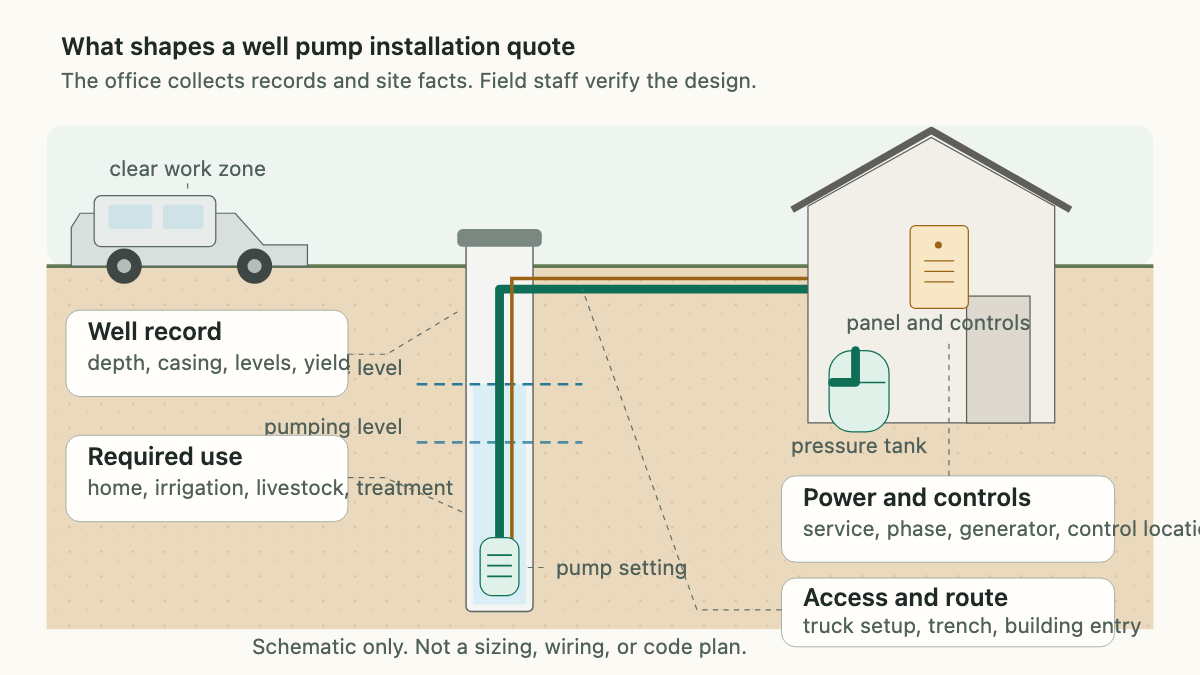
Total well depth is useful, but it is only one line on the record. Pump selection also depends on the static water level, pumping water level or drawdown, reliable yield, casing diameter, existing pump setting, and the elevation and distance to the point of use.
Water Well Journal’s pump selection overview lists required flow, reliable well production, static level, drawdown, lift, friction loss, delivery pressure, available power, and control method among the inputs. Its well design guidance also explains that a submersible installation must physically accommodate the pump, column pipe, and electrical cable.
The call taker does not need to interpret every field. The goal is to find out what records exist and get readable copies to the estimator. Ask for:
- the well completion report or driller’s log
- the latest yield or pumping test, if one was performed
- the existing pump, motor, control, and pressure-tank labels
- the date and scope of prior well or pump work
- photos of the wellhead, equipment room, panel area, and route between them
A caller may say, “The well is 300 feet,” while looking at an old invoice that lists 300 feet of drop pipe. Record the wording and request the document. Do not turn a remembered number into a verified specification.
Translate water use into a design conversation
The estimator needs to know what the system must serve. Count the home and its fixtures, but ask about the loads that can change the job: irrigation zones, livestock troughs, a detached shop, water treatment, geothermal equipment, an accessory dwelling unit, or planned construction.
Peak use matters. Penn State Extension’s water-system planning guide explains that daily consumption can be concentrated into a much shorter demand period. It also treats well yield and available storage as connected parts of the design. A household total by itself does not show what happens when showers, laundry, and outdoor water use overlap.
Pressure equipment belongs in the same conversation. WellOwner notes that a pressure tank stores water for small demands but cannot supply flow beyond the pump’s capacity. That is why “install a bigger tank” and “install a bigger pump” are requests to document, not conclusions for reception to approve.
Use plain questions: “What will this system supply?” “What runs at the same time?” “Is anything being added in the next year?” The answers give the estimator a demand picture without asking the caller to perform calculations.
Capture power and controls without opening anything
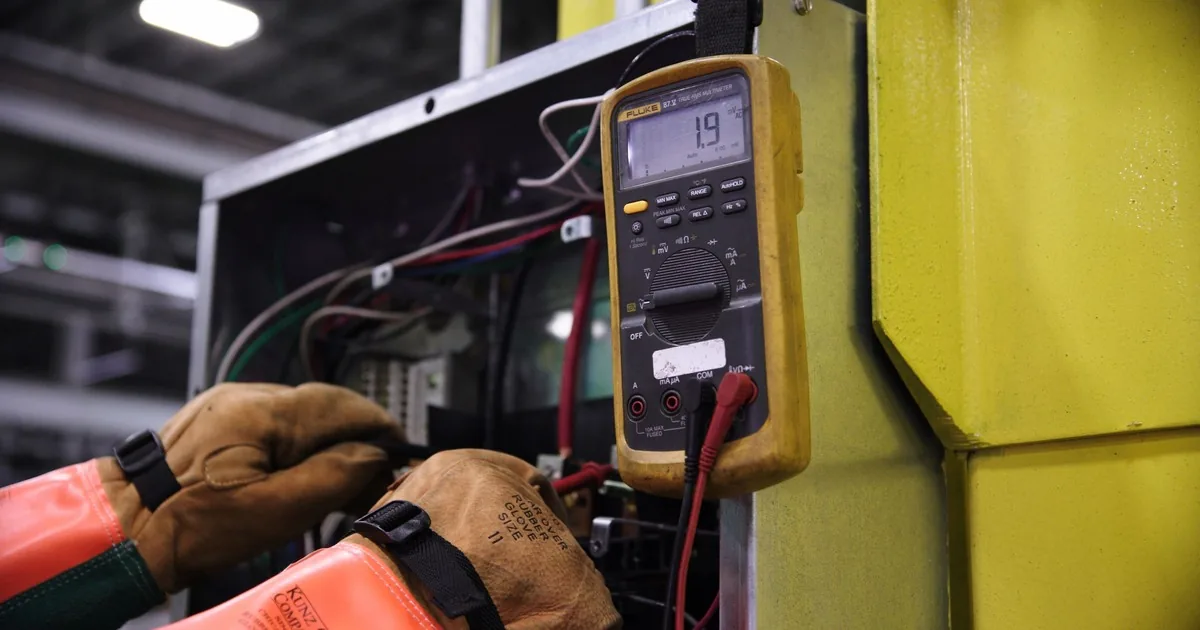
Ask where the electrical panel, disconnect, pressure switch, control box, and any generator connection are located. Request photos of closed covers and visible labels. Note whether the caller knows the available voltage or phase, but treat that information as unverified until qualified staff inspect it.
Manufacturer data shows why exact identification matters. Franklin Water’s residential submersible pump catalog lists models that vary by flow rating, horsepower, voltage, stage count, dimensions, and performance curve. A familiar horsepower number does not establish compatibility with the well or electrical system.
Keep the safety boundary firm. Reception should never tell a caller to remove a control-box cover, test voltage, move conductors, or reset a breaker repeatedly. If there is smoke, sparking, heat, a burned odor, exposed wiring, or water near electrical equipment, stop routine quote intake and follow the company’s electrical hazard procedure.
The ticket should also state who handles electrical work. Some pump contractors perform permitted electrical work within their license. Others coordinate with an electrician. Local rules vary, so the office should describe its own scope after the job location is known.
Map the route from the well to the building
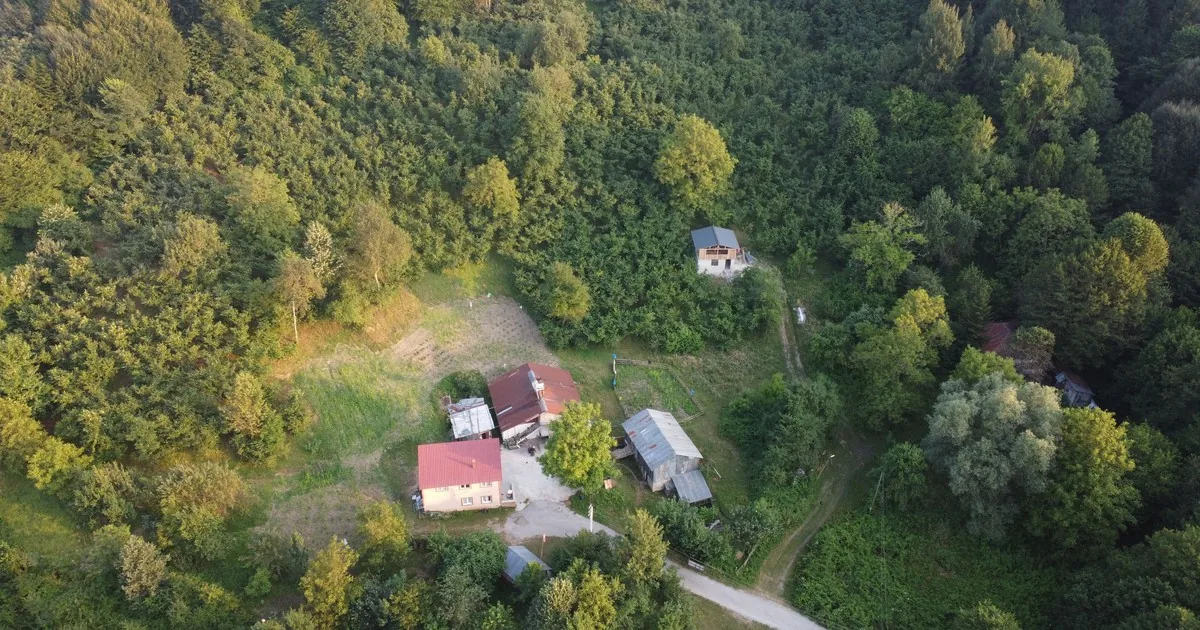
Two properties with similar wells can require very different installation work. One has a casing beside the driveway and an open path to the pressure tank. The other has a fenced yard, low branches, a stone wall, buried utilities, and a finished basement on the far side of the house.
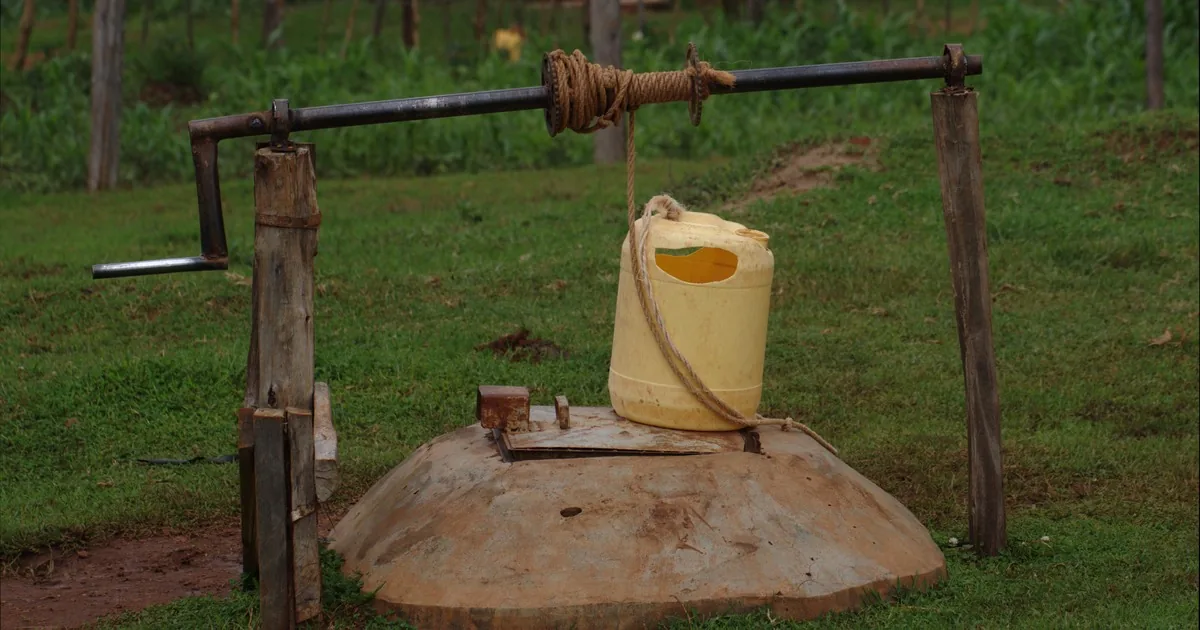
Ask where a service truck can park and whether the crew can position equipment over or beside the well. Record gates, soft ground, slopes, overhead lines, septic components, landscaping, animals, and structures near the work zone. Find out whether the casing is exposed, inside a pit, below grade, or hidden under a cover. Photos taken from several steps back are often more useful than a tight picture of the well cap because they show the working area.
Then trace the proposed water and cable route. Where will the line enter the building? Is there an existing trench or conduit? Which walls and floors are finished? Has anyone marked buried utilities? Reception should not promise a trench path or restoration method. It should make the site constraints visible before the estimate.
Include the pressure side and handoff point
A pump quote may include much more than the pump. Ask whether the proposal should cover drop pipe, wire, safety cable, well seal or cap, pitless equipment, buried water line, controls, pressure switch, pressure tank, gauges, shutoffs, treatment connections, and startup testing. The estimator can then state what is included and what remains outside scope.
Authorization matters too. Confirm the service address, property owner, decision-maker, billing contact, and any builder, driller, electrician, or general contractor involved. For new construction, ask whether power is active and whether the building is ready to receive the water line. For an occupied property, note whether the home currently has water and whether the request is planned or urgent.
Close the call with a specific next step. That might be “Email the well report and four site photos for review,” or “We need a field visit because the well record and route are unknown.” A budget range, if the company uses one, should carry written assumptions. A final quote should wait for whatever verification the contractor requires.
The best ticket lets the estimator picture the whole installation before opening the attachments: water source below grade, equipment at the well, cable and pipe along the route, controls and tank inside, plus enough clear space for the crew to do the work.