A homeowner calls after filling a white bowl at the kitchen sink. “There is sand in the bottom, and the pressure dropped during the shower.” That gives the office two observations worth preserving. It does not prove a failed screen, a bad pump, or a filter problem.
A useful sediment ticket records what the material looks and feels like, where it appears, whether it settles, when it began, and what changed at the same time. Ask about pressure, air, pump sounds, recent well work, flooding, excavation, and treatment equipment. Screen water-safety concerns before ordinary scheduling. The technician should receive a clean symptom map, not a diagnosis made from a photograph.
Start with the material the caller can describe
Keep the caller's own words in the record: sand, grit, flakes, rust-colored particles, black specks, milky cloudiness, or mud. Then make the description more useful without naming the substance.
Ask whether the particles feel hard or smear when touched. Do they float, cling to the glass, or settle at the bottom? Does the water begin cloudy and clear while standing, or remain cloudy? A clear glass or white bowl can make the observation easier to photograph, but the office should not tell the caller what the material is based on its color.
Time matters. Record the first date and the first water use where someone noticed it. Ask whether the change was sudden or gradual, appears every time, or follows heavy use such as laundry, irrigation, or several showers. “Started Monday after the second laundry load and returns whenever two fixtures run” is field evidence. “The well is collapsing” is a conclusion.
Penn State Extension lists increased sand or sediment and cloudiness among changes that can signal a well or pump needs attention. Its maintenance guidance also describes several possible contributors, including physical plugging, sand pumping, screen or casing condition, well development, overpumping, and abrasive pump damage. The range is the reason the office should resist choosing one cause.
Map the complaint across the property
Ask where the caller found the material. Start with one fixture, then widen the map:
- Does it appear at every fixture or only one faucet, toilet, hose bib, or appliance?
- Is it present in cold water, hot water, or both?
- Does an outdoor fixture supplied before treatment show the same thing, if the customer already knows such a fixture exists?
- Is the complaint visible in a toilet tank, tub, aerator, filter housing, or clear container?
- Are neighbors on the same shared well seeing the change?
Do not coach the caller to remove an aerator, open a housing, bypass treatment, or operate an unfamiliar valve. Record what is safely visible and what they already know about the plumbing.
The location pattern helps dispatch separate several scopes. A complaint at one faucet may call for a different first check than grit throughout the cold-water system. Material found only after the water heater belongs in a different branch of the ticket. Sediment visible before and after treatment tells the technician something else. These are routing distinctions, not remote findings.
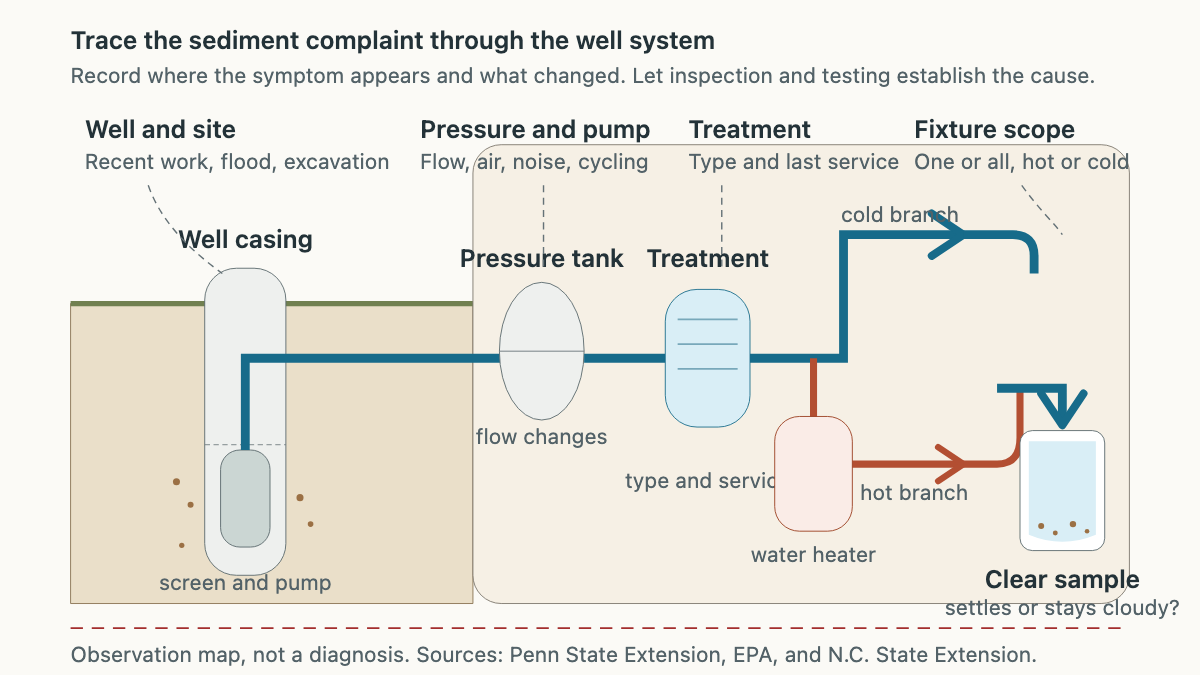
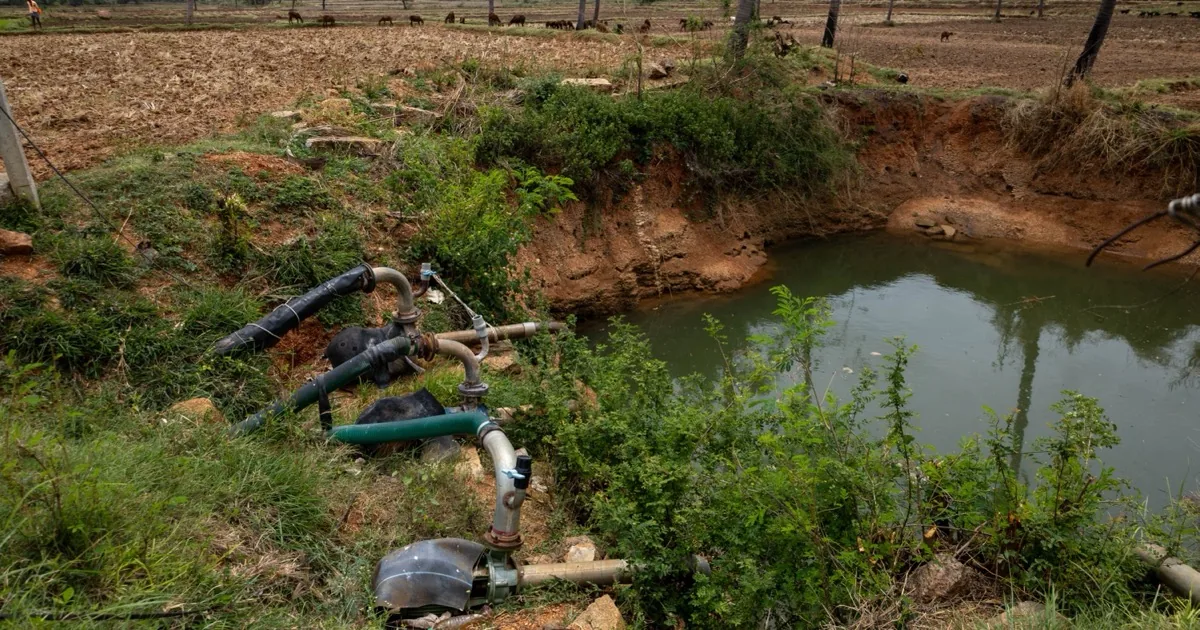
The trace gives the call taker four physical checkpoints. Recent work or flooding belongs with the well and site. Pressure, air, noise, and cycling belong with the pump and pressure equipment. Filter type and service history belong with treatment. Fixture scope and settling behavior belong at the point of use. Together they turn “dirty water” into a ticket another person can act on.
Screen water-safety flags before routine booking
Ask whether the change followed flooding, a damaged well cap, a vehicle strike, excavation, drilling, pump work, nearby construction, or a chemical or fuel spill. Ask about a new odor, taste, or color. If anyone reports illness, follow the company's health and emergency escalation policy rather than interpreting symptoms.
EPA advises private-well owners to test after a noticeable change in water quality, significant nearby land disturbance, or repair to the well system. It also directs people with a well affected by flooding or suspected disaster contamination to local or state health officials and an experienced well contractor. The right test depends on the address and event. Reception should not invent a panel or declare the water safe.
Record what the household is doing for drinking and food preparation. If the company's script tells callers to stop using water under defined conditions, follow that approved language exactly. Otherwise, connect the caller with the local health department or other authority named in company policy. A service appointment and a certified laboratory test may be separate work orders.
For visible wellhead damage, use the dedicated well cap and casing damage intake. That route captures exposed openings, impact damage, standing water, and site access in more detail.
Preserve the pressure and pump timeline
Sediment often arrives with a second complaint. Ask whether pressure weakened, pulsed, or changed only when several fixtures were open. Did air spit at the faucet? Did the pump become louder, run longer, start more often, or behave differently after a power outage? Record what the caller heard and where, without assigning the sound to a component.
The low-water-pressure well intake guide gives a fuller branch-by-branch check when weak flow is the main symptom. Link the two tickets when sediment and pressure changed together. Do not let one complaint erase the other.
Ask about water demand before the change. A recently filled pool, new irrigation schedule, leaking fixture, livestock trough, or several houseguests can alter the usage pattern the technician needs to understand. Record the event without claiming that it caused the sediment.
Keep the chronology tight. A useful note might read: “Normal water Sunday evening. Fine tan grit appeared at all cold fixtures Monday at 7:10 a.m. after two showers. Hot water also showed particles by noon. Whole-house pressure now fades when a second fixture opens. Customer reports no air, new pump noise, flooding, digging, or recent well work.”
Capture the well and treatment record
Ask for the well log, completion report, pump invoice, prior service tickets, water test reports, and treatment manuals if the customer has them. Penn State recommends retaining well construction, pump, inspection, water-quality, and treatment records. Those documents can establish well depth, construction details, prior yield information, equipment identity, and service history without relying on memory.
For treatment equipment, record the brand and model visible on the outside, the type the customer believes it is, the last service date, recent filter changes, and any untouched display message. Do not promise that a cartridge replacement will solve sediment coming from the source. The well filtration maintenance intake covers treatment-centered calls where pressure drop, filter condition, or scheduled media service is the main issue.
Photos should show context. Ask for one image of the material in a clear glass or white bowl, one of the affected fixture or location, and one of safely accessible equipment labels. A tight photo of three brown grains with no date or location is weak evidence. File names or ticket notes should identify where and when each photo was taken.
Hand the technician an observation map
Before ending the call, confirm the service address, caller, owner or authorized decision-maker, occupants, shared-well users, access route, gate, pets, parking, and the location of the wellhead and pressure equipment. Note a buried or obstructed wellhead, soft ground, low branches, steep drives, locked utility rooms, and any tenant coordination.
Read the symptom record back:
“Fine tan grit settles in a clear glass after about ten minutes. It appears at the kitchen cold tap, upstairs cold tap, hot water, and outside hose bib. The customer first noticed it Tuesday morning after routine water use. Whole-house pressure has also become weaker when two fixtures run. No flood, excavation, damaged cap, fuel odor, illness, recent well work, or opened equipment reported. A sediment filter was serviced four months ago; the date comes from the invoice. Well log and pump invoice are attached. The owner will be onsite and can authorize inspection. Water-safety questions were routed under company policy.”
That read-back gives the caller a chance to correct the locations, timeline, and source of each detail. An AI receptionist can collect the same fields after hours when the contractor supplies the safety language and escalation rules. The finished ticket should let the field technician begin at the right physical point, with the uncertainty still intact.