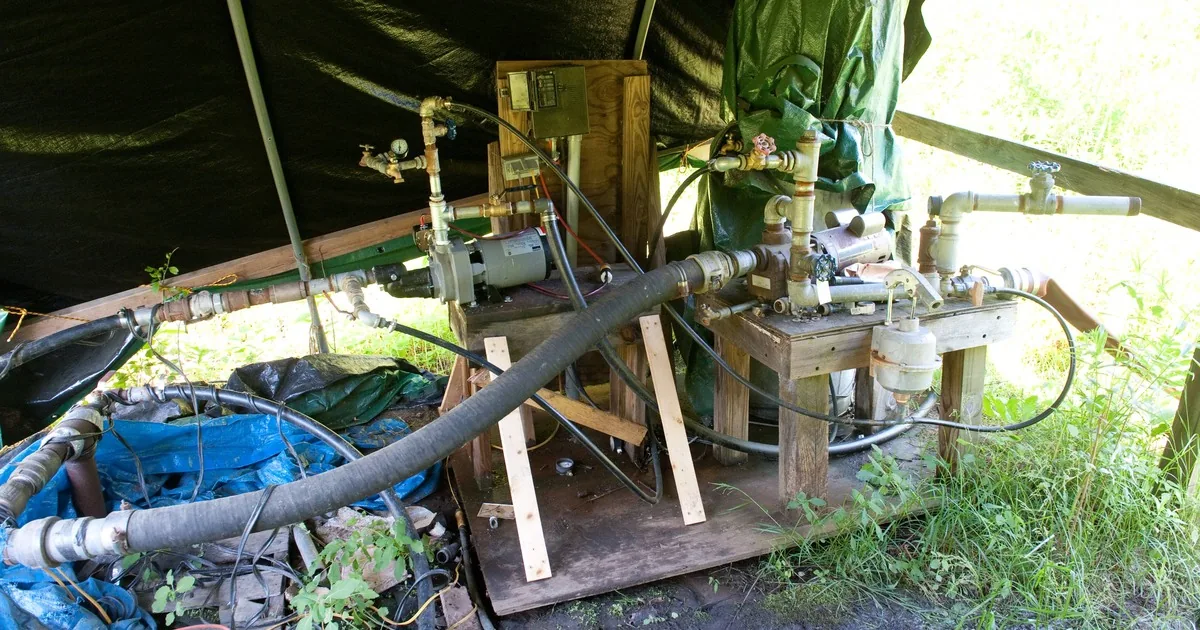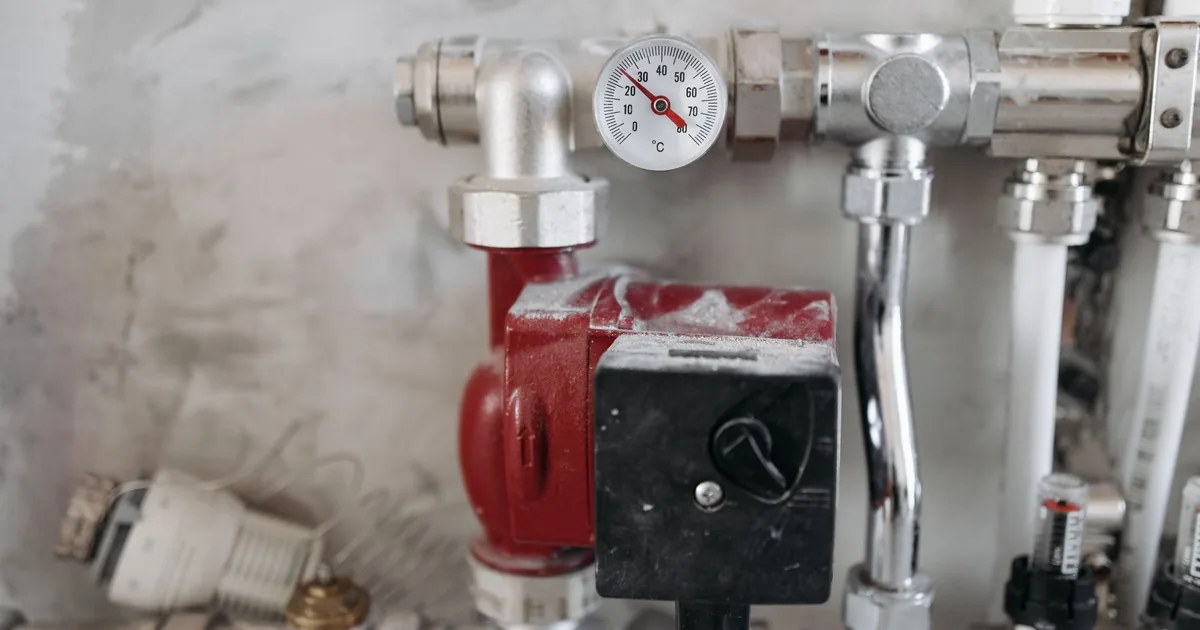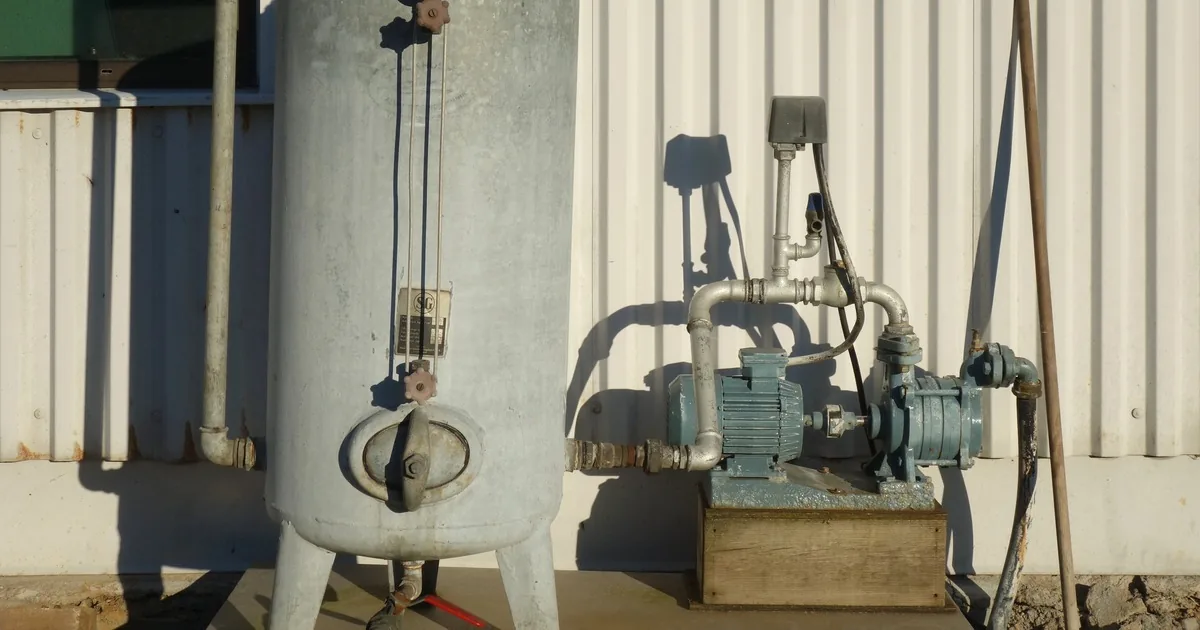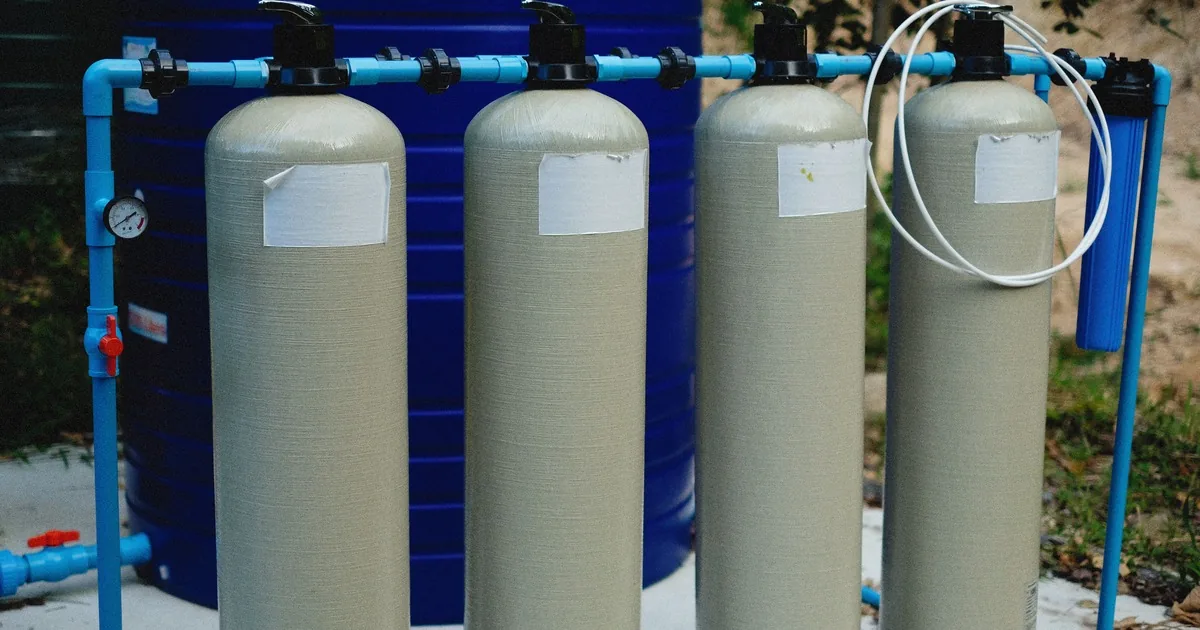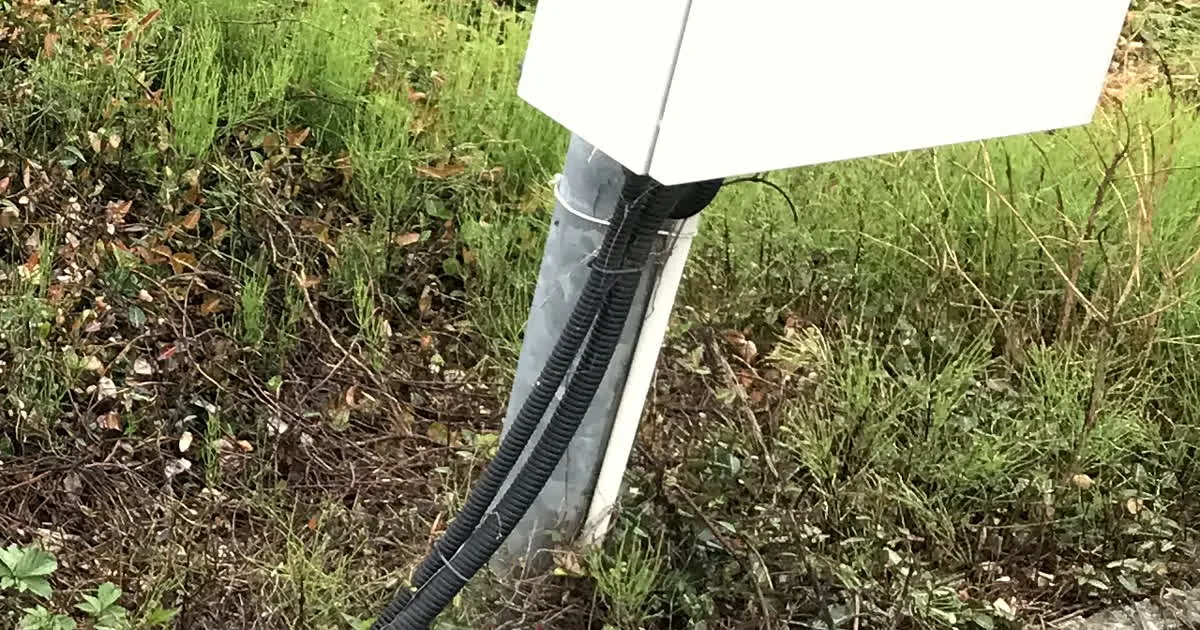
“The well pump started making a grinding sound last night” sounds specific. For a dispatcher, it is still only the start of the intake. The caller may be hearing an above-ground jet pump, a pressure-switch click, pipe movement, a vibrating tank connection, or sound carried through a floor or wall. If the pump is submerged, the loudest noise inside the house may come from connected equipment rather than the motor down the well.
A useful service note captures five things early: where the sound is strongest, when it happens within the pump cycle, what the water does at the same time, what changed recently, and whether there is heat, odor, leaking water, damaged wiring, or a loss of water. Leave the diagnosis to the technician. Words such as “hum,” “rattle,” and “bang” help describe the complaint, but none identifies a failed part by itself.
Turn “the pump sounds wrong” into observable details
Ask the caller to describe the sound in their own words before offering labels. A customer who says “it shakes the wall for two seconds when the shower starts” has given you location, duration, and timing. “Bad bearing” is a theory, even if the caller sounds certain.
Start with these questions:
- Where are you when the sound is loudest: near the pressure tank, at an above-ground pump, beside the wellhead, at a fixture, or in another room?
- Does it happen when water use begins, while water is flowing, when the pump stops, or while nobody is using water?
- Is the sound continuous, a single knock, a brief buzz, repeated clicking, a rattle, a scrape, or a vibration you can hear through the structure?
- What happens to the water at the same moment: normal flow, weak pressure, pulsing pressure, air at the faucet, cloudy or sandy water, or no water?
- Was there a recent outage, storm, plumbing repair, filter change, pump service, excavation, or change in irrigation use?
Keep the caller in an ordinary, safe location. Do not ask anyone to remove a cover, touch a control box, hold a pipe to feel vibration, enter a wet equipment area, or stand over an open well. A recording made from a normal occupied area can help if company policy accepts attachments, but it should supplement the timeline rather than replace it.
Locate the sound before anyone names a component
Water systems carry vibration well. Rigid pipe can move sound across a basement. Framing can make a short mechanical event seem louder in the room above it. A pressure tank connection, check valve, control enclosure, pump base, or loose support can be closer to the listener than the source of the disturbance. That is why “I hear it by the laundry room” and “the pump is in the laundry room” are different claims.
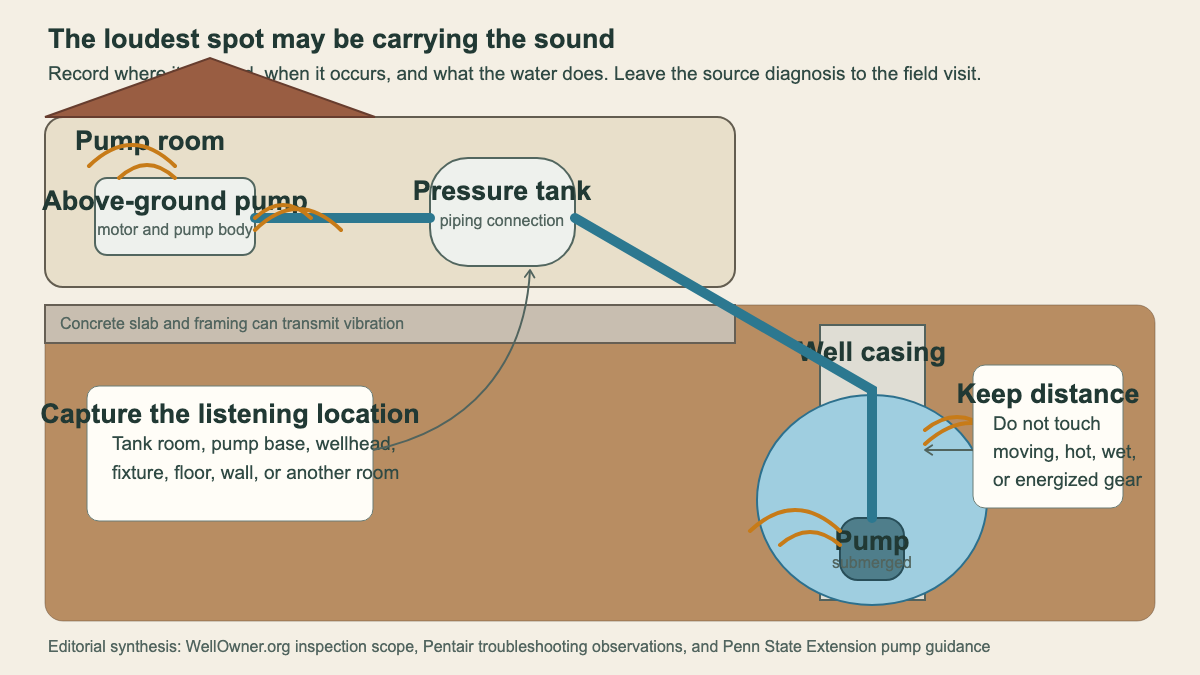
For an above-ground pump, record the pump's location and whether the sound appears to come from the motor or pump area, nearby piping, the tank connection, the control area, or the mounting surface. Those are location notes, not test results. For a submersible system, ask where the caller actually hears the noise. The answer may be the pressure tank room, piping, a control box, or the wellhead.
The National Ground Water Association's annual inspection guidance shows how broad a professional well-system check can be. It includes pump motor performance, line voltage, grounding, the pressure tank, and pressure-switch contact. It also tells owners to note above-ground pumping equipment, leaks, corrosion, weakened fittings, piping, gauges, wiring, control boxes, and burned connections. A sound complaint can touch several parts of that system, which is why phone intake should preserve observations and stop short of diagnosis.
Tie the noise to one pump cycle
Timing often gives the field technician more value than the sound label. Ask the caller to describe one ordinary event, such as opening a kitchen faucet, and what happens next. Do not have the caller repeat an event if the equipment is hot, leaking, sparking, smoking, tripping a breaker, or producing a burning odor.
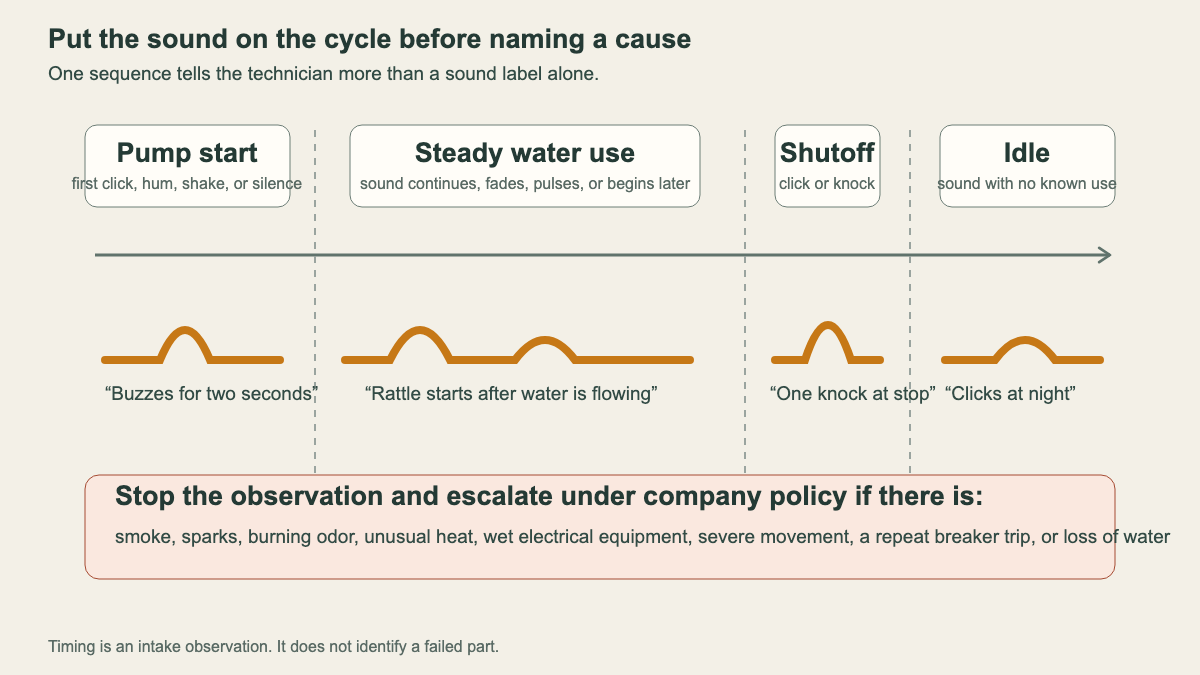
A sound at pump start belongs in the note as “at start,” plus the caller's description and location. A sound during steady water use needs the same treatment, along with any pressure change. A knock when the pump stops is a shutoff observation. Noise while nobody is using water raises another intake question: how does the caller know the pump or control is operating, and is water running anywhere on the property?
Rapid repeated clicks or short bursts of operation may overlap with a cycling complaint. Use the well-pump short-cycling intake guide when starts and stops are the main symptom. Keep this page's intake focused on sound and vibration when the cycle frequency appears ordinary but the equipment suddenly sounds different.
Pentair's pump-control troubleshooting manual directs service personnel to observe noise, vibration, leaks, and overheating as part of a larger investigation. The grouping matters. Noise is one field observation among several, and a technician may need electrical, hydraulic, mechanical, and well-condition checks before reaching a conclusion.
Screen the conditions that change routing
A new rattle with normal water and no other warning signs can enter the standard service queue under the contractor's policy. The route changes when the caller reports smoke, sparks, a burning odor, unusual heat, exposed or damaged wiring, wet electrical controls, active leaking near energized equipment, a repeatedly tripping breaker, or severe movement of exposed machinery.
Ask about the present water condition too. Record a complete loss of water, sharply reduced pressure, sand or sediment, unusual cloudiness, air sputtering, or water discoloration. Those observations may change crew preparation or urgency, but they still do not prove why the sound started.
Penn State Extension's water well maintenance and rehabilitation guidance lists several possible contributors to pump damage, including abrasive sediment, corrosion, high operating temperature, and cavitation. It also points to mechanical parts such as bearings, impellers, stuffing boxes, and pump bowl assemblies, with maintenance and repair following the manufacturer's recommendations. That range is a warning against matching “grinding” or “humming” to one part during intake.
If the complaint includes a repeat breaker trip, follow the company's electrical escalation policy. If there is fire, an active shock hazard, or a utility line problem, emergency or utility instructions take priority over scheduling.
Capture system details the technician can use
Once safety and timing are clear, collect the equipment and access details already known to the caller. Ask whether the system uses an above-ground jet pump or a submersible pump if they know. Record the pressure tank and control locations, any visible model information on the outside of closed equipment, the wellhead location, and whether the property uses a variable-speed controller, generator, transfer switch, irrigation system, treatment equipment, or booster pump.
Service history helps. Note the approximate installation date if known, the last pump or pressure-tank work, recent plumbing changes, and whether a filter or treatment device was serviced just before the noise appeared. Ask whether the customer has a well log, invoice, equipment manual, or prior service report. Do not turn missing records into a scheduling obstacle.
Access belongs in the same note: gate codes, locked pump-house doors, basement entry, pets, livestock, soft ground, steep drives, and the location of controls or the wellhead. If the sound is intermittent, ask when it last occurred and whether it follows a predictable use such as irrigation or a morning shower. Never promise that a technician will reproduce it on command.
A clean handoff might read:
“Caller reports a new metallic rattle heard beside the basement pressure tank when the pump starts. It lasts a few seconds, then stops while water continues at normal pressure. They do not hear it during idle time or at pump shutoff. No smoke, burning odor, unusual heat, wet controls, exposed wiring, breaker trip, leak, or loss of water was reported. The pump is believed to be submersible. The pressure tank and closed control box are in the basement, and the wellhead is beside the east driveway. Irrigation work was completed last week. Caller has a pump invoice and a phone recording made from the basement doorway.”
That note preserves the caller's words, cycle timing, water behavior, safety screen, system type, recent change, and access location. It gives the technician a place to begin without turning a sound into a verdict.
An AI receptionist can collect the same fields after hours if the workflow uses clear safety stops and routes uncertainty to a person under the contractor's policy. For any call taker, the best final check is simple: could a technician understand exactly when and where the customer heard the sound without inheriting an unsupported diagnosis?