“The pump you installed is failing again” arrives as one complaint, but the office has two jobs. The house may need water service today. Separately, someone must review the original work, the installed equipment, the written warranty terms, and what happened after the last visit.
Start with the present condition. Ask whether the property has no water, low pressure, short cycling, a tripped breaker, visible leakage, unusual sound, discolored water, or another symptom. Record when it began and what still works. Then build the warranty packet. Do not tell the caller that the problem is covered, excluded, caused by a specific part, or free to repair. A repeat symptom proves only that the caller needs a next step.
Handle today’s water problem first
A warranty discussion can wait long enough to identify immediate risk. Confirm the service address, caller, on-site contact, water-use needs, and the exact symptom in the caller’s words. Ask whether anyone sees smoke, heat, sparking, flooding near electrical equipment, a damaged wellhead, or exposed wiring. Follow the contractor’s emergency policy. Reception should not ask a caller to remove a panel, reach into a wet area, reset a breaker repeatedly, or test energized equipment.
If the property has no water, use the no-water well call process. If a breaker keeps opening, use the safe breaker-trip routing guide. Those pages own immediate symptom intake. The warranty callback adds the prior-job record and coverage review after safe routing is underway.
Ask what temporary water plan exists for people, livestock, medical needs, sanitation, and any business operation at the property. Record the answer without promising an arrival time or reimbursement unless company policy authorizes both. A customer can have an urgent service need even when coverage is unclear.
Connect the caller to the exact prior job
A surname is rarely enough. Search by service address, customer name at the time of work, invoice number, proposal number, phone, email, and approximate service date. Ask whether ownership changed. The current caller may be a buyer, tenant, property manager, family member, or home-warranty representative who did not purchase the original work.
Read the scope back from the actual record. “Invoice 1847 shows a submersible pump and control box installed on May 12” is useful. “We replaced your whole system” may be wrong if the pressure tank, wire, drop pipe, or controls remained in place. Separate each item that was supplied, reused, repaired, adjusted, or excluded.
Capture these documents when available:
- the proposal, invoice, completion note, payment record, and written labor or workmanship terms;
- product labels, registration, manufacturer literature, and seller receipt;
- installation readings, pump or well log, photographs, and the technician’s prior diagnostic notes;
- later invoices from this company or anyone else who worked on the system.
Do not make the caller prove a claim during the first conversation. The goal is a complete file that the proper reviewer can evaluate.
Map each record to the installed system
A well system contains equipment from several sources and dates. The pump end, motor, control box, pressure tank, pressure switch, variable-frequency drive, wiring, and treatment equipment may carry different labels and terms. One invoice can include company labor, manufacturer products, distributor-supplied parts, and reused components.
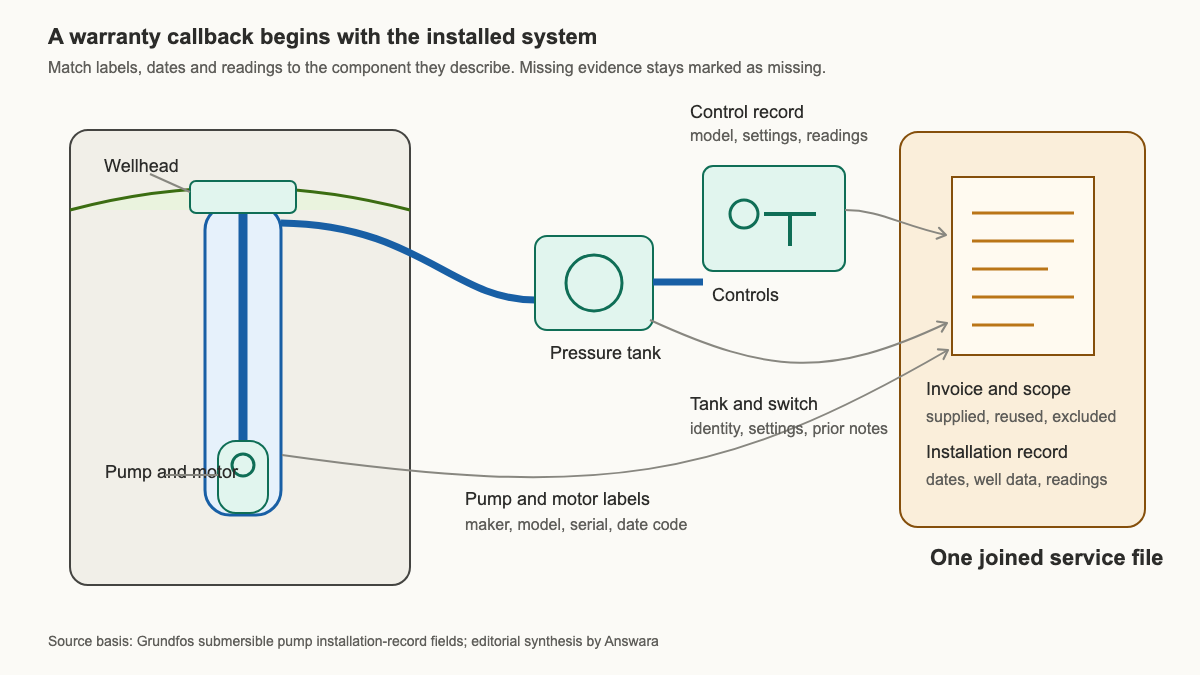
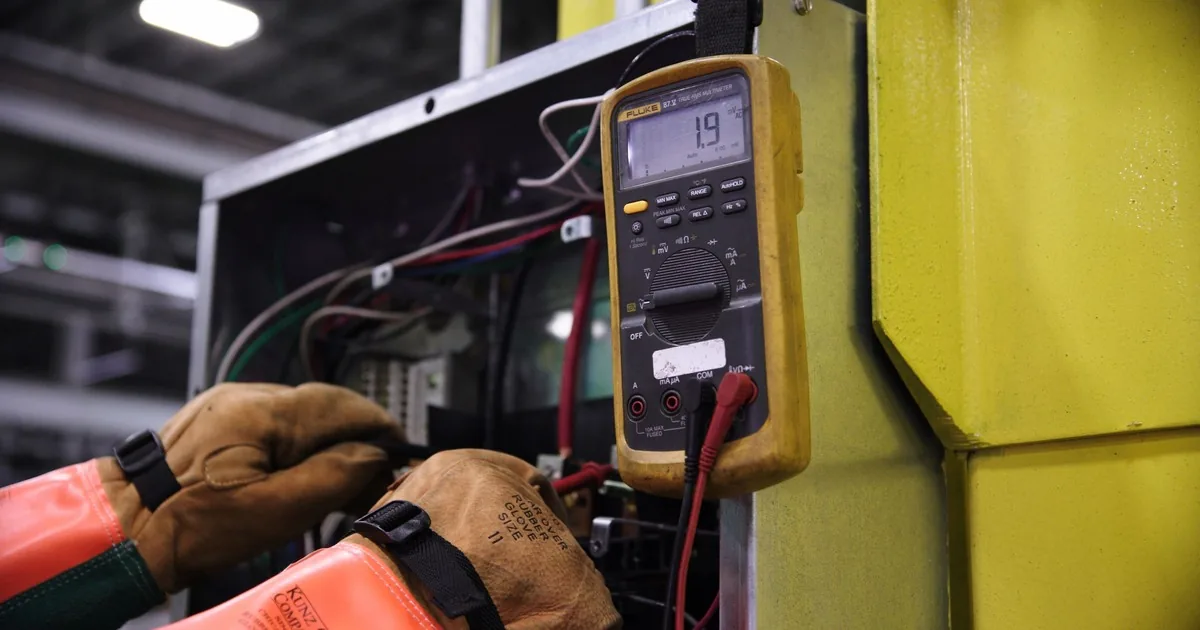
Ask for safe photographs of visible labels only. A clear control-box label may provide the maker, model, serial number, voltage, and date code. A pump or motor label deep in the well may be unavailable until a qualified crew pulls equipment. Mark it unavailable. Never replace a missing serial number with a model found on the internet.
The Grundfos submersible pump installation record shows how detailed a useful record can be. It includes installation and failure dates, well depth and water levels, motor and pump nameplates, control equipment, incoming voltage, current readings, cable details, and operating conditions. A residential contractor may use a shorter form, but the principle holds: equipment identity and installation conditions belong together.
Reconstruct what happened after the work
The most useful callback question is often “Did the system work normally after the visit?” If yes, record for how long and under what use. If no, record the first symptom and the first report date. Avoid summaries such as “never worked right” when the caller can provide a clearer timeline.
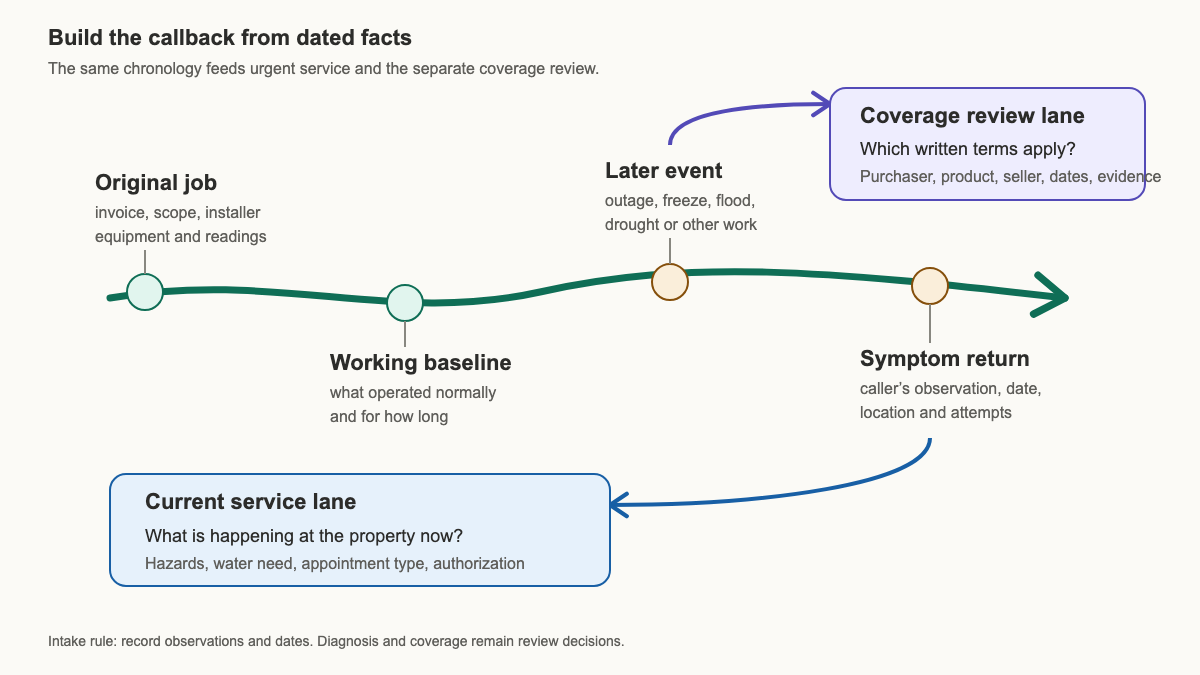
Ask about events between the original work and today: power outage, lightning, freeze, flooding, drought, excavation, a dry-running event, treatment work, plumbing changes, generator use, pressure-setting changes, or service by another company. Do not suggest that any event caused the failure. Record what the caller knows, the date or best date range, and the source of that information.
Separate observations from conclusions. “Pressure fell at every fixture Tuesday evening” is an observation. “The new pump is defective” is a conclusion awaiting diagnosis. “Breaker was reset once and opened again” belongs in the service record. Repeated reset instructions do not.
A compact read-back might say: “Original invoice is dated May 12 and lists a pump, motor, and control box. Caller reports normal whole-house pressure through September 24. A utility outage occurred September 25. Low pressure began September 27 and no breaker trip is reported. No other contractor has worked on the system. Current water service is limited but present. Dispatch review is needed today; coverage review remains pending.”
Route the file under the written terms
Manufacturer terms differ. Grundfos tells a covered purchaser to contact the seller, provide proof of purchase, explain the defect and when it occurred, and describe the surrounding circumstances. Its terms also identify limits and exclusions. The RIDGID water-pump warranty applies to listed models, asks for proof of purchase, directs service through an authorized center, and tells callers to have model and serial number available.
Those examples support a disciplined intake. They do not create one universal rule. Check the terms for the exact product and transaction, plus the contractor’s own written labor or workmanship policy. State law may affect consumer rights, so legal questions belong with management or counsel.
Assign a named owner for each lane:
- Current service: who decides urgency, appointment type, diagnostic authorization, and any temporary plan?
- Company workmanship review: who compares the callback with the original scope, completion notes, and internal policy?
- Product claim: who contacts the seller, distributor, manufacturer, or authorized service channel and tracks required material?
- Customer approval: who may approve charges that fall outside confirmed coverage?
A manufacturer remedy may concern a product while travel, diagnosis, labor, pulling equipment, shipping, fluids, excavation, or replacement work follows separate terms. Never promise that these items are included until the applicable documents and reviewer say so.
Give the reviewer one factual handoff
End the call with a record that another employee can use without replaying it. Include the current symptom and hazards, service address, on-site contact, original purchaser, invoice and scope, component identities, installation date, prior baseline, intervening events, photographs received, work by others, written terms located, and the next owner for both service and coverage review.
Tell the caller what happens next in plain language: “I have opened a service review for the low-pressure condition and attached your May invoice, label photos, and outage timeline. Jordan will review the appointment type. Casey handles warranty documentation and will confirm which written terms apply. We have not determined coverage yet.”
An AI receptionist can collect the same fields after hours and route a current no-water condition separately from document review. It should never diagnose the component or promise coverage.
The strongest callback record gives two people what they need. Dispatch sees the condition at the property right now. The warranty reviewer sees the exact job, equipment, dates, evidence, and written terms. The caller gets a clear next step without a promise that someone else must later retract.