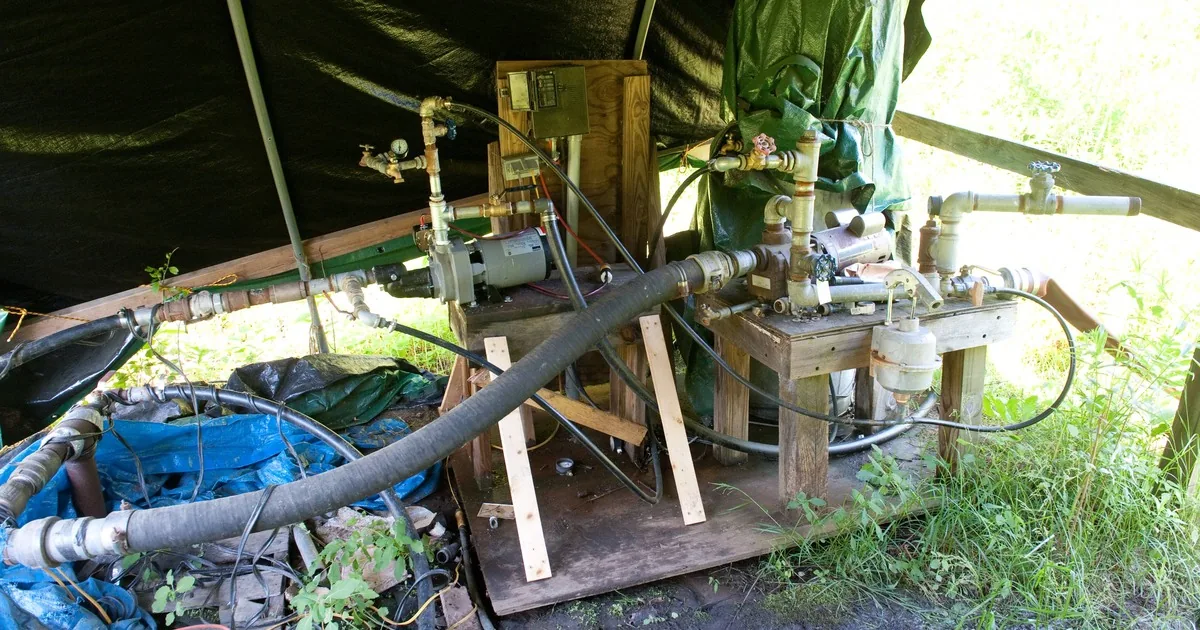
“The well-pump breaker tripped again” is enough to open a service call. It is not enough to name the failed part. The problem could involve the electrical supply, controls, cable, motor, pump, or the way the water system is operating. A receptionist cannot separate those possibilities over the phone, and repeated resets can expose a caller to a fault that needs professional attention.
Start with safety. Ask when the breaker trips, what the water did before it happened, and whether the caller sees or smells anything unusual. Heat, smoke, sparks, buzzing, a burning odor, wet electrical equipment, or damaged wiring belongs in the company’s urgent escalation lane. If those signs are absent, gather the pump, pressure tank, control, well, access, and service-history details a technician will need.
Treat the repeat trip as the start of the service call
Some callers will say, “I reset it and it held for a minute, then went again.” Others have already tried several times. Record what happened. Do not suggest another reset, a larger breaker, a new fuse, or any work inside the panel, pressure switch, disconnect, or control box.
The Electrical Safety Foundation International lists frequent breaker trips alongside warning signs such as warmth, discoloration, buzzing, and burning odor. Its guidance is general household electrical safety, but the office boundary applies cleanly: a protective device that keeps operating should be investigated, not defeated.
Ask these questions before scheduling:
- Is there no water, weak pressure, normal pressure, or water that stops after a short run?
- Did the breaker trip when someone tried to use water, while the pump was already running, or at an unknown time?
- Does it trip immediately, after running for a while, or only on some pump cycles?
- Did the caller hear a click, hum, buzz, chatter, grinding sound, or silence?
- Is there smoke, heat, a burning odor, sparking, moisture, flooding, or visible wire damage near any well equipment?
- Was there a recent outage, storm, lightning event, plumbing repair, pump service, or excavation?
“Breaker keeps tripping” becomes a useful dispatch note only after the timing and surrounding conditions are attached to it.
Capture exactly when the breaker trips
Trip timing does not prove a diagnosis. It does narrow the technician’s starting context.
An immediate trip may mean the breaker opens as soon as the caller attempts an ordinary reset or as soon as the pump is expected to start. Record whether the house had no water first, whether the pressure gauge was visible, and whether the caller heard anything before the trip. Stop there. The office should not walk anyone through disconnecting wires or isolating equipment.
A delayed trip means the pump appears to run before power opens. Ask how the caller knows it was running. They may hear the motor, see a gauge rise, get water at a fixture, or hear flow at the pressure tank. Capture the sequence in the caller’s own words. “The shower ran normally for about a minute, pressure faded, and then the breaker tripped” is better than “pump overheated.” The first is an observation. The second is an unsupported diagnosis.
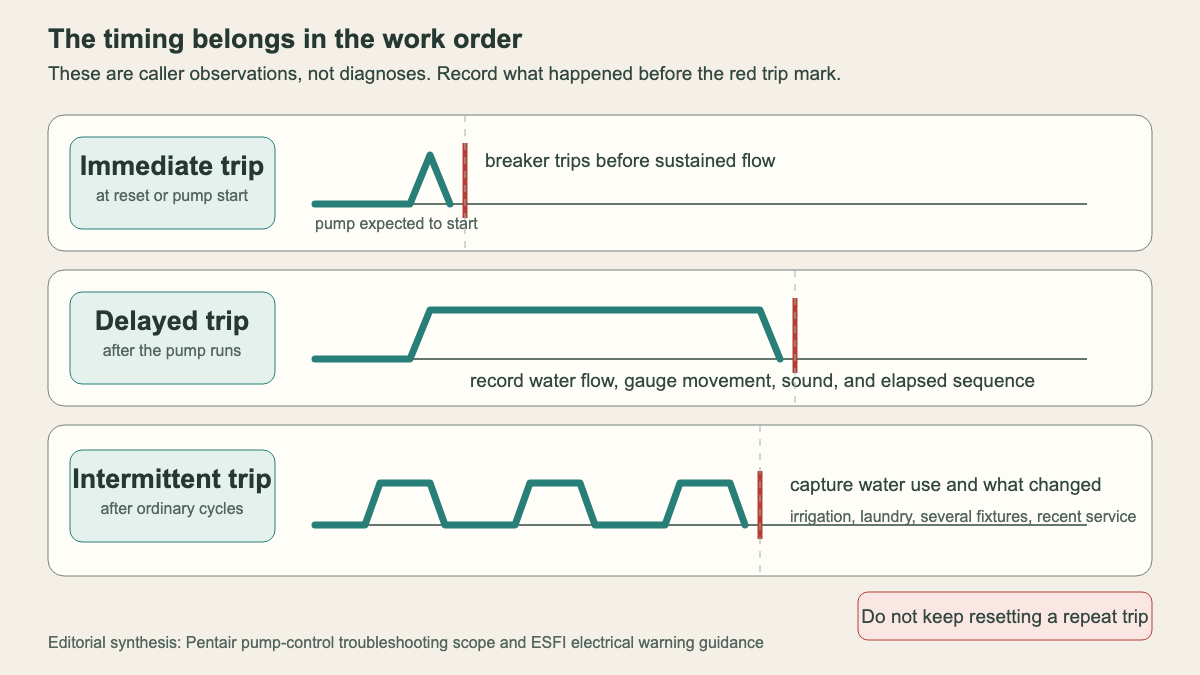
An intermittent trip may occur after several ordinary cycles or only during high water use. Ask what was operating at the time: irrigation, laundry, a shower, livestock watering, or several fixtures. Also ask whether the pump has recently started and stopped more often than usual. This establishes conditions for the field visit without claiming that water demand caused the electrical fault.
Manufacturer technical material shows why the office should resist naming a part. A Pentair pump-control manual routes breaker-trip and no-start symptoms through several possible electrical, motor, pump, and well checks. Those checks require proper instruments and qualified service work. A phone description cannot replace them.
Map the circuit without asking the caller to open anything
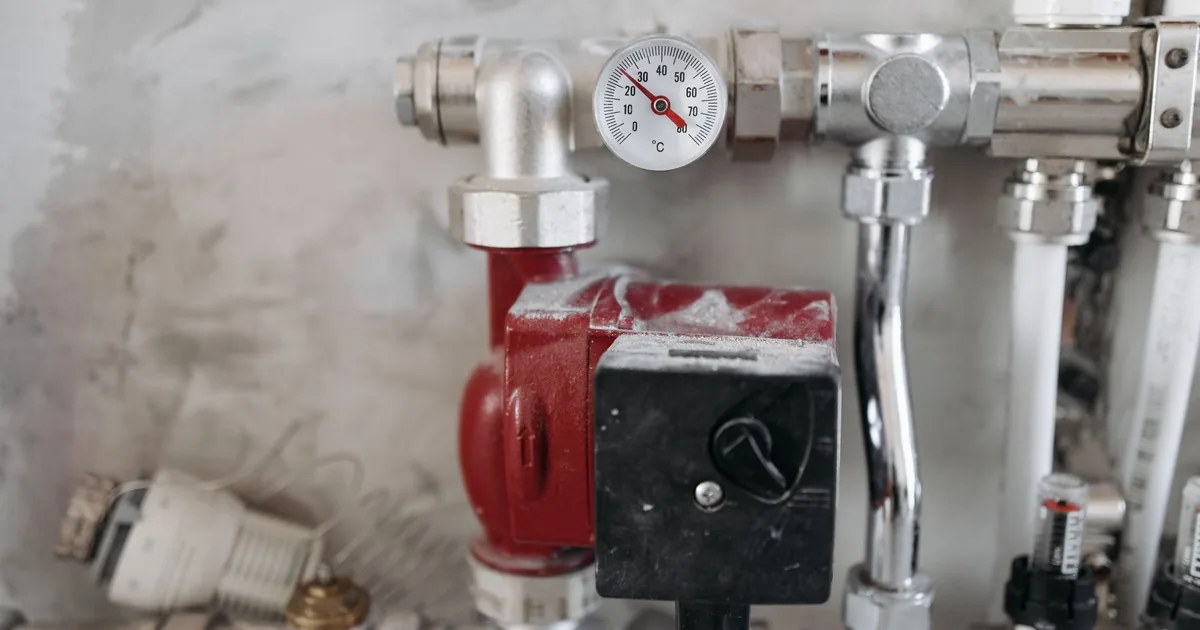
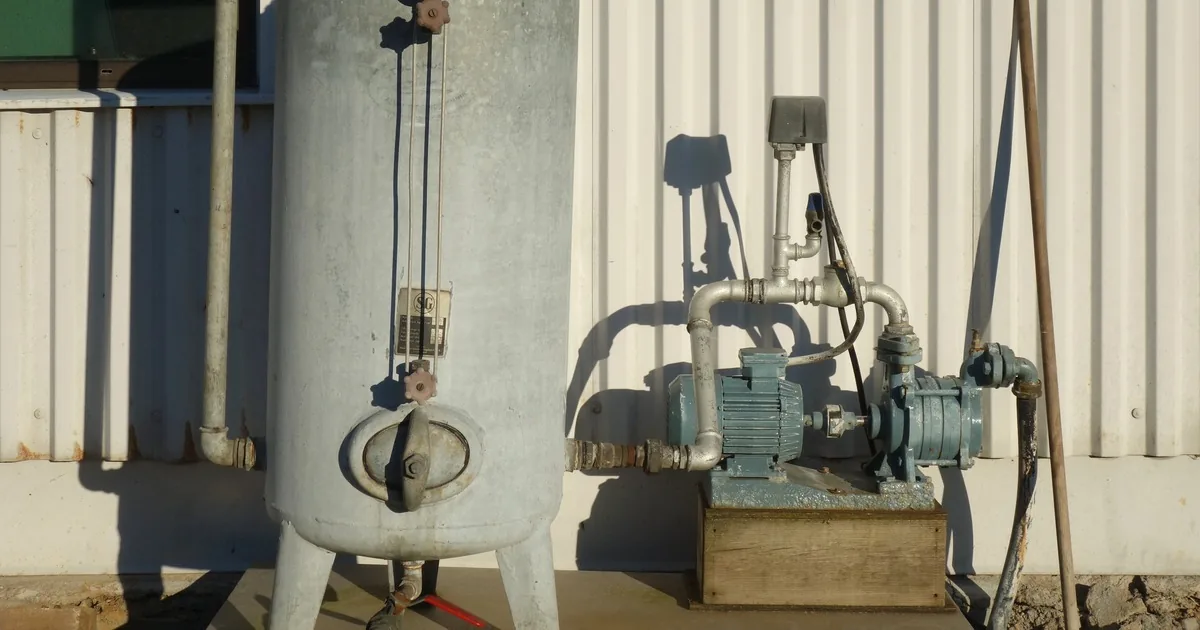
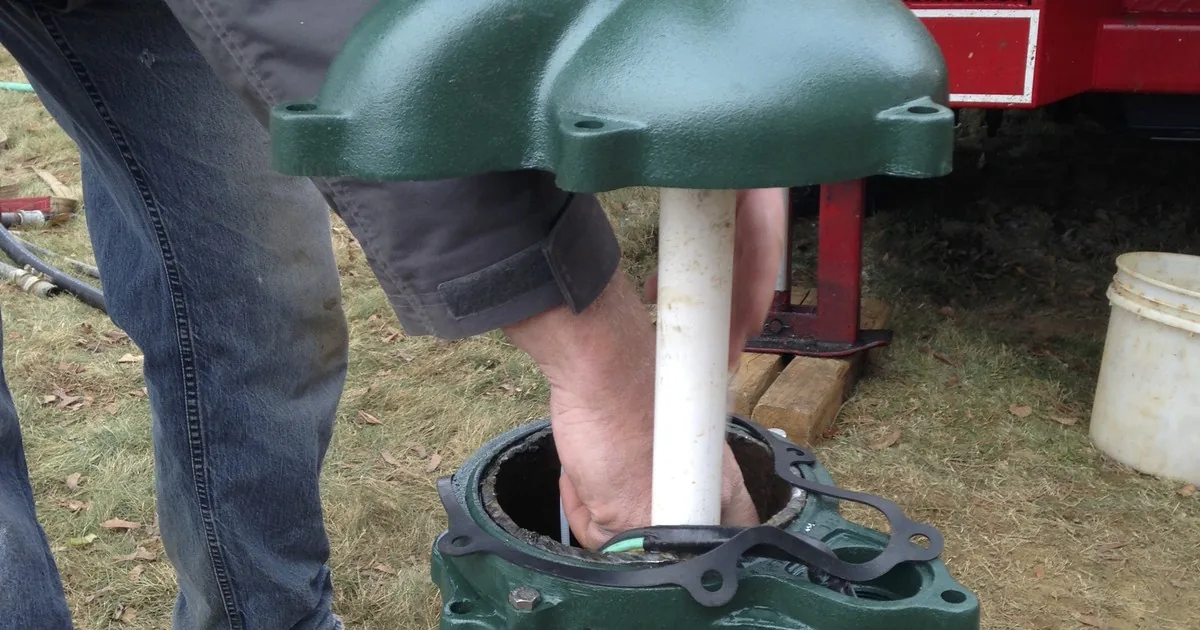
A well-pump circuit may pass through more than the breaker panel. Depending on the installation, the visible system can include a disconnect, pressure switch, control box, variable-speed drive, protection device, pressure tank, gauge, wiring to the wellhead, and a submerged or above-ground pump.
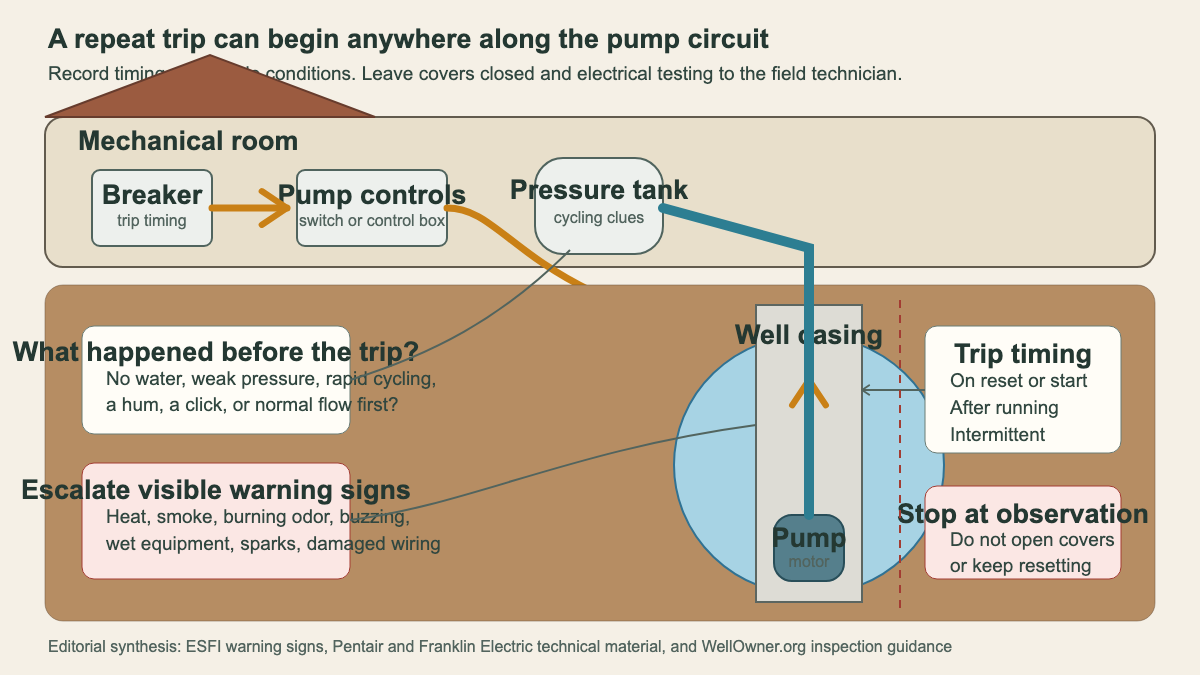
Ask the caller to describe only what is already visible and safely accessible. Useful details include labels on the outside of a control enclosure, indicator lights or fault codes visible without removing a cover, the pressure-gauge reading, the pressure tank location, and whether the pump is in the well or above ground if they know. A photo of the closed equipment area may help under company policy. It should never require entering water, moving guards, opening enclosures, or touching damaged equipment.
The National Ground Water Association’s inspection guidance names pump motor performance, line voltage, grounding, the pressure tank, and the pressure-switch contact among professional inspection points. That scope explains why “the breaker” is not a complete diagnosis. Several connected components can lead to the same call.
Franklin Electric’s Pumptec product information also describes protection based on motor-load conditions. The practical lesson for intake is modest: record any visible protection device and its displayed condition. Do not interpret a fault light beyond the contractor’s approved script.
Separate an electrical hazard from a routine dispatch
A repeat trip with no other warning signs still needs service, but some observations change the response. Use the company’s urgent electrical or emergency procedure for smoke, active sparking, a burning odor, unusual heat, wet controls, floodwater around powered equipment, exposed conductors, a damaged service panel, or a fallen utility line.
Keep the language plain. “Please stay clear of the equipment while I follow our escalation procedure” is safer than an improvised troubleshooting sequence. If there is fire, an active shock risk, or a utility hazard, the established emergency or utility instruction takes priority over booking.
Water needs matter too. Record whether the property has no water at all and whether the household has a medical, sanitation, animal-care, or business dependency that the contractor’s policy treats as urgent. Do not promise restoration time. A field visit may uncover an electrical problem, a pump problem, a dry-well condition, damaged controls, or another cause that cannot be confirmed at intake.
Use the broader no-water emergency call guide when the breaker is only one detail in a total loss-of-water complaint. If the caller reports rapid starts and stops before the trip, the pressure tank intake guide provides the tank, switch, gauge, and cycling questions to add. Keep the breaker complaint as the primary symptom until a technician evaluates the system.
Build a technician-ready handoff
The work order should preserve sequence. Start with the last known normal water use, then the first symptom, the trip timing, what happened after the caller’s prior actions, and the present condition. Add the full address, contact person, gate or access instructions, wellhead location, tank and control location, pets or livestock, and any road or weather problem that affects the crew.
Ask for records already on hand: the well log, pump invoice, motor or control model, installation date if known, prior repair notes, and the name of any electrician or well contractor who recently worked there. Note whether the property has a generator, solar equipment, a transfer switch, or other backup power, but leave connection and capacity questions to qualified personnel.
A clean handoff sounds like this:
“Caller has no water at any fixture. They report the pump breaker tripped during an evening shower. After one reset they had water briefly, heard a hum near the control box, and the breaker tripped again. They made no further reset attempts. No smoke, heat, sparks, burning odor, wet equipment, or visible wire damage was reported. The pressure gauge reads 18 psi. The pressure tank and closed control box are in the basement; the wellhead is beside the north fence. A pump invoice from 2021 is available. The driveway gate code is in the account note.”
That note gives the technician a timeline, a safety screen, one gauge observation, equipment locations, and a record to review. It does not guess which component failed.
An AI receptionist can collect the same fields after hours if the workflow stops on hazards, avoids electrical coaching, and escalates uncertainty according to the contractor’s policy. The best first distinction remains simple: did the breaker trip once, or did it trip again?