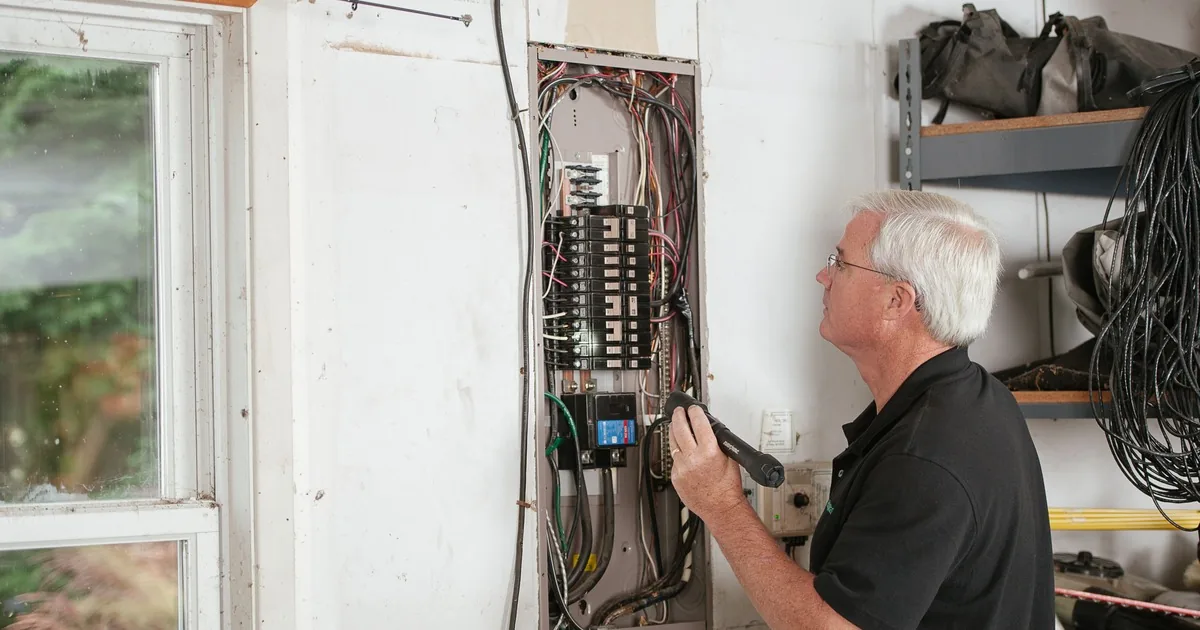
“The well is frozen” can mean a dry kitchen faucet, weak flow at every fixture, an exposed pipe covered in ice, or water spreading across the pump-room floor. Those calls should not share one script.
Start with five facts: when water last worked, whether every fixture is affected, where the pump and pressure equipment are located, whether those spaces still have heat and power, and whether the caller sees water, sparks, smoke, or a burning odor. Route the hazard first. A field technician can then determine whether the trouble is a frozen component, a split line, an electrical failure, or an unrelated pump problem.
Screen the room before the equipment
A caller may head straight toward the pressure tank with a flashlight. Slow the call down. Ask whether the floor is dry and whether any water is near a panel, disconnect, pressure switch, control box, extension cord, heater, or other electrical equipment.
Standing water near electrical equipment belongs on the urgent path. The Maine Emergency Management Agency warns about electric shock around standing water and tells households to know where the water shutoff is. Follow the contractor’s emergency procedure. Do not ask the caller to wade through water, touch equipment, or operate a shutoff that cannot be reached safely.
Also ask about smoke, sparks, unusual heat, buzzing, and a burning odor. A frozen line may be the caller’s theory, but these observations change the trade or emergency response needed. A whole-house heating failure matters too. The immediate property problem may be broader than the well system, especially if several rooms or utility spaces have fallen below normal indoor temperature.
If the home has no water for people, livestock, or essential medical equipment, record that impact plainly. The no-water emergency intake guide covers the wider urgency questions. Keep the cold-weather timeline attached to the same ticket.
Find where the system enters the cold
Most callers do not know which part they are looking at. Ask for locations before labels.
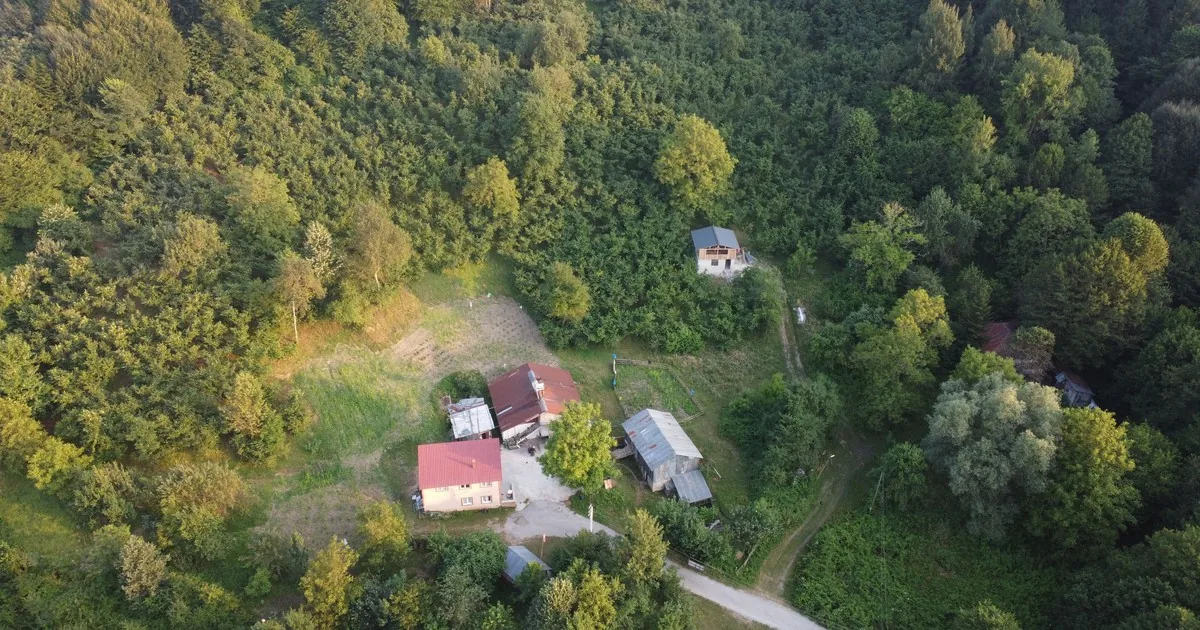
Is the pump down the well, above ground in a well house, or inside a basement? Where is the pressure tank? Does the water line pass through a crawlspace, exterior wall, unheated garage, utility shed, or vacant part of the building? Is the wellhead beside a driveway where a plow or snowblower could have reached it?
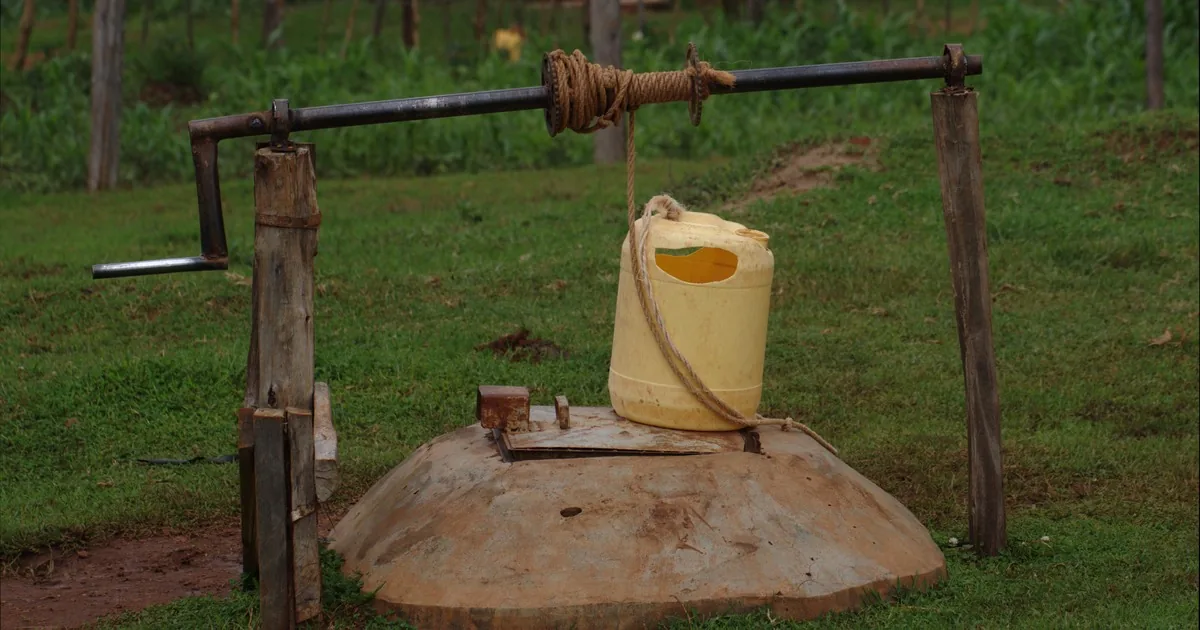
The Water Systems Council freeze-protection guide says most well pumps sit down inside the well at depths that do not freeze. It points instead to exposed pipes, above-ground pumps, tanks, wellheads, and the small connection between a pressure switch and the tank piping as vulnerable locations. Actual installations vary. Some use a pitless adapter below the local frost line; others have exposed equipment that needs a different winter setup.
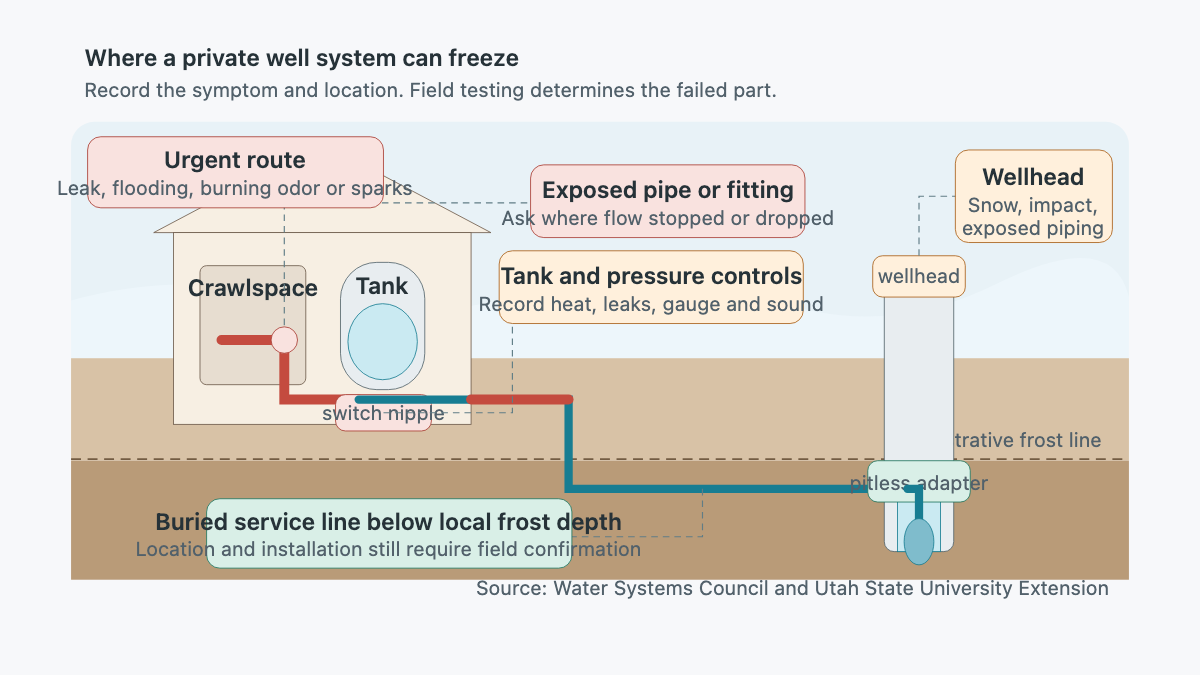
The cutaway is a location map, not an installation plan. Never tell a caller how deep a buried line should be based on a national article. Local frost depth, soil, construction, code, and the property’s records all matter.
Build a clean freeze timeline
Cold-weather calls often arrive after a night of changing conditions. Capture the sequence while the caller remembers it.
Ask when water last flowed normally and which fixture was used. Note when the caller first found weak flow or no flow. Record the caller’s reported outdoor conditions without turning them into a diagnosis. Then ask whether power or heat failed, whether a door or crawlspace vent was left open, and whether the building was vacant.
The next questions should be concrete:
- Are all hot and cold fixtures affected, or only one room or branch?
- Is flow completely absent, reduced, or intermittent?
- Did the change happen at once, or did pressure fall over several uses?
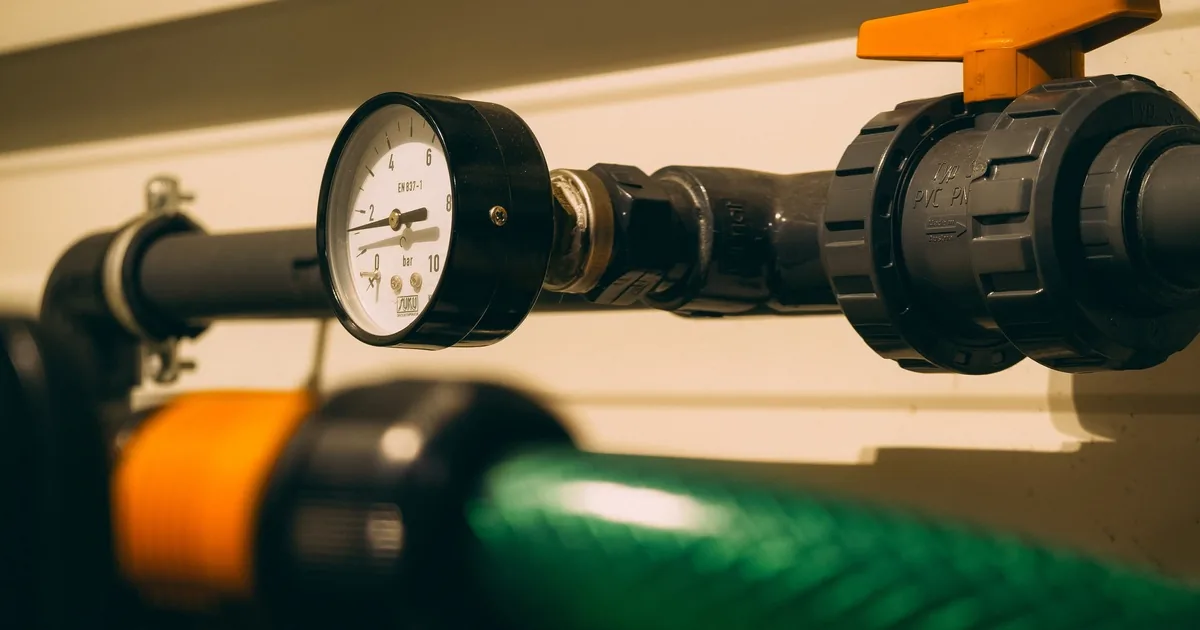
- Is a pressure gauge already visible from a dry, safe position? If so, what does the caller report?
- Is the pump, control, or pressure switch making a sound the caller recognizes as new?
- Has anyone already reset a breaker, applied heat, closed a valve, or opened a faucet?
- Is there ice, frost, bulging, a split, or water on any visible pipe or fitting?
Preserve the caller’s wording. “The gauge stayed near zero and I heard one click” is useful. “The pressure switch froze” is a conclusion that still needs inspection.
A breaker action deserves its own line. Ask whether anyone reset it and what happened next. If it tripped again, stop reset coaching and flag it for dispatch. When the freeze report followed a loss of utility power, add the sequence in the power-outage recovery intake guide.
Do not run a thawing lesson over the phone
A general article cannot see the wiring, pipe material, hidden damage, insulation, heat source, confined space, or standing water at this property. That makes remote thawing instructions risky.
Both Utah State University Extension and Maine MEMA warn against using an open flame to thaw a pipe. Utah State’s frozen-pipe guidance also cautions against boiling water and electrical appliances in wet locations. The practical office rule is simple: do not improvise a torch, heater, heat tape, hair dryer, or electrical setup for a caller.
If the company has a written procedure for a specific installed system, the call taker can follow it exactly. Otherwise, record what the caller already did and dispatch the qualified person. Do not ask anyone to open a well cap, panel, control box, pressure switch, pump housing, or tank fitting.
This boundary protects the service ticket too. Once several unrecorded thawing attempts occur, the technician has a harder time separating the original condition from changes made afterward.
Treat returned flow as a new observation
Ice can damage a water line before a leak becomes visible. Utah State University Extension explains that frozen water can crack or split pipe, with leakage appearing after thawing when pressurized water returns.
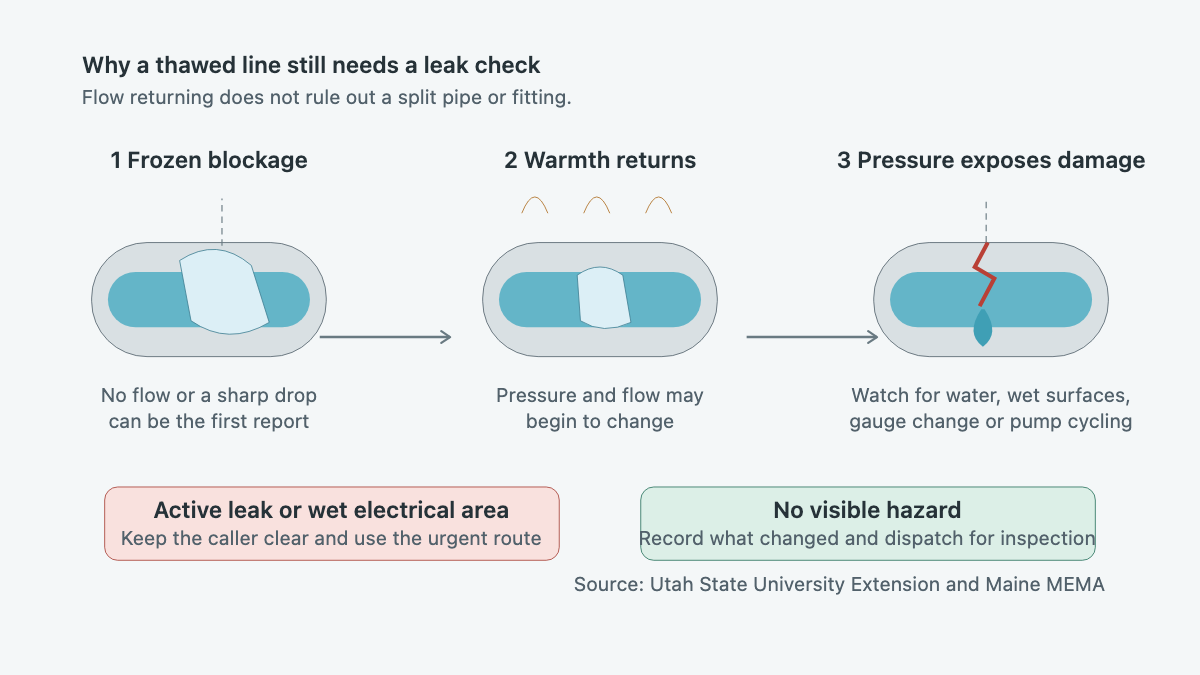
If the caller reports that water has started moving again, ask what changed. Is pressure normal at every fixture? Did water appear around a pipe, fitting, tank, wall, ceiling, or floor? Is the pump cycling differently? Did the gauge move? Is any wet area close to electrical equipment?
Returned flow does not finish the call. It changes the symptom set. The field inspection still needs to find the source, check for damage, and confirm that the system operates normally.
Send a work order the technician can use
A field-ready freeze ticket should identify the property and access conditions, then preserve the timeline and observations. Include snow depth or an unplowed drive only as reported access facts. Do not promise that a service vehicle can reach the property before dispatch reviews them.
A clean handoff could read:
“Caller reports normal water at the kitchen sink near 9:30 p.m. and no flow at any hot or cold fixture at 6:20 a.m. Home has heat and power. Pressure tank and controls are in an unheated crawlspace entered from the west side. Caller can see frost on an exposed horizontal pipe from a dry doorway. Gauge reportedly reads near zero. No smoke, sparks, burning odor, buzzing, standing water, or visible split. Caller has not reset the breaker, used a heater, or opened equipment. Wellhead is beside the north drive; drive is plowed. Two adults are in the home, with bottled water available for the morning.”
That note gives the technician the last normal use, scope of the outage, equipment location, hazard screen, caller actions, access, and household impact. It does not name the failed part.
An AI receptionist can collect the same fields after hours when its workflow has hard stops for standing water, electrical symptoms, repeat breaker trips, unsafe access, and essential water needs. The best winter call record still begins with a plain question: “Where was the last place water worked normally?”