“The lightning hit close, and now the well pump is dead” sounds like a diagnosis. On the phone, it is still a timeline. The storm may have affected utility power, the service panel, pump controls, cable, motor, pressure equipment, treatment equipment, or something unrelated that appeared at the same time.
A strong intake call does four things. It keeps the caller away from storm and electrical hazards, records the order of events, separates water symptoms from electrical symptoms, and gives the field technician enough system detail to arrive prepared. Nobody needs to open a panel or control box to make that record useful.
Keep the caller inside until the storm has cleared
If thunder is still audible, stop the equipment questions. The National Weather Service says people should remain in a substantial building or hard-topped vehicle, avoid electrical equipment and plumbing while indoors, and wait 30 minutes after the last lightning or thunder before going back outside.
That rule applies to intake. Do not ask for a photo of the wellhead, an outdoor disconnect, a generator connection, a fallen branch, or a damaged conduit while the storm remains active. A better opening is: “Please stay inside. I can collect the timeline and property details now, and we can note outside conditions after the lightning safety period.”
Ask whether anyone is in immediate danger. A fire, fallen power line, active sparking, electrical shock, or utility hazard belongs with emergency responders or the utility under the company’s escalation policy. The well-service appointment comes after that handoff.
Build the event timeline before discussing parts
Storm-related calls get muddy fast. The caller remembers a flash, the lights flickering, the pump going quiet, and a dry faucet. Intake needs the sequence.
Start with the last normal water use. Which fixture worked, and about what time? Then ask when thunder began, whether the property lost all power or only certain circuits, when utility power returned, and what happened at the first water use afterward. Record clock times when the caller knows them. Use “around 8:15 p.m.” when they do not.
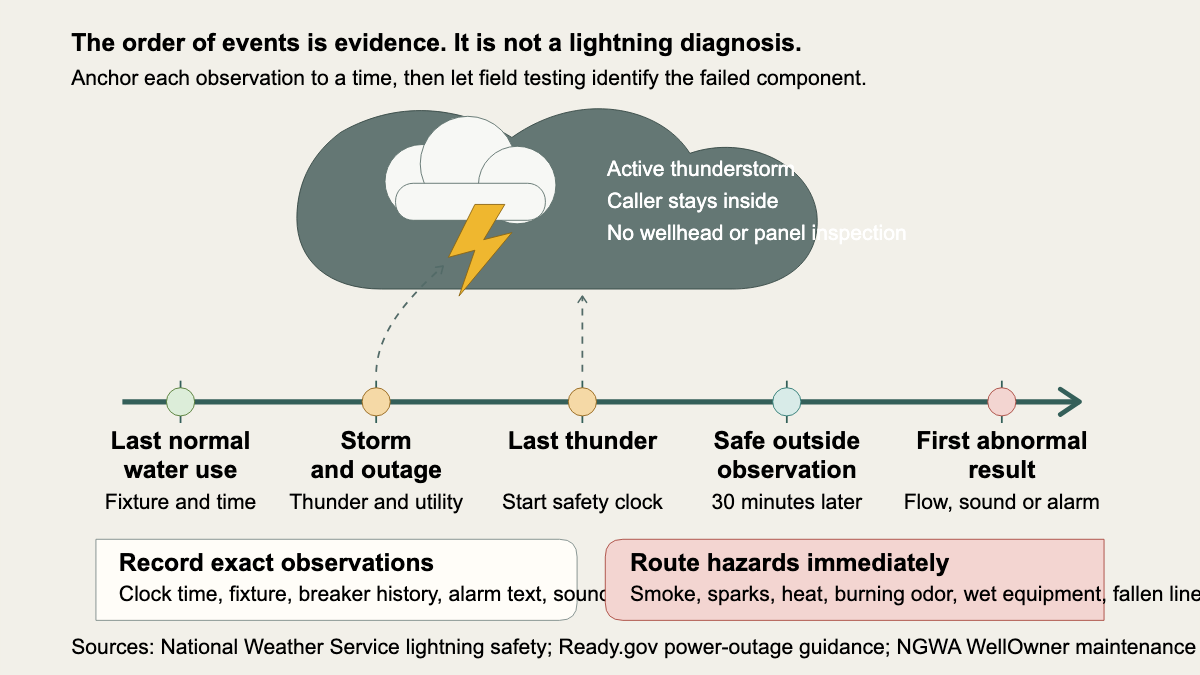
Ready.gov notes that power may return with momentary surges or spikes. That makes restoration time relevant. It does not establish that a surge reached the pump or damaged a component.
Capture any action already taken without recommending another one. Did the caller reset a breaker once? Did it trip again? Did a generator or transfer switch operate? Did an alarm appear on a closed control or treatment unit? Write down the exact display text or light pattern if it is visible from a safe, dry location. “Red light labeled overvoltage” is an observation. “Drive was destroyed by lightning” is a conclusion for field testing.
Route visible hazards before an ordinary service call
Once the storm has cleared, ask about hazards the caller can see without approaching or touching equipment. The list is short and serious:
- smoke, sparks, unusual heat, buzzing, or a burning odor
- standing water around a panel, control, pressure switch, pump, or generator
- fallen utility lines, a damaged meter, exposed conductors, or broken conduit
- a scorched enclosure, displaced well cap, flooded well house, or tree damage near the wellhead
- a breaker that tripped again after the caller’s prior reset
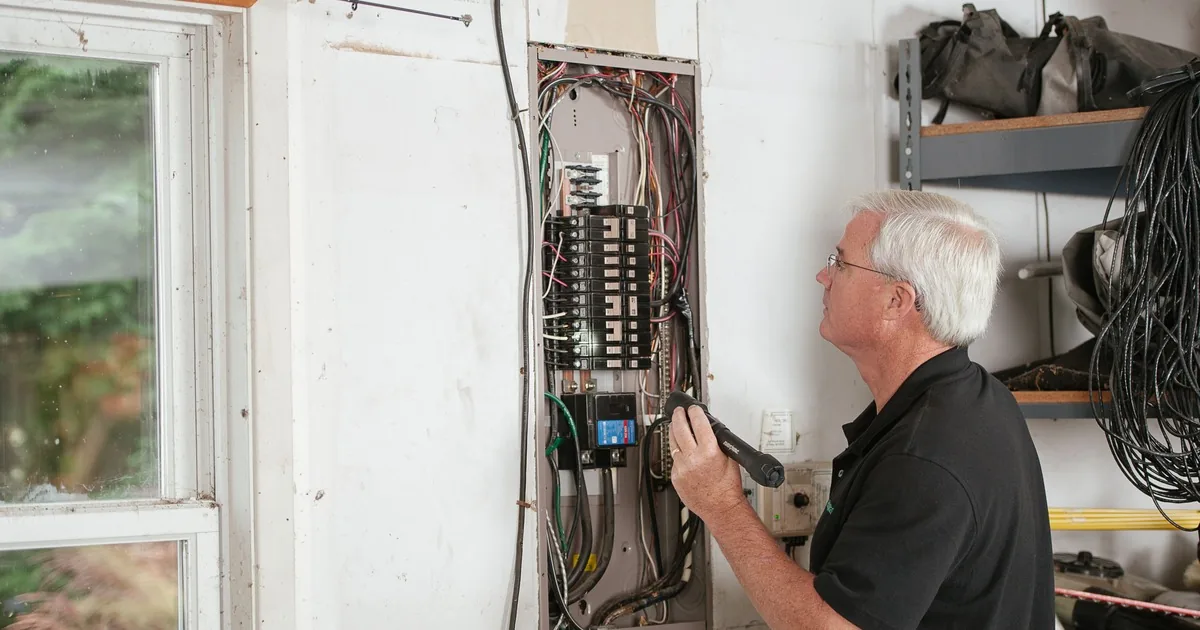
The National Ground Water Association’s WellOwner guidance sends burned wiring odors and breakers that trip more than once to qualified professionals. It also cautions owners against electrical repairs unless they are qualified. Intake should preserve that boundary. Ask the caller to stay clear while the office follows its electrical or utility escalation procedure.
Do not tell someone to remove a panel cover, open the pump control, touch a pressure switch, pull a fuse, disconnect a cable, or enter a wet basement. Even a useful-looking photo is optional. It should show only a closed, safely accessible area under company policy.
If the property has no water, add the urgency and access questions in the no-water emergency call guide. Keep the storm timeline in the same ticket.
Separate electrical symptoms from water symptoms
A caller may use “pump failed” to describe no water, weak flow, sputtering, unusual sound, a gauge that stays low, or silence at equipment they usually hear. Record each symptom separately.
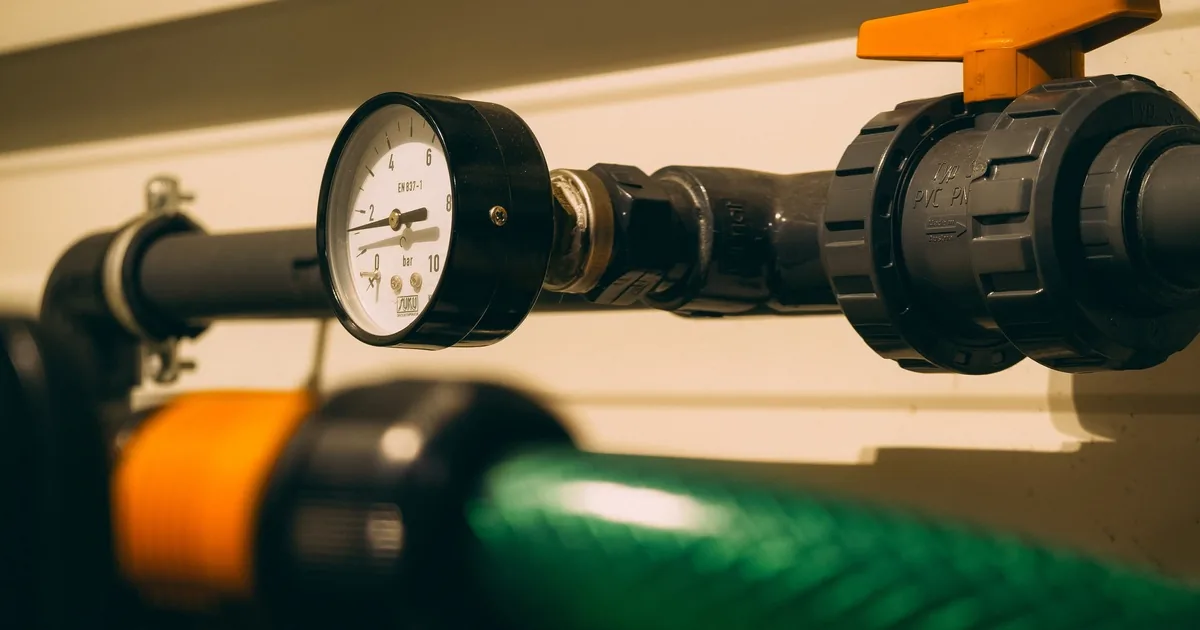
Ask whether every fixture is affected. Compare hot and cold water at one safely accessible faucet, but do not turn the call into a long test sequence. Note whether water is absent, weak, intermittent, or normal. If a pressure gauge is already visible from a dry floor, record the caller-reported reading and whether the needle moved. Do not ask them to tap, adjust, or remove anything.
Then ask how pump operation is inferred. A submersible pump may not be audible from the house. The caller might instead see a run light, hear a control click, notice a pressure change, or recognize a familiar hum. Preserve their words: “one click at the gray box, then silence” tells the technician more than “bad relay.”
Water condition needs its own lane. Ask whether color, odor, taste, or sediment changed after the storm. Also ask whether the system lost pressure, the wellhead flooded, or treatment equipment lost power. CDC disaster guidance explains that power or pressure loss can create a well-water safety concern. Its page addresses wildfire, so it does not prove a thunderstorm contaminated this well. It does support conservative routing when pressure was lost or equipment was damaged. Local health guidance and certified testing decide what happens next.
Map the installed system without opening it
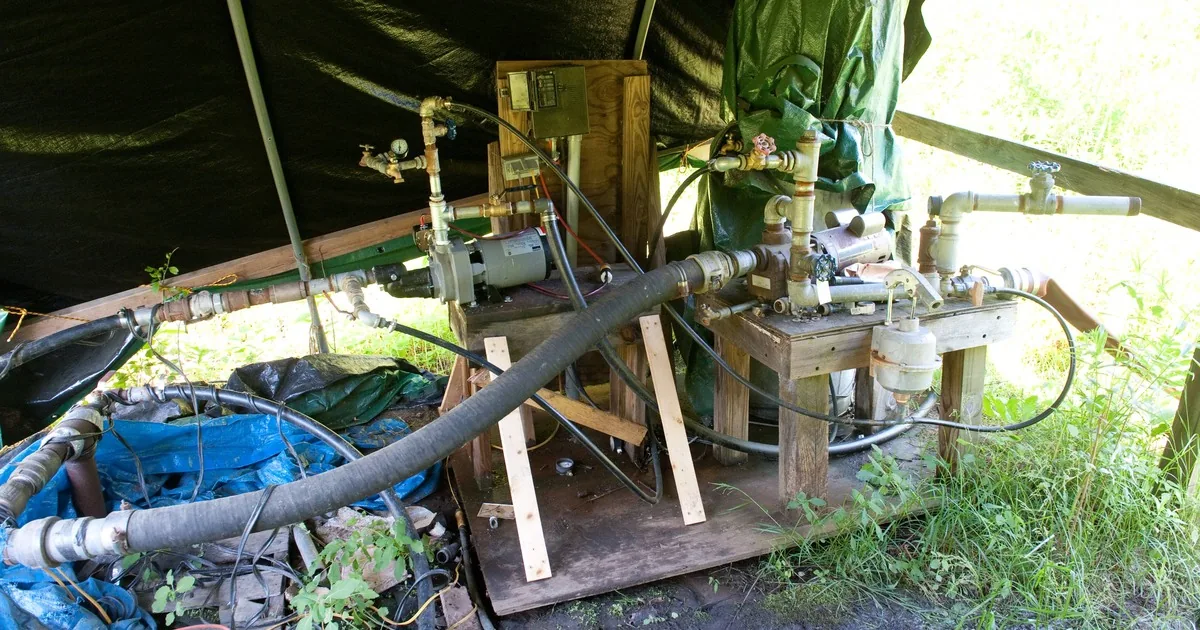
“The pump” can span several locations. Depending on the installation, power may travel through a service panel, disconnect, pressure switch, control box, variable-speed drive, protection device, buried or well-drop cable, and motor. The water side may include a pressure tank, gauge, filters, softener, storage tank, and treatment controls.
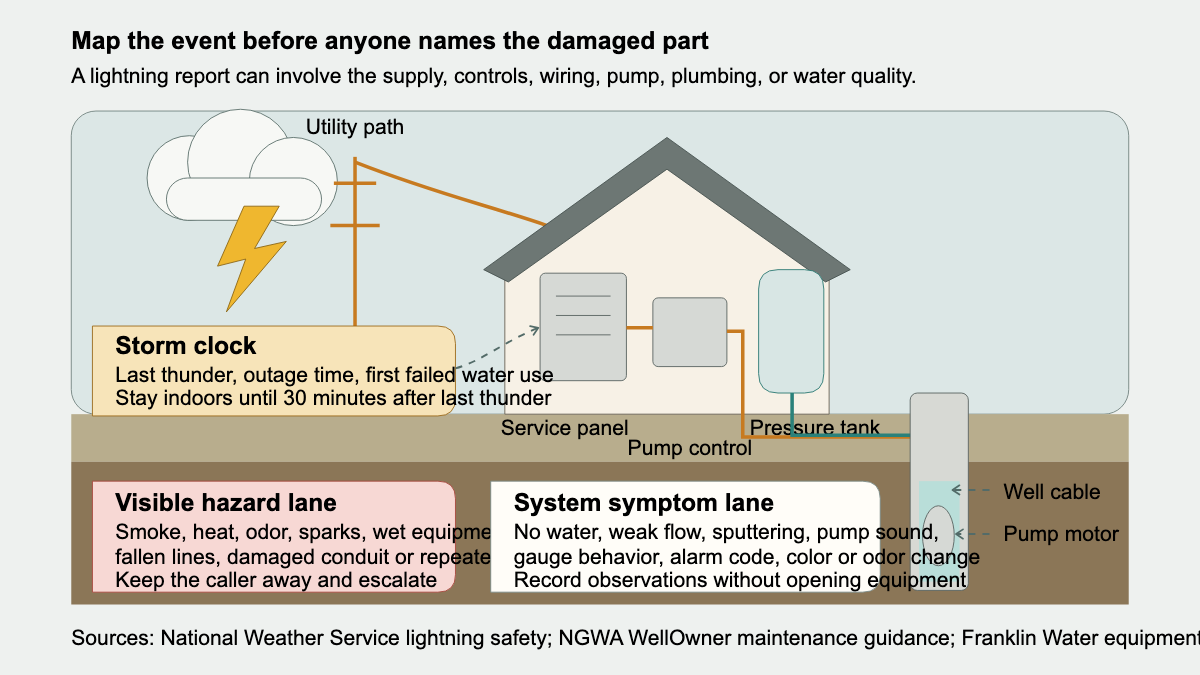
Franklin Electric’s submersible motor support page lists separate motor, control-box, lightning-arrestor, installation, and troubleshooting material. An unknown property may use different equipment. The practical intake lesson is that storm timing cannot identify which connected part, if any, failed.
Ask for information already available: pump invoice, well log, motor or control model, installation date, prior service notes, and photos taken before the storm. WellOwner recommends keeping records for the well, pump, controls, and pressure tank because they help troubleshooting. Those records can also show whether a device seen today was already installed and what a normal setup looked like.
Coordinate the right service lane
A well contractor evaluates the well, pump, pressure equipment, and related controls within the company’s scope. A licensed electrician may need to evaluate service power, grounding, panels, transfer equipment, or wiring. The utility owns its side of the service. Water-quality questions may belong with the local health department and a certified laboratory.
Insurance is separate. The office can document the caller’s report, technician findings, photographs, model and serial numbers, and replaced parts. It should not promise that a carrier will classify the loss as lightning damage or cover the repair. Ask whether the caller has opened a claim and whether the adjuster requested that failed parts be retained. Follow company policy before discarding anything.
For an ordinary loss of water during an outage, use the well-pump power-outage recovery guide. The lightning intake belongs when a strike or thunderstorm is part of the reported event and the office must preserve storm evidence across several possible systems.
Write the handoff as a sequence
A clean work order might read:
“Caller reports last normal water use at the kitchen sink near 7:40 p.m. Thunder began about 7:50. Whole-house power went out at 8:05 and returned at 9:18. Caller waited until after the storm, then tried the kitchen faucet at 10:10. No water came from hot or cold. Pump breaker was found tripped and was reset once before this call; it tripped again immediately. No further reset was attempted. Caller reports no smoke, sparks, heat, burning odor, standing water, fallen line, or visible conduit damage. Closed control box shows no visible light. Pressure gauge reportedly reads zero. Tank and control are in a dry basement; wellhead is beside the east driveway. Pump invoice from 2019 is available.”
That note gives the technician a clock, the caller’s prior action, present water condition, hazard screen, equipment locations, and a record to review. It leaves the cause open.
An AI receptionist can capture the same fields after hours if the workflow stops for active thunder and hazards, avoids repair coaching, and routes uncertainty according to the contractor’s policy. The most useful sentence remains the simplest one: “Tell me what happened first.”