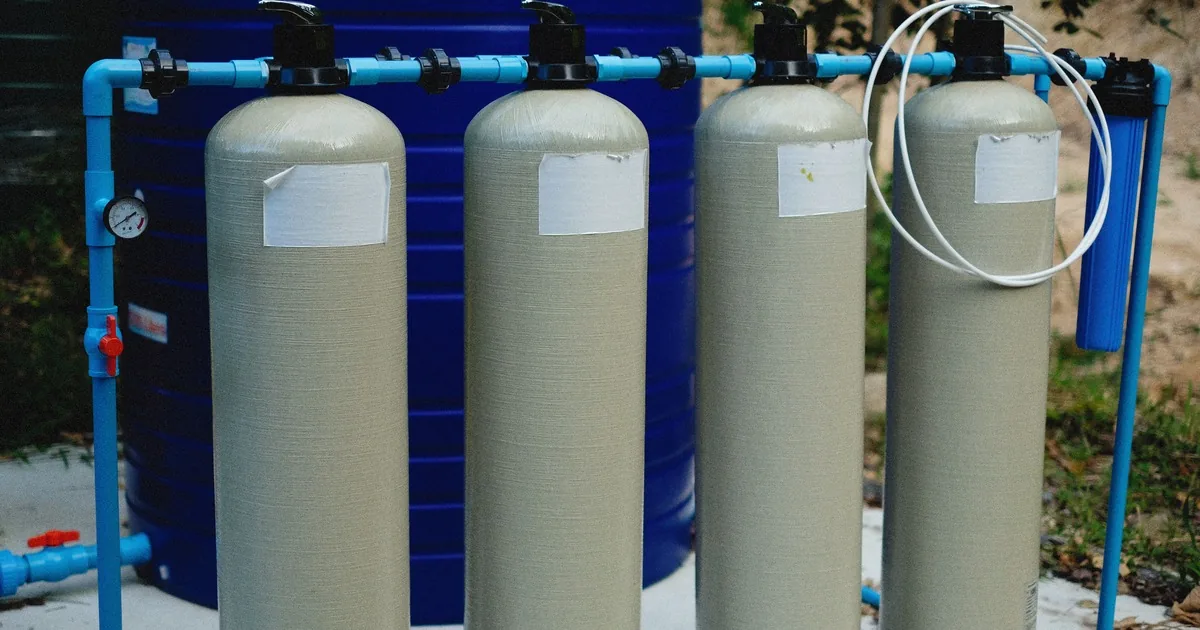
A caller says, “I need the well filter changed.” That could mean a sediment cartridge under a clear housing, an iron-treatment tank that has stopped cycling, a neutralizer that needs media, a softener using too much salt, or a drinking-water unit under the kitchen sink. Booking every version as a simple filter change creates the wrong service window before the truck leaves the shop.
Start with three facts: what equipment is installed, what changed, and where the caller notices it. Then capture the last service, any labels or alarm codes, recent plumbing or well work, access, and active leaks. The office should document observations and assign the next step. Equipment diagnosis and water-safety decisions belong with the technician, test results, and qualified local guidance.
Map the equipment in the order water reaches it
Ask for one wide photograph that shows the connected pipe run. Close-ups of labels help later, but a label alone does not show whether a housing sits before or after the main treatment vessel. The order matters when a caller reports low flow, sediment, odor, staining, or an alarm.
A useful equipment map begins where water enters the building. It may pass through a pressure tank, a sediment prefilter, one or more treatment vessels, a polishing cartridge, and then the household plumbing. Some properties have a separate point-of-use unit at one sink. Others have equipment in two rooms. Record what is visible without forcing the caller to name unfamiliar parts.
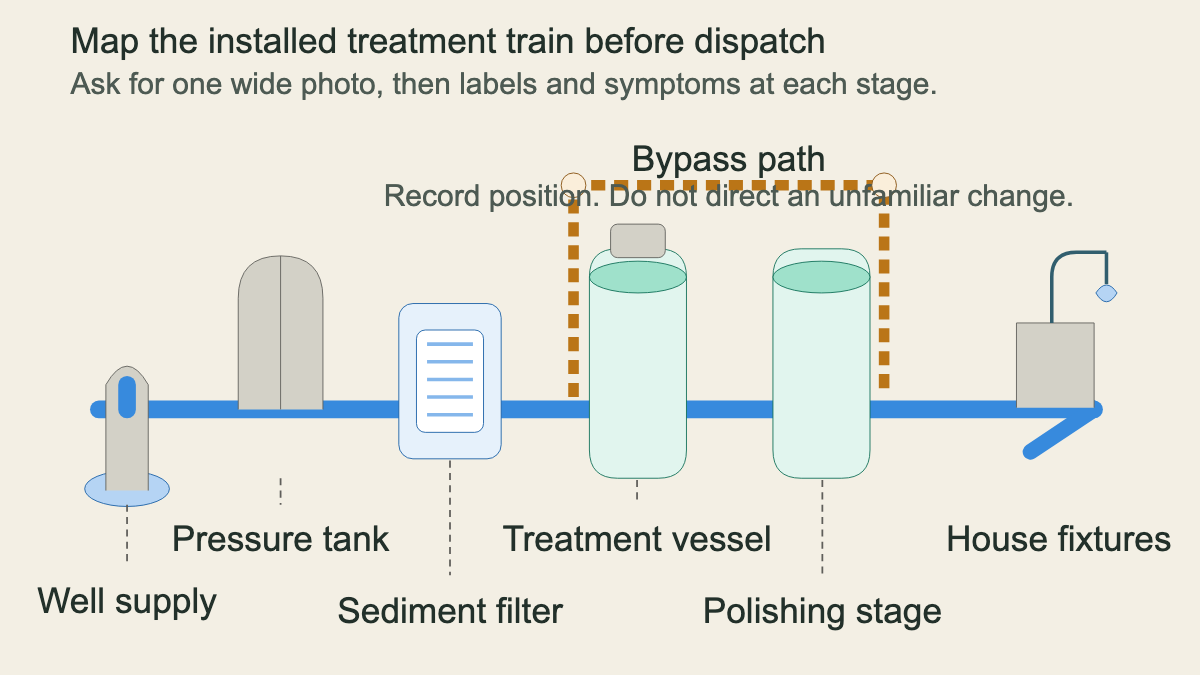
For each housing or vessel, ask for the brand, model, readable service sticker, and any display message. Note whether the caller sees standing water, corrosion, a cracked housing, loose tubing, unusual sound, or a valve handle in an unfamiliar position. Do not direct someone to open a housing, remove a cover, touch wiring, or move a bypass they do not understand.
The physical map keeps the intake honest. “Two blue tanks and a clear filter” is a useful start when it is paired with a photo and pipe order. The technician can identify the equipment from there.
Ask what changed before discussing the maintenance interval
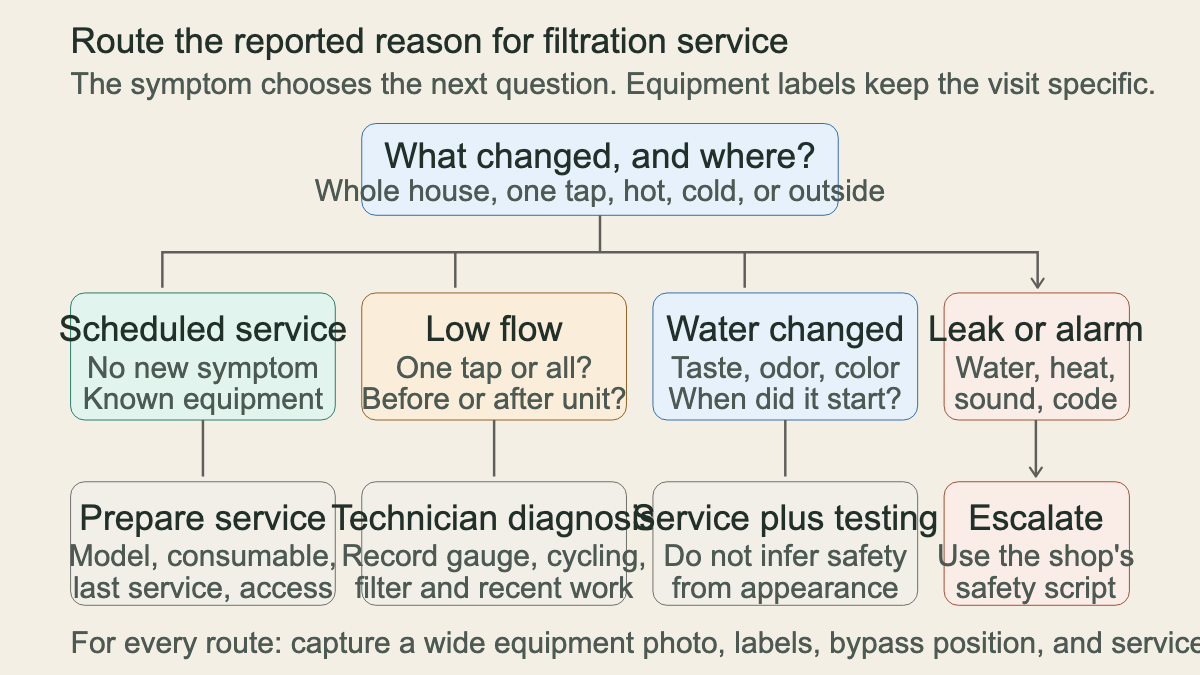
The strongest first question is plain: “What made you call today?” A scheduled annual service has a different scope from a sudden pressure loss or a new rotten-egg odor. Let the caller describe the trigger in their own words, then locate it.
Ask whether the change affects every fixture, one room, one faucet, only hot water, only cold water, or water used outside. If flow is weak, ask whether it starts strong and fades, stays weak, or drops when a second fixture opens. The existing guide to low-pressure well service calls gives a fuller location-and-demand intake for that symptom.
When the complaint is taste, odor, color, or staining, record the caller's exact description and timing. Ask whether it appears at the first draw, after water runs, at hot taps, at cold taps, or throughout the house. The CDC warns that taste, smell, and appearance do not reliably show whether water is safe. Some harmful germs and chemicals produce no obvious sensory change, while some nuisance conditions create strong odors or stains.
Keep the promise narrow: the company can inspect the equipment and discuss appropriate testing. Reception should not identify a contaminant from a phone description or say that a cartridge change will make the water safe.
Identify the treatment job the equipment was meant to do
A filter is useful only in relation to its target. The CDC's home water filter guidance explains that filter performance depends on factors such as pore size, the substance being removed, and how that substance interacts with the filter. Penn State Extension's water treatment equipment guide likewise maps different treatment methods to different water-quality problems.
Ask what the system was installed to address. The caller may have an old laboratory report, installation proposal, service invoice, or equipment manual. Attach those records to the job. If the homeowner has no paperwork, do not fill the gap with a guess based on tank color or shape.
This distinction changes preparation. A sediment cartridge, ultraviolet unit, reverse-osmosis membrane, oxidizing filter, neutralizer, and softener have different parts and service procedures. Even two units that look similar may use different media and controls. Model photographs are more valuable than a receptionist's improvised label.
Capture the service history without inventing a universal schedule
Ask when the system was last serviced and what was done. “Serviced last spring” may mean a cartridge was replaced, salt was delivered, a lamp was changed, a tank was regenerated, media was added, or the entire system was bypassed during plumbing work. Write the action, not the shorthand.
A practical service-history note includes:
- Installation date if known, plus installer or prior service company
- Brand, model, serial number, control-head label, and consumable label
- Last service date and the part, cartridge, lamp, media, or test involved
- Current alarm, display message, timer behavior, salt level, or visible gauge reading
- Recent filter change, plumbing repair, power outage, well work, flooding, or long vacancy
- Current bypass position as observed, without coaching the caller to move it
- Photographs of the full pipe run, labels, visible leak area, and any displayed code
Avoid quoting one replacement interval for every system. New Jersey's private-well treatment guidance directs owners to the manufacturer's filter-change instructions. Penn State also notes that maintenance varies with the treatment process. Water quality, usage, pretreatment, equipment design, and the manufacturer's requirements all affect the service plan.
Separate routine service from testing and urgent faults
The call should leave the office with a route, not a remote diagnosis. Scheduled maintenance can be prepared around known equipment and consumables. Low flow or pressure needs a diagnostic visit with the treatment train and recent changes attached. A new water-quality complaint may need equipment service and testing. An active leak, hot component, burning odor, sparking, or damaged electrical connection belongs in the company's urgent safety procedure.
The EPA recommends testing private well water annually for several basic indicators and testing after well-system repairs or a change in odor, color, or taste. Local health departments and state private-well programs can advise which additional substances matter at a particular address. For a home-purchase scenario, use the more specific private-well testing call guide. For an odor complaint, the well-water odor intake guide helps preserve timing and location.
Changing a filter can also expose a person to material caught by that filter. CDC gives a specific caution for people with weakened immune systems, who should avoid changing filters themselves. The office does not need to assess anyone's medical condition. It can avoid casual do-it-yourself instructions and route health questions to appropriate professionals.
Build a dispatch note a technician can use
A strong note reads like a map and timeline. For example: “Whole-house equipment is in the basement. Water enters the pressure tank, then a clear sediment housing, then one labeled treatment vessel. The kitchen and upstairs cold taps slowed over four days; the outdoor spigot appears unchanged. No odor or color change is reported. The sediment cartridge was last changed in March. A plumber replaced a shutoff last week. Photos of the pipe run, cartridge label, and valve positions are attached. No active leak or electrical warning sign is visible.”
That note gives the field technician a place to start. “Needs filter” does not.
Before ending the call, confirm the service address, callback number, access instructions, equipment location, pets or locked areas, and who can approve work. State whether the next step is scheduled maintenance, a diagnostic visit, a technician callback, or testing guidance. Give an arrival or callback window only after the responsible person accepts it.
An AI receptionist can gather the same equipment, symptom, and history fields after hours, then route the call according to the contractor's rules. The useful boundary stays the same: capture what the caller sees, keep photographs and records with the job, and leave treatment decisions to the people who can inspect and test the system.