A caller says, “The slider is shot. How much is a new one?” The door may need two rollers and a latch adjustment. Or the rollers may be the least important problem because the frame is distorted, water has reached the floor, and the insulated glass is cloudy.
The office cannot settle that question from one sentence. It can book the right appointment by locating the symptom: moving panel, rollers, track, latch, weatherstrip, glass, frame, sill, drainage path, or the opening around the door. A localized movement or hardware complaint can begin as a repair assessment. Broken glass, a panel that may leave the track, a door that will not secure, frame damage, repeated water entry, or several failures call for a broader review.
Ask whether the door is safe to use right now
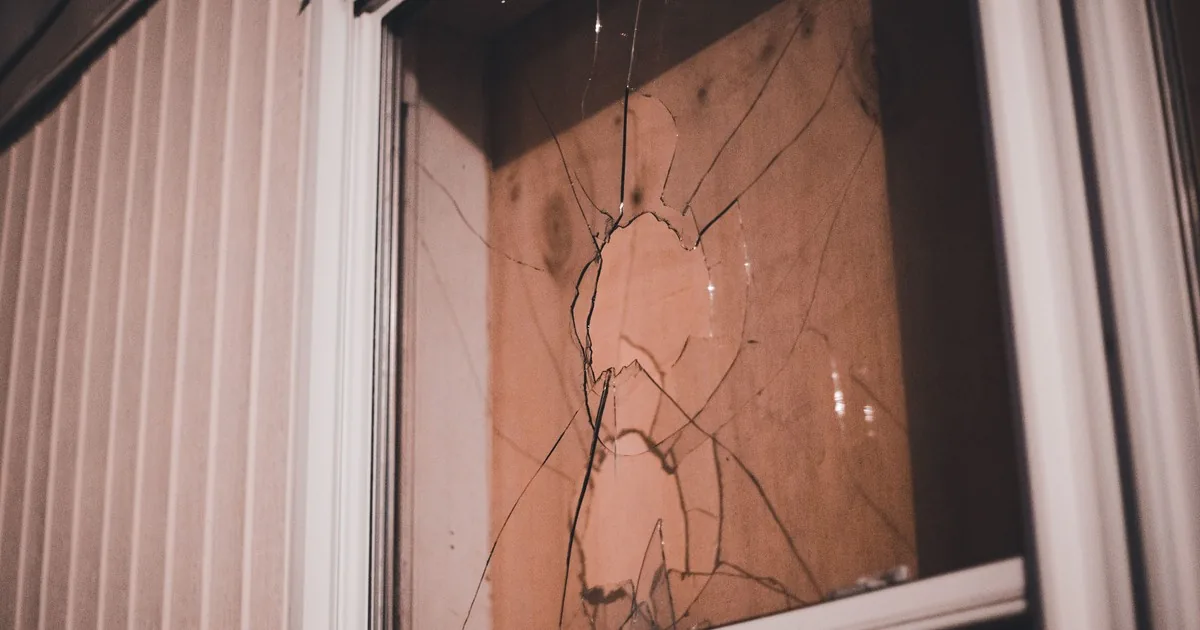
Start with the condition that could hurt someone or leave the property unsecured. Ask whether the glass is cracked, loose, or missing. Find out whether the moving panel remains upright in both tracks. Does it close far enough to latch? Has anyone seen the panel jump, tip, or scrape metal hard enough to shed pieces?
If glass is broken or the panel appears unstable, tell the caller to keep people and pets away from it. Do not coach them through lifting a heavy glass panel or removing stops. Record whether the opening is exposed to a deck, patio, pool area, public walkway, or ground-floor room. That context helps the company set urgency.
A patio slider that will not lock deserves the same direct treatment. Ask whether the door can close fully, whether the latch reaches its keeper, and whether the customer has another way to secure the home. Office staff should avoid improvised security instructions that the company has not approved.
Patio-type sliding glass doors fall within the federal architectural glazing safety standard described by the U.S. Consumer Product Safety Commission. The practical intake lesson is simple: a caller's phrase “regular glass” does not identify the installed product or an acceptable replacement. Photograph markings in the glass corner if they are visible, then leave glass selection and compliance to qualified review.
Make the caller describe the movement
“Hard to open” is a useful starting point. It is not enough for dispatch.
Ask the caller to describe one complete cycle without forcing the door. Does it resist at the first inch, halfway across, or near the latch jamb? Does the panel grind, scrape, wobble, bounce, or become heavy? Is the trouble the same in both directions? Did it begin suddenly after an impact or get worse over months?
Those details separate a movement complaint from a lock complaint. They also help the technician arrive with a better picture of the job. The Fenestration and Glazing Industry Alliance treats roller assemblies as distinct sliding-door components, including assemblies with height-adjustment features. That supports a repair assessment when the reported problem is concentrated at the rollers or panel alignment. It does not prove that a roller swap will solve the installed door.
Ask whether anyone has already adjusted screws, lubricated the track, removed the panel, or replaced hardware. Record what was done and when. A door that moved better for a week after adjustment tells a different story than one that became immovable after a wheel broke.
Record each part separately
A sliding patio door is a system, but the intake note should name its parts. This prevents “stuck slider” from becoming the entire work order.
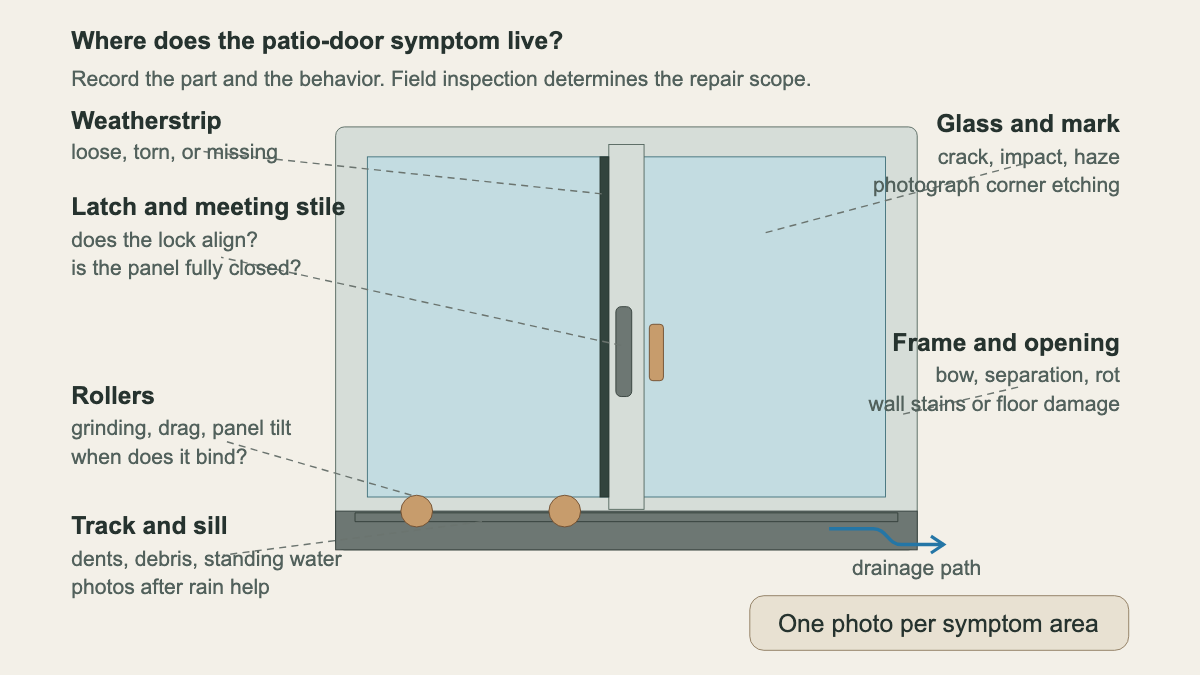
For the track and sill, ask about dents, corrosion, dark wear lines, loose pieces, and debris that returns after cleaning. Find out whether the customer sees standing water and whether it appears only during wind-driven rain. Some products use weep openings to move incidental track water outside. FGIA advises keeping those openings and their covers clear. The presence of track water alone does not identify the cause, so the office should capture photos and weather conditions rather than label it a failed frame.
For the lock and handle, ask whether the panel closes fully before the latch is operated. Does the handle feel loose? Does the latch move but miss the keeper? Has the keeper shifted or pulled away? A caller who says “the lock broke” may have a latch problem, a panel-alignment problem, or both.
For weatherstrip, ask where the draft, light gap, whistle, or loose strip appears. Note whether it is at the meeting stiles, the closing jamb, the top, or the sill. Weatherstrip is one of several component categories FGIA identifies within fenestration performance. The field technician still needs to match the profile and inspect the surfaces that hold it.
Expand the scope when the opening tells a larger story
A complete-door consultation makes more sense when the complaint extends beyond one serviceable part. Ask whether the frame looks bowed, separated at a corner, pulled from the wall, or soft from decay. Record stains on trim, swollen flooring, recurring wet drywall, and sealant gaps. Note whether the problem began after siding, deck, flooring, or structural work.
Glass adds another branch. A crack, impact mark, missing piece, or failed sealed unit needs a glass-aware review. Haze trapped between panes belongs in the same evidence record used for foggy double-pane window calls. Fresh broken glass needs the safety and access questions in the broken window glass intake guide.
Ask about the customer's goal too. Someone may call about a worn roller while already planning a larger opening, a different operating style, better accessibility, or a complete performance upgrade. ENERGY STAR treats a sliding patio door as a complete door product and ties rated performance to glazing level and NFRC-certified values. That is a replacement-consultation topic, separate from repairing one wheel or handle. Do not promise energy savings from a new unit during intake.
Several failures at once also justify broader evaluation. A panel that drags, will not lock, has cloudy glass, and sits in a deteriorated frame should not be booked as a simple roller call merely because the caller mentioned the rollers first.
Collect the evidence before the appointment
A useful photo set begins with one wide image of the complete door from inside. Add a second wide image from outside when access is safe, then close-ups of each symptom area. Ask for the track, bottom corners of the moving panel, latch and keeper, meeting stiles, glass markings, frame corners, sill, and any water staining.
Collect these details in the same record:
- Number of panels, which panel moves, and which direction it opens
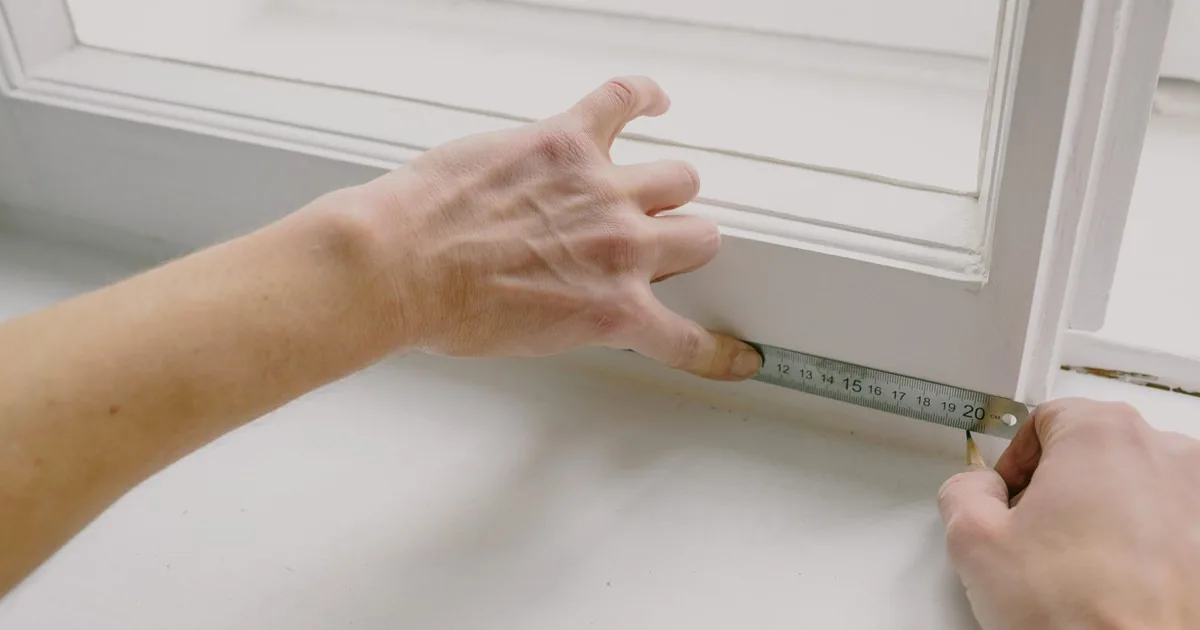
- Rough width and height of the complete frame, clearly labeled as caller measurements
- Frame material and color, if known
- Manufacturer name, label, etching, receipt, or prior work order
- Approximate installation age and when the symptom began
- Ground-floor or upper-level location, stairs, gates, furniture, and parking access
- Photos of prior repairs, impact points, water marks, and affected flooring or trim
FGIA says product labels may appear on an inside frame edge and can contain manufacturer codes. Ask the customer to photograph the label in place. Do not tell them to peel it off. The label may be useful for product identification, certification history, replacement parts, or warranty research, while final availability still depends on the manufacturer and exact product.
If the caller rents, manages a property, or belongs to an association, identify who can approve work and who will provide access. Record occupants, pets, alarm contacts, gate instructions, and any limited work hours. A perfect technical note still fails if the technician cannot reach the door.
Route the appointment without promising the answer
The close should tell the customer what kind of review is being booked and what remains open. “We are scheduling a repair assessment for a dragging panel and latch alignment” is precise. “We are scheduling a complete-door evaluation because the frame, water history, and glass also need review” is equally clear.
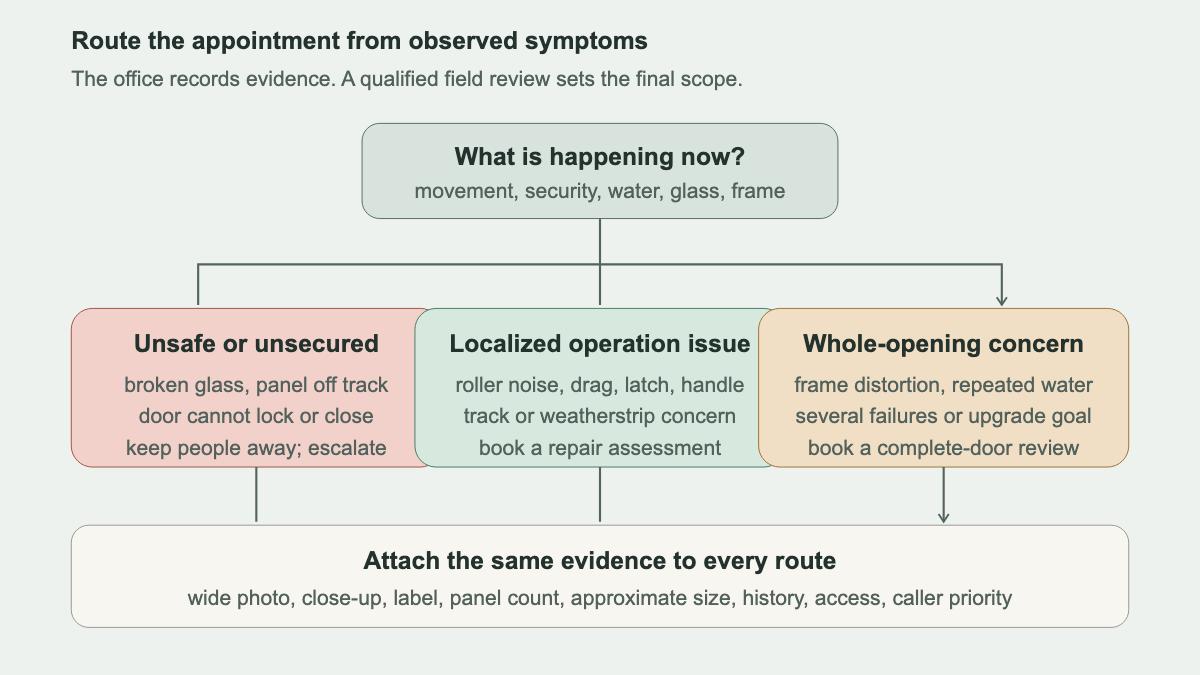
Keep the final decision with the field reviewer. The office should not guarantee that parts exist, that the panel can be removed without added work, that glass can be replaced independently, or that the existing frame can support the proposed repair. It should explain any assessment fee under the company's written policy and say when the customer will receive options.
An AI receptionist can collect the same component fields after hours and flag broken glass, an unstable panel, or a door that will not secure. The useful output is still the work order: one wide photo, close-ups by symptom area, label details, movement description, water history, access notes, and the right appointment type.
Sources
- FGIA frequently asked questions
- ENERGY STAR criteria for windows, doors, and skylights
- CPSC architectural glazing safety standard update
- FGIA AAMA 906-21 sliding-door roller assembly specification