A homeowner calls after getting two quotes. One contractor proposed insert windows. The other recommended full-frame replacement. The caller wants your office to settle the argument before booking a visit.
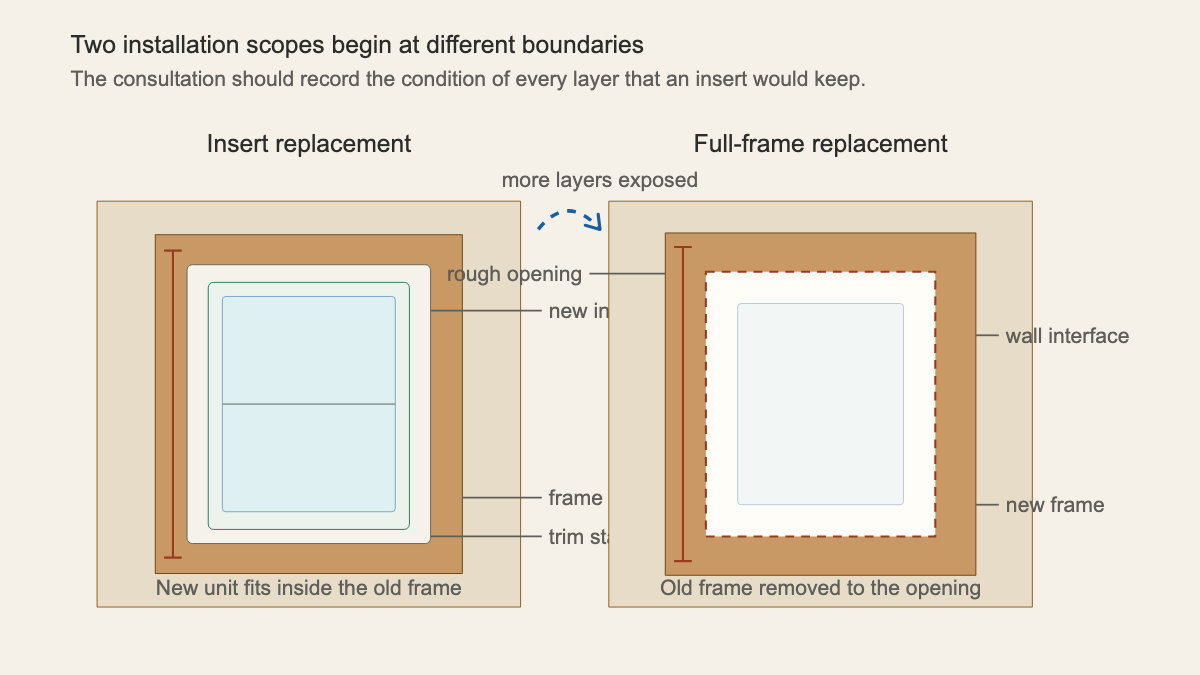
Give the physical distinction first. An insert, sometimes called a pocket replacement, fits a new window inside the existing frame. Full-frame replacement removes the existing window and frame to reach the rough opening. The right method depends on conditions that cannot be confirmed from a phone description alone, especially the old frame, sill, wall interface, water history, dimensions, and product requirements.
The office can still make the consultation far more useful. Record what the homeowner wants to change, what must stay, and what is happening at each opening. Ask for photos with enough context. Then book the field assessment under the company's own replacement process.
Explain what stays before comparing benefits
Callers often use “window” to mean the glass, the moving sash, the frame, the trim, or the entire assembly in the wall. Ask which part they expect to remain. That simple question prevents a long conversation in which everyone is discussing a different scope.
The NFRC Consumer Guide's insert replacement guidance describes the boundary clearly. Insert replacement leaves the original frame in place and installs the new unit within it. Full-frame replacement removes the existing frame and places the new window in the rough opening.
That boundary affects more than demolition. The old frame remains part of an insert installation. Interior and exterior finishes may be preserved, but the new unit occupies space inside the old frame and may reduce the glass area. Full-frame work exposes more of the opening and its connection to the wall. It may also affect trim, siding, stucco, flashing, insulation, or interior finishes. The actual effects depend on the house and installation system.
Avoid turning those differences into a blanket claim that one method is better. A sound retained frame and a homeowner who wants to preserve finished trim present one set of facts. A deteriorated sill, a badly distorted frame, or a planned change in opening size presents another. The field professional needs to see the assembly and match it to a product and approved installation detail.
Test whether the existing frame belongs in the conversation
An insert proposal depends on the frame left behind. NFRC identifies a sill and frame in good condition, a structurally sound installation, and an opening suitable for a square fit as important conditions. Reception should collect evidence about those points without announcing that the opening passes.
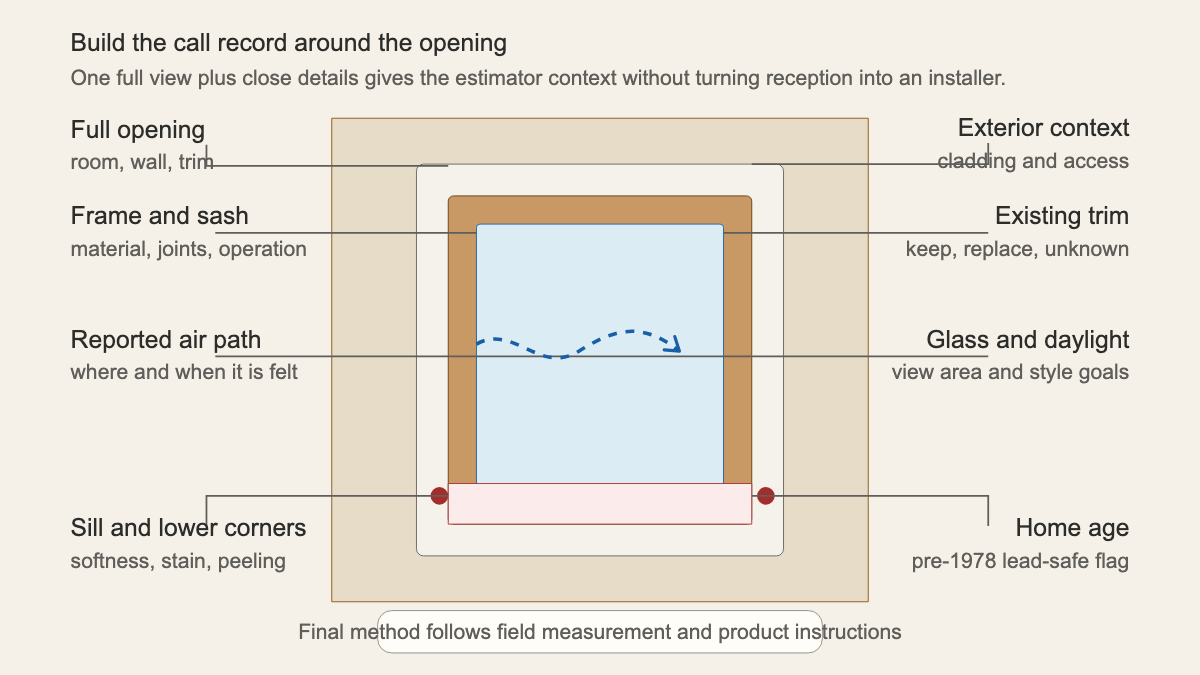
Start with operation. Ask whether the sash opens, closes, latches, and locks normally. Record rubbing, binding, a corner that will not close, a lock that needs pressure to engage, or a visible uneven gap. Use the caller's words. “Lower sash rubs at the right corner” is useful. “Frame is out of square” is a conclusion for the person measuring it.
Then ask about material condition. Does the caller see peeling paint, soft wood, open joints, cracking, swelling, corrosion, loose trim, or repairs at the sill and lower corners? Has anyone patched the frame before? A close photo should include the damaged area and enough surrounding frame to locate it.
Water deserves its own entry. Record staining, damp trim, swollen material, damaged drywall, a musty odor, or water that appears after wind-driven rain. Ask when it was last seen and on which side of the opening. Do not promise that a full-frame window will solve the water path. Roof, cladding, flashing, drainage, wall, and condensation conditions can show up near the same opening.
If the complaint is only a small air leak at an operable joint, route it through the company's repair policy before assuming the caller needs replacement. The separate guide to weatherstripping and draft repair calls covers that service intent. If the problem is haze sealed between panes, use the foggy double-pane window intake to separate glass-unit assessment from complete-window evaluation.
Record what the homeowner wants to preserve or change
A method discussion can sound technical while the real decision is architectural. The homeowner may care most about keeping original interior casing, avoiding disturbance to a tiled backsplash, increasing visible glass, changing a double-hung window to a casement, matching exterior trim, or enlarging an opening. Those goals belong near the top of the call record.
Ask these questions in plain language:
- Are you replacing the same window style and approximate size, or do you want a different operation, shape, or opening size?
- Do you want the interior casing and exterior trim to remain? Is any trim historic, custom, tiled around, or recently finished?
- Is maximizing visible glass important? Are grids, divided-light patterns, colors, or sightlines supposed to match nearby windows?
- Is this one opening, a room, one elevation, or the whole house? Do all affected windows have the same age and construction?
- Do you have product labels, past invoices, warranty records, architectural approvals, or association requirements?
Do not quote a final glass dimension from the homeowner's tape measurement. Approximate width and height can help prepare the visit, but ordering measurements and opening conditions need the company's approved field process. The same applies to product availability, lead time, and compatibility with existing trim.
A photo set should include one straight-on view of the entire opening, one view of the surrounding interior wall and trim, close details of each concern, and an exterior view when it can be taken safely from the ground. Ask the caller to leave covers, stops, caulk, and trim in place. Removing material before the visit can hide evidence and create damage.
Add the wall and access conditions
A replacement window meets the wall's water and air control layers. NFRC's replacement-window installation guidance says installation must provide an airtight fit and maintain a continuous water barrier. It also distinguishes drainage-membrane walls, where water behind the cladding must drain out, from surface-barrier construction. Those details are installer territory, but the office can identify what the estimator needs to inspect.
Record the exterior finish around the window: siding, brick veneer, masonry, stucco, panel cladding, wood trim, or unknown. Ask whether the owner sees prior sealant work, patched cladding, exposed gaps, or staining. Never tell the caller which flashing or sealant detail will be used. Product instructions and the actual wall assembly control that answer.
Access can change the appointment plan. Note the floor, interior furniture, blinds, security sensors, pets, locked gates, steep grade, porch roofs, shrubs, balconies, and parking restrictions. For a rental or managed building, identify who authorizes work and who can provide entry. The estimator should not arrive at a third-floor opening and discover that exterior access crosses a neighboring property.
Ask when the home was built. EPA's Renovation, Repair and Painting guidance warns that window replacement in a pre-1978 home can disturb lead-based paint and create hazardous dust. The office should flag the construction year and follow the company's lead-safe process. Reception should not decide whether paint contains lead or coach the homeowner through disturbing it.
Book the assessment without promising the method
A clean consultation record lets the field team see why the homeowner called and where uncertainty remains. It should contain the property address and contact, number and location of openings, window type and material if known, approximate age, operation problems, visible deterioration, water or draft history, finish preferences, design changes, access limits, home construction year, and available photos or records.
Name the appointment honestly. “Replacement window consultation” or “field measure and scope review” is safer than “insert estimate” when the retained frame has not been assessed. If the company offers separate repair, glass, and replacement visits, route according to its written rules. Keep the final method open.
A receptionist or AI voice agent can capture the same fields after hours, but the boundary should stay firm: collect observations, preserve the caller's priorities, and schedule the qualified review. The installer chooses the method after seeing the opening.
When the estimator arrives, the useful note is specific: “Six wood double-hung windows on the north elevation; lower sills show peeling paint; two sashes bind; owner wants to keep interior casing; home reported as built in 1964; exterior is brick veneer; ground access is clear.” That record gives the visit a real starting point without pretending the phone call already answered the question.