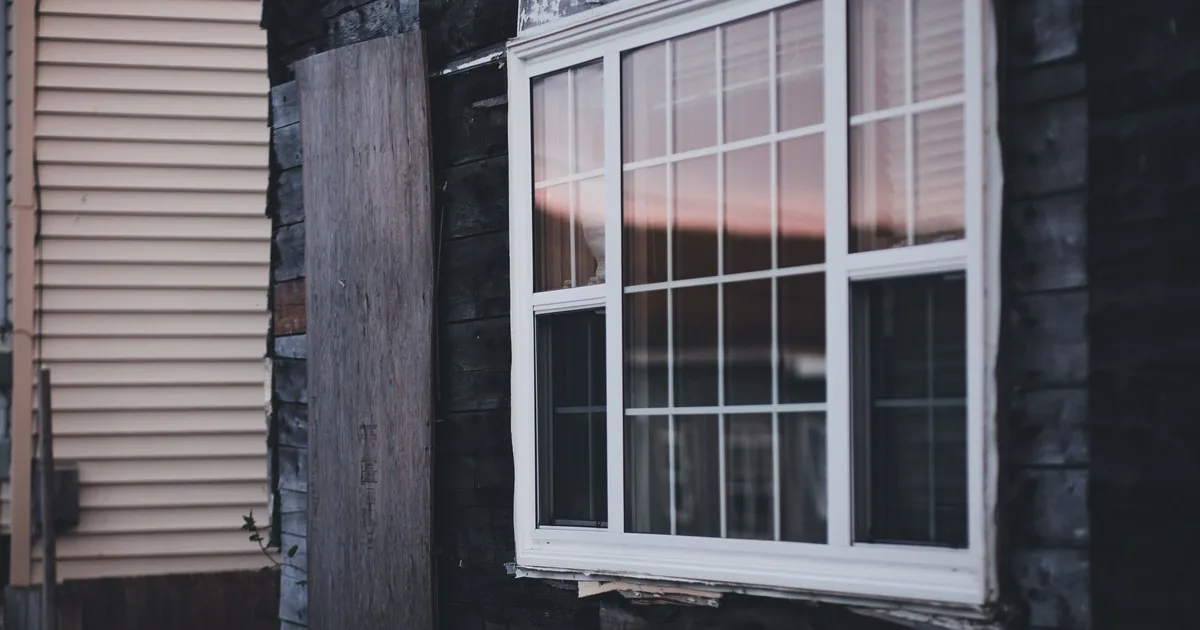
A homeowner calls and says, “I want storm windows before winter.” That can mean an exterior panel over old wood windows, a removable interior insert, an impact-rated replacement window, or a repair after severe weather. Those are different projects.
Start by confirming that the caller wants an added window layer over an existing primary window. Then record the condition and operation of each opening, where the panel might mount, how the sill drains, what access the installer has, and whether appearance or historic review matters. The consultation can select the product and verify measurements. Reception should prepare that visit, not make the product decision by phone.
A storm window works with the existing opening. It cannot correct a rotted frame, broken sash, failed flashing, or window that will not close. That boundary is the most important part of the call.
Confirm which window project the caller means
Ask the caller to describe the product they have in mind without correcting them too quickly. “Does the existing window stay in place, with another panel added inside or outside?” usually separates a storm-window retrofit from full replacement.
If the caller means hurricane or impact protection, route the request through the company’s impact-product process. An ordinary low-emissivity storm window is an attachment for comfort and energy performance. It is not automatically an impact-rated assembly. If the call began with broken glass, active water entry, or a window that will not secure, use the repair or urgent-service workflow first.
Capture the reason for the project in the caller’s words. A cold sitting area, traffic noise, condensation, preservation of original wood windows, and a seasonal screen problem can lead to different conversations. Avoid converting that goal into a promise. “The bedroom feels cold beside the north window” is useful evidence. “This will cut your bill by a specific amount” is not an intake conclusion.
Ask how many openings are involved and whether the homeowner wants the whole house, one elevation, or a few rooms evaluated. Label the openings by room and wall: front bedroom, second floor, left window when viewed from outside. A count without locations becomes unreliable as soon as the house has two similar windows.
Start with the primary window
ENERGY STAR’s storm-window guidance says these products work best over functioning primary windows in good condition. The office can collect visible condition evidence before the appointment, though the field evaluator still decides whether repair is needed.
Ask whether each primary window opens, closes, locks, and stays in position. Record cracked panes, loose glazing, missing hardware, torn weatherstripping, soft wood, peeling paint, frame movement, and water stains. A homeowner who says, “The lower sash needs a push to lock” has given the estimator more useful information than “The window is old.”
Request one interior and one exterior photo of each window type, plus close views of damage. Photos should be taken from the floor or ground. Never ask a caller to climb a ladder, lean outside, remove trim, or probe soft wood.
Age and material help with planning. Ask whether the primary frames are wood, metal, vinyl, or another material, if known. Metal-to-metal contact may require a thermal break in the selected assembly, according to Pacific Northwest National Laboratory’s low-e storm-window guide. The call record should flag the frame material. The installer decides the detail.
If deterioration is already visible, route that condition before treating the call as a straightforward installation. The full-frame versus insert consultation guide covers the broader opening questions when the retained frame may no longer be suitable.
Choose an interior or exterior evaluation path
Interior and exterior storm windows create an added air space, but they affect access, appearance, moisture control, and operation in different ways. Ask which side the homeowner expects and why. Treat the answer as a preference.
For an exterior request, note the casing and sill material, story, grade, landscaping, shutters, security bars, awnings, and nearby rooflines. Ask whether existing screens or old storm panels must be removed. Upper-story work may change access planning even when the units themselves are simple.
For an interior request, record blinds, curtains, deep trim, furniture, radiators, counters, window sensors, pets, and rooms with limited access. Ask where removable panels would be stored and how the homeowner expects to open the primary window for ventilation or cleaning. A magnetic insert, fixed panel, and operable storm unit do not create the same routine for the occupant.
Historic homes need a separate note. The National Park Service advises that storm-window divisions should align with important parts of the primary window and that color and attachment affect visual compatibility. Ask whether the property is locally designated, in a historic district, subject to association rules, or part of a tax-credit project. Reception records the status and documents. It does not promise approval. The historic-home window consultation guide gives that conversation more room.
Protect drainage and operation
An exterior storm window has two competing jobs. It needs a controlled perimeter, and it needs a way for water between the layers to leave. PNNL instructs installers to seal the head and jambs while leaving the sill drainage path and weep openings clear. ENERGY STAR excludes exterior storm windows that lack drainage features.
That makes existing sill condition a consultation issue. Ask about cracks, rot, flat or reversed slopes, old caulk across the bottom, and stains between the primary window and any current storm panel. If the caller reports fog or droplets between layers, note the season, weather, room, and frequency. Do not diagnose the cause by phone.
The interior layer matters too. PNNL recommends limiting warm, moist indoor air movement through the primary window while allowing slight exterior ventilation through the storm’s drainage openings. Reception can ask about worn weatherstripping, a sash that does not pull tight at the lock, and persistent indoor condensation. Those details help the evaluator inspect the right boundaries.
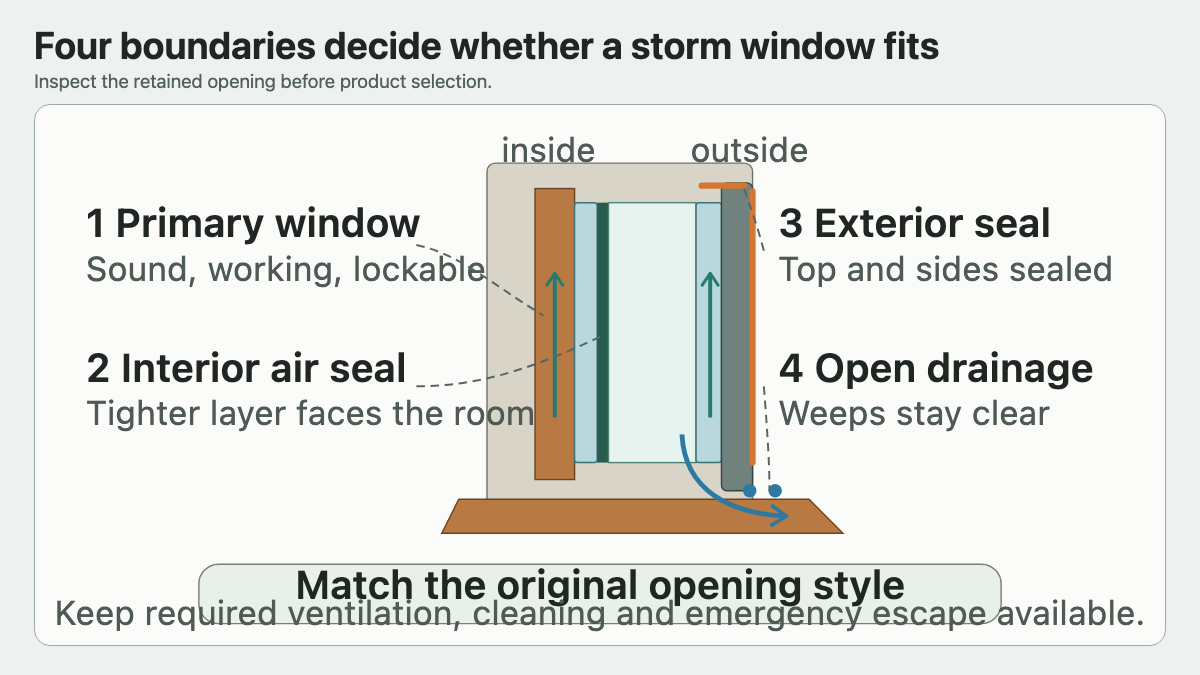
Operation deserves its own check. Ask whether the window is fixed, double-hung, single-hung, sliding, awning, or casement. If the caller does not know, photos are better than a guess. Record bedrooms and any opening the homeowner identifies as an emergency exit. The field evaluator must confirm the applicable local requirements and ensure the proposed configuration does not obstruct required escape, ventilation, or safe cleaning.
Build a useful consultation record
A strong intake packet includes:
- the project goal in the caller’s words;
- an opening count, room names, story, and exterior elevation;
- primary-window style, material, operation, lock condition, and visible damage;
- interior and exterior mounting preference, if any;
- photos of each window type and every damaged opening;
- exterior ladder, landscaping, roof, shutter, or security-bar constraints;
- interior furniture, treatment, sensor, pet, and storage constraints; and
- historic, association, occupancy, decision-maker, and timing notes.
Ask whether the home is owner-occupied, rented, vacant, or managed for someone else. Confirm who can authorize measurements, product choices, repairs, and access. For a tenant call, get the property manager’s contact rather than assuming the occupant can approve work.
Read the record back in concrete language: “You want exterior storm windows evaluated for six original wood double-hung windows on the first floor. Two north-bedroom sashes are hard to lock, one dining-room sill has peeling paint, and the front elevation may be subject to district review. You will send full interior and exterior photos, close views of the sill and locks, and the preservation paperwork before Tuesday’s visit.”
That appointment now has a clear purpose. The evaluator can inspect the retained windows, verify mounting surfaces and drainage, check operation, measure each opening, and discuss certified products suited to the location. The homeowner gets an honest next step, and the order waits until the opening has been seen.