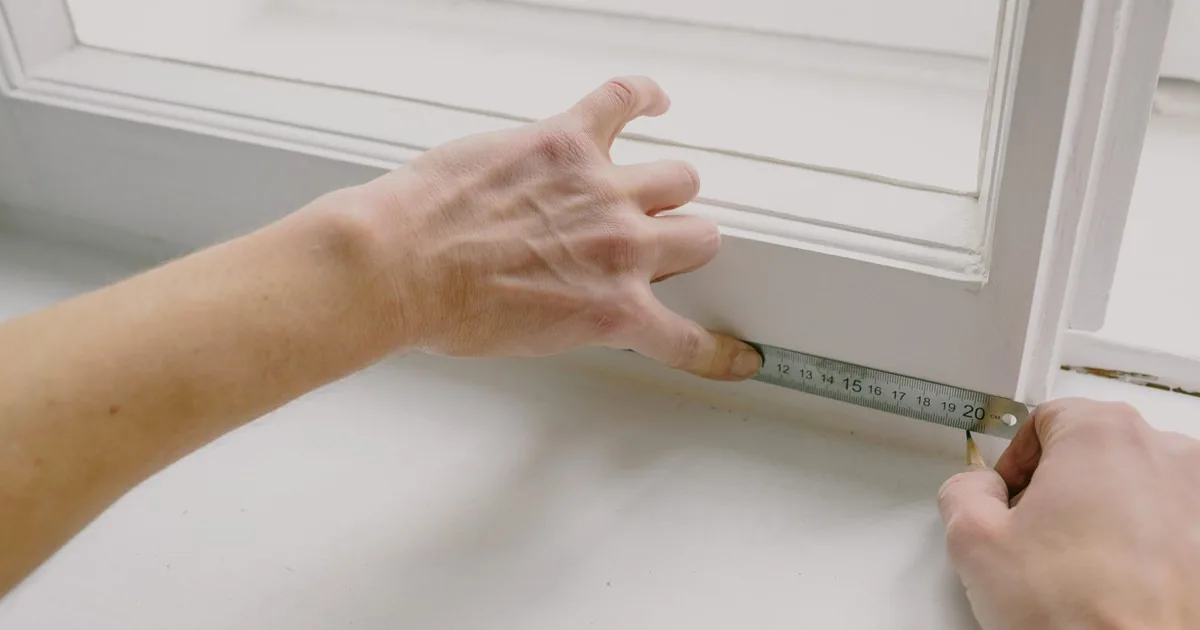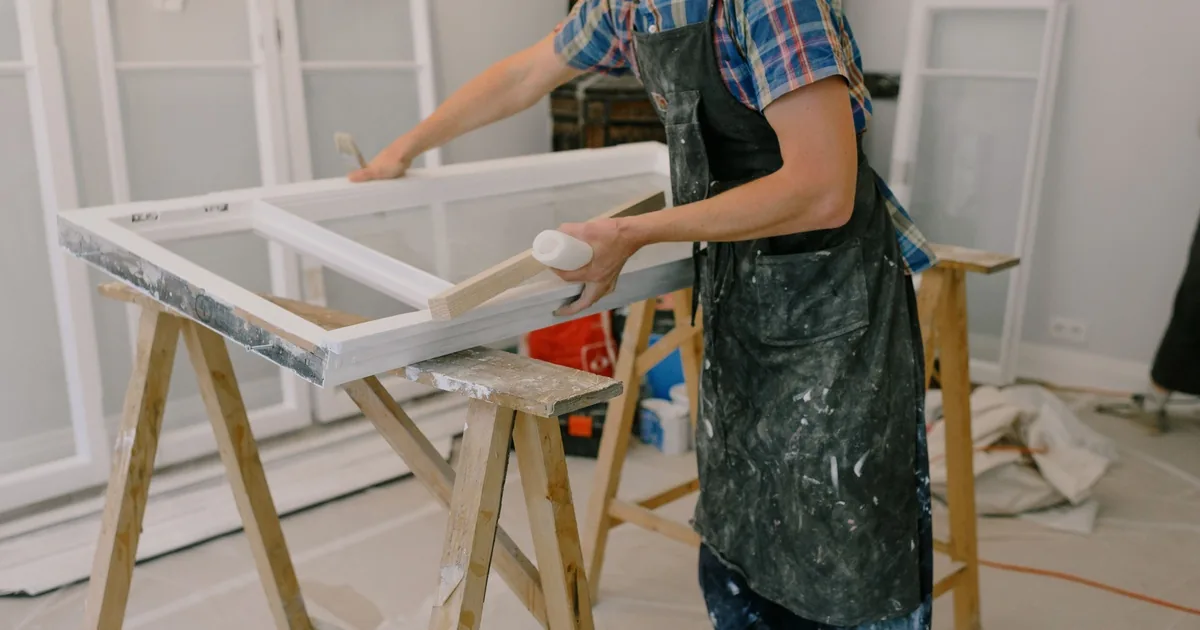
A homeowner calls about six painted wood windows in an 1890 house. The lower sashes stick, two cords are broken, and one sill has a soft corner. She wants a replacement price by Friday because a neighborhood review meeting is coming up.
That call should become a preservation-aware field consultation, not a phone verdict. First establish whether the property has a historic designation or local review requirement. Then identify each opening, record its condition and visible details, ask what the owner wants to keep, and collect available photos and records. Qualified staff can decide what is repairable, what might need replacement, and which approvals apply after they see the windows.
Historic-window intake works best when the office treats every opening as evidence. “Old windows in bad shape” tells the field team almost nothing. “Front parlor, first floor, left opening; lower sash painted shut; broken right cord; soft wood at exterior left sill corner; wavy glass; owner wants to retain interior casing” gives the visit a useful starting point.
Start with the property's status and the owner's goal
Ask for the property address and municipality early. The caller may say the house is “historic” because it is old, because it appears on a register, because it sits in a local district, or because an easement or grant affects the work. Those are different situations. Reception should record what the caller knows and avoid confirming legal status.
Local rules vary. For example, the City of Newton explains that exterior changes such as window repairs and replacements in its local historic districts require preservation review. Another jurisdiction may use different boundaries, forms, thresholds, or staff procedures. Ask whether the owner has contacted a local preservation office, received written guidance, attended a prior hearing, or submitted an application. Capture the agency name and any project number.
The owner's goal matters just as much. Are the windows drafty, hard to operate, visibly deteriorated, painted shut, missing hardware, or broken? Does the owner want safe operation, weather protection, quieter rooms, restored original material, a visual match, or a complete replacement proposal? A sale deadline or insurance request should be recorded as context, not treated as proof that replacement is required.
The National Park Service's historic-window evaluation guidance begins with repair under the Secretary of the Interior's Standards for Rehabilitation. It also recognizes that deterioration can reach a point where replacement is appropriate. The office should preserve that question for inspection. A call description cannot establish the extent of decay hidden under paint or inside a joint.
Give every opening a stable identity
A twelve-window house can produce a folder full of close-ups that nobody can place. Build a naming system before asking for photos. Use the room, floor, elevation, and a left-to-right number when needed: “dining room, first floor, south elevation, opening 2.” Put the same identifier in the call notes and photo filenames.
Ask for one straight-on image of the whole opening, one wider view showing the wall and trim, and focused images of each reported concern. Exterior photographs should be taken only from safe ground or another normal walking surface. Nobody should climb, lean out of an opening, remove stops, scrape paint, or dismantle a weight pocket for intake.
For each opening, record operation separately for the upper and lower sash. Does it move? Does it stay open? Does the lock align? Is the sash painted shut, rubbing at one corner, loose in the frame, or missing a cord? “Window does not work” hides all of those differences.
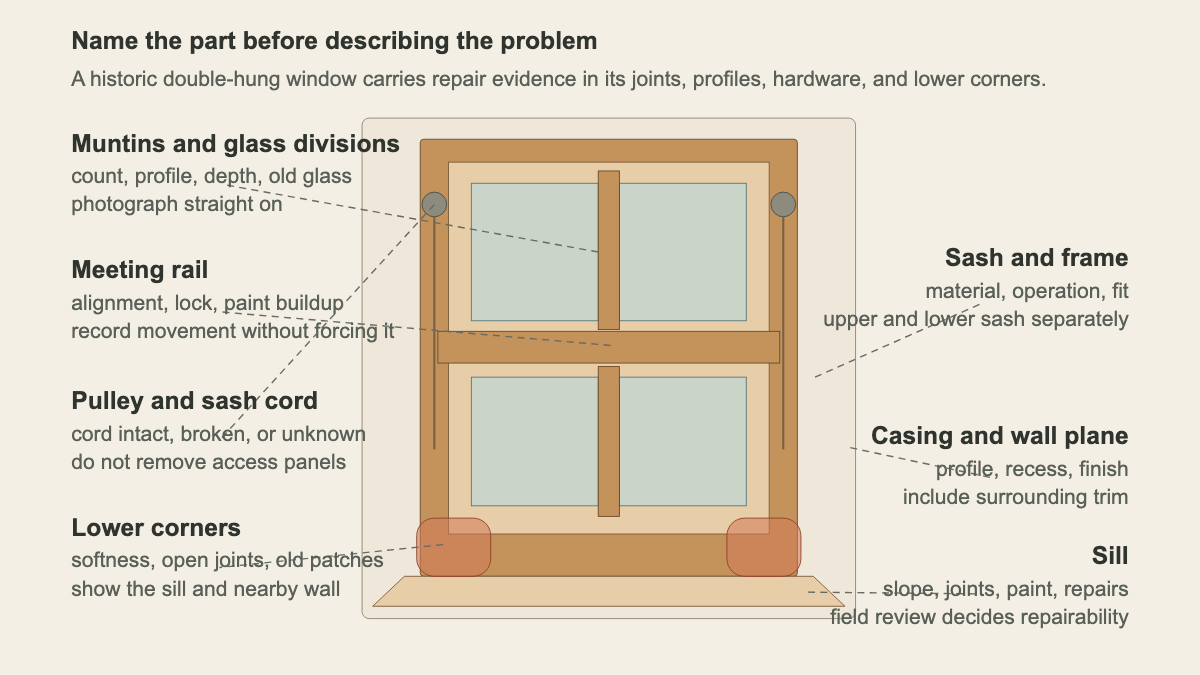
Material condition gets its own notes. Ask about peeling or alligatored paint, open joints, soft wood, missing putty, cracked glass, loose panes, staining, rust, prior filler, metal patches, and visible movement at the frame. Note whether water appears during rain or condensation forms on an accessible surface. Do not identify the water path from the call.
Preserve the details that make the window fit the building
Historic compatibility reaches beyond rough width and height. NPS replacement-window guidance identifies placement in the wall plane, frame size and shape, glass divisions, sash elements, operation, materials, finish, and glass characteristics as parts of the visual match.
That list translates into practical intake. Ask whether the sash is wood, steel, or another material. Record the window type, such as double-hung, casement, awning, fixed, arched, or unknown. Count visible panes in each sash. Note true muntins, applied grids, unusual profiles, curved trim, deep recesses, distinctive hardware, colored or patterned glass, and old glass with visible waviness. Photographs should show these details without forcing the caller to name them.
Location changes the context. Under the NPS framework, windows on a primary street-facing elevation can demand a closer match than windows on a secondary elevation with limited visibility. The office should therefore ask where each opening sits and whether it is visible from a public way. Reception still should not tell the caller what a commission will approve.
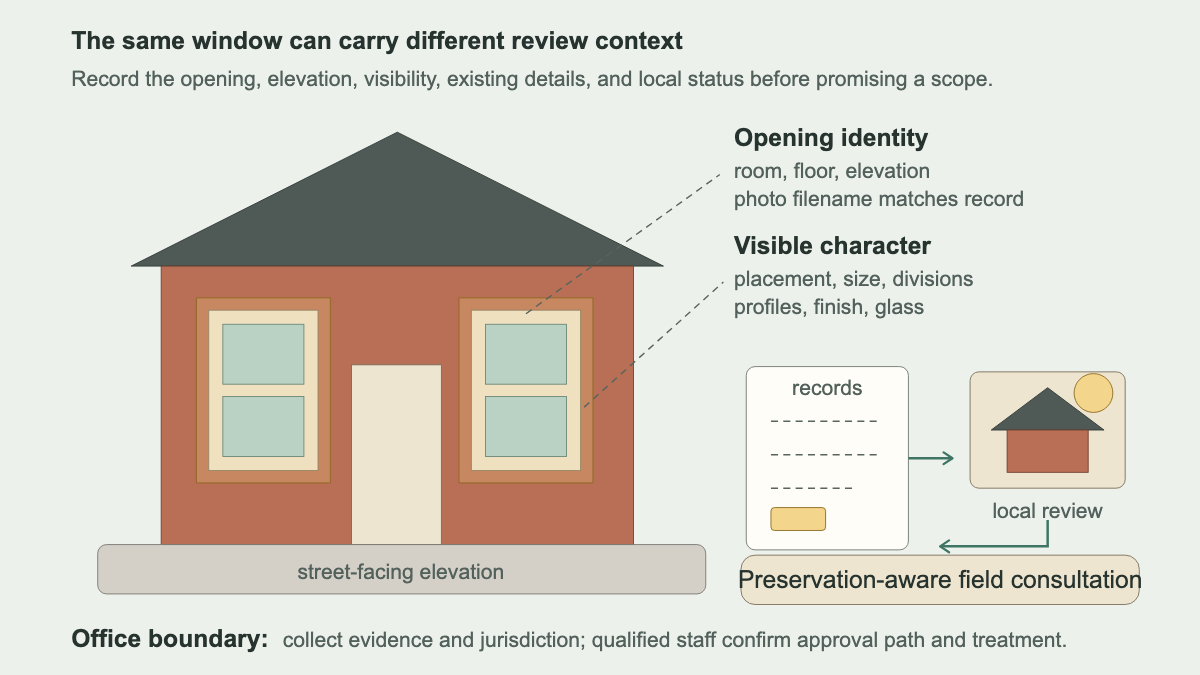
Ask what documentation already exists. Useful records may include old photographs, architectural drawings, a prior conditions survey, commission correspondence, tax-credit materials, a window schedule, product labels, repair invoices, or an earlier approval. A historic photograph can answer a question that a current opening cannot, especially when the original sash was removed years ago.
NPS also notes that a sample repair can help answer questions about feasibility and quality. That does not mean reception should promise a sample or quote one. It means the final note should preserve uncertainty when the caller asks whether every window must be replaced.
Separate preservation intake from installation scope
A historic-window call may eventually lead to sash repair, full restoration, a storm-window plan, selective component replacement, a replica sash, or a complete new unit. Each option touches a different amount of original material. The office should document the owner's priorities and the observed condition before discussing products.
If the caller asks whether an insert window can go inside the old frame, the full-frame versus insert consultation guide explains that installation boundary. Historic review adds another layer: keeping a frame does not automatically preserve the important profiles, glass area, wall-plane placement, or operation. Likewise, removing a frame does not prove that replacement will receive approval.
Ask whether interior casing, stools, exterior trim, shutters, blinds, curtains, security sensors, or wall finishes must remain. Record masonry, siding, stucco, wood trim, and any prior metal cladding around the exterior. If the owner is considering storm windows, note whether existing storms are interior or exterior and whether screens are present. Qualified staff can evaluate how those pieces relate.
Avoid price ranges before the scope is known. Ten openings of the same apparent size may have different decay, hardware, glass, access, and documentation needs. A useful response is specific about process: the company will inspect the identified openings, review the owner's records and goals, and explain the work it is qualified to offer.
Flag safety, occupancy, and access before scheduling
Ask when the home was built. EPA's Renovation, Repair and Painting guidance says that replacing windows in pre-1978 homes can disturb lead-based paint and create hazardous dust. Record the reported construction year and follow the company's lead-safe process. Do not ask the caller to scrape paint for a photo or announce that a surface does or does not contain lead.
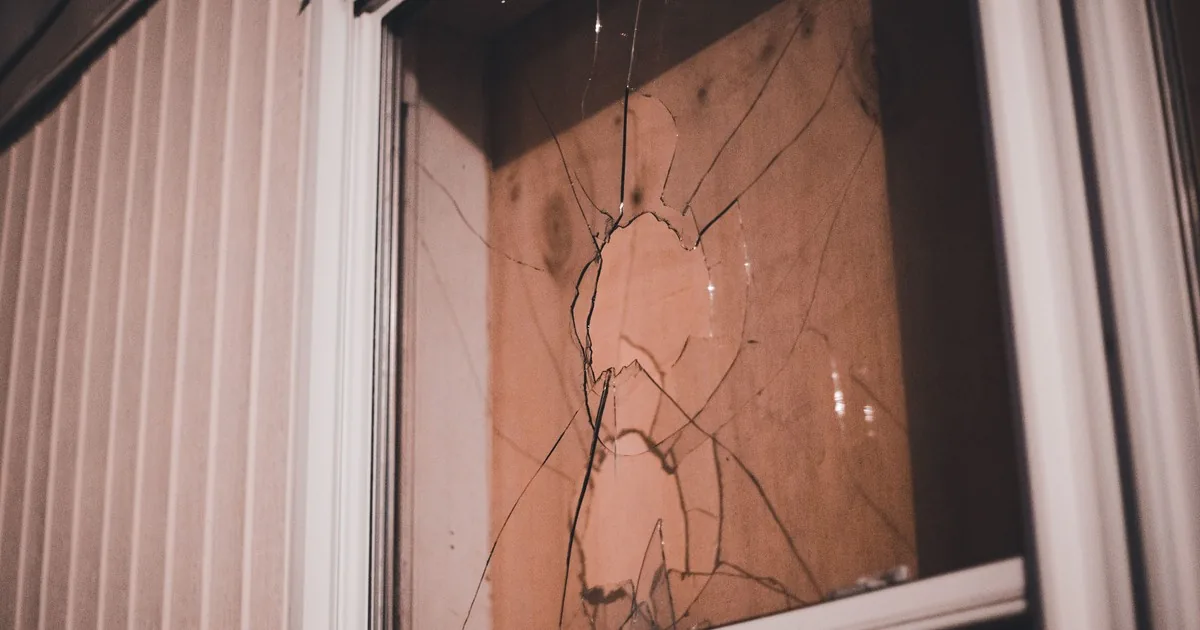
Broken glass needs a separate safety path. Record whether a pane is cracked, loose, missing, or falling, whether the opening can be secured, and whether children, pets, tenants, or the public can reach it. The broken window glass intake guide covers immediate security and access questions without coaching a risky repair.
Access notes should include floor level, steep grade, narrow side yards, porches, roofs below the opening, neighboring property, locked gates, parking restrictions, furniture, window treatments, pets, and occupied tenant spaces. For a managed property, identify the owner, caller, onsite contact, and person authorized to approve work. A preservation specialist cannot assess a rear second-floor sash if the appointment provides access only to the front rooms.
Close with an honest appointment name
Call the visit a “historic window condition and scope consultation” or a “preservation-aware window assessment” when that matches the company's service. Avoid “replacement measure” if nobody has established that replacement is the likely treatment. Avoid “approval consultation” unless the company is actually qualified and contracted to handle that work.
The final record should state the property address, reported historic status, jurisdiction, known review contact, number and identity of openings, facade locations, operation problems, visible material conditions, distinctive details, owner goals, home age, safety flags, access limits, deadline, and records received. It should also say what remains unknown.
An office team or AI receptionist can collect these fields after hours, but the boundary stays the same. The call produces a reliable evidence packet. The field professional evaluates the windows, and the relevant authority determines what it will approve.
A strong note sends the craftsperson to the right opening with the right context: “Front parlor, first floor, street elevation; lower sash painted shut; both cords reported broken; soft exterior sill corner; six-over-six glass pattern; owner wants original interior casing retained; house reported as 1890; local district review pending; ground-level exterior access clear.” That is enough to begin careful work.