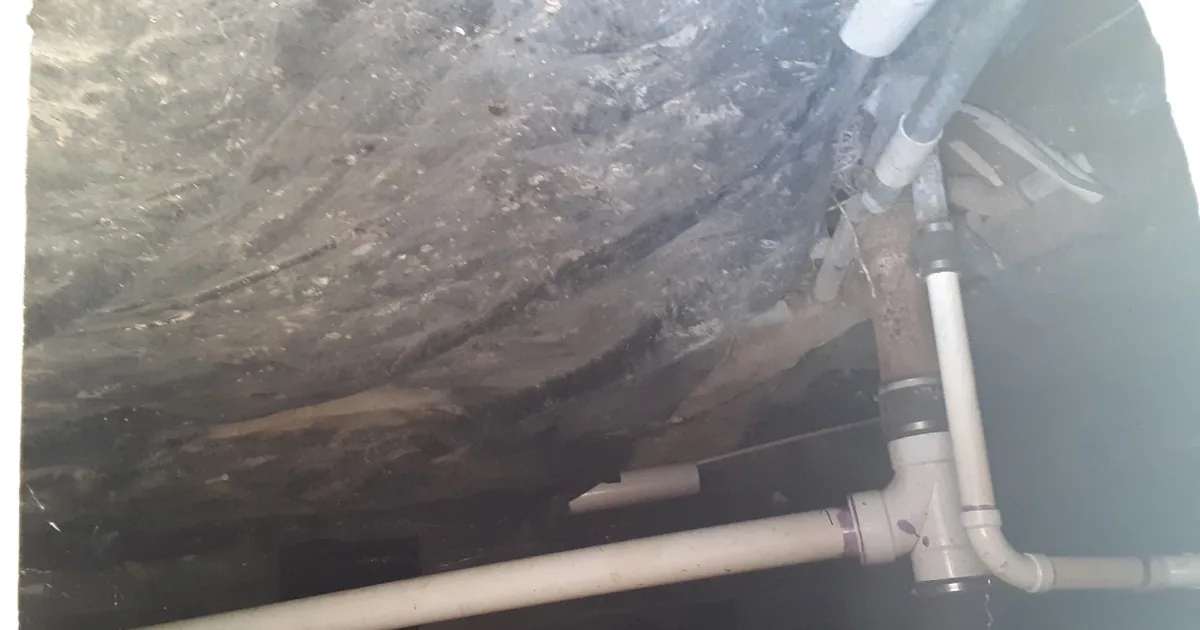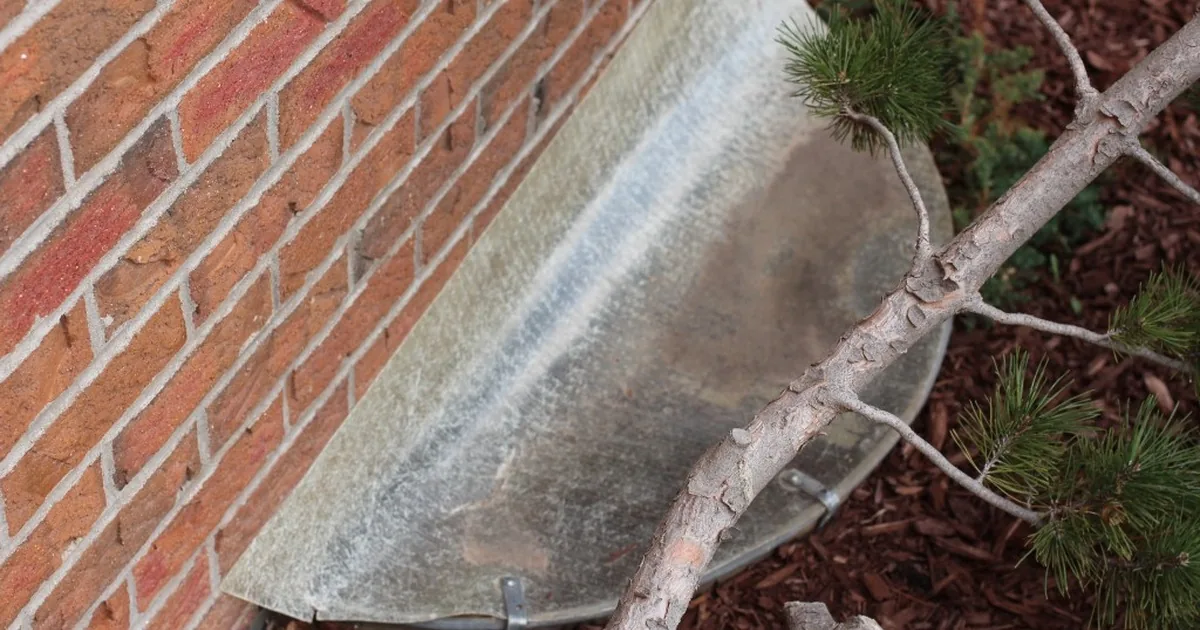
A homeowner calls while rain is drumming on the window-well cover. Water is halfway up the basement glass, a towel is already dark beneath the sill, and the caller wants to know whether the drain has failed. The office cannot answer that last question from a phone description. It can do something more useful: establish whether water is still entering, screen for immediate hazards, preserve the route with photos, and give the field technician a clean record of the well, window, and first wet point indoors.
Start with the address and callback number. Then ask whether water is actively rising, flowing through the window, spreading across the floor, or touching electrical equipment. Record what the caller sees without naming the cause. “Water is pooling above the gravel and seeping at the lower-left window corner” is field evidence. “The footing drain is clogged” is a diagnosis.
Route active water before booking an ordinary inspection
An active leak and a dry stain need different handling. Ask whether rain is still falling, whether the water level in the well is rising, steady, or falling, and whether water is entering the room now. Find out how far it has spread and which materials are wet: bare concrete, trim, drywall, carpet, stored boxes, or furniture.
Follow the company's escalation policy when the caller reports water near a receptacle, panel, extension cord, appliance, furnace, or other energized equipment. Sewage, a fuel odor, a visibly bowing well, broken glass, or fast-moving water also needs a specific safety route. Reception should not tell someone to climb into the well, touch electrical equipment, remove a cover during dangerous weather, or test a drain by adding more water.
If the basement is taking on substantial water, the call may also need the response used for a basement flood restoration intake. Keep the window-well observations in the work order even when another crew handles water extraction. The entry route still matters.
Build a rain timeline while the evidence is fresh
Ask when the caller first noticed water and what the weather was doing. Did it appear during a short downpour, after hours of steady rain, during snowmelt, or on a dry day? Has the same well filled before? Did the problem begin after landscaping, a new patio, gutter work, a window replacement, excavation, or a change to a downspout?
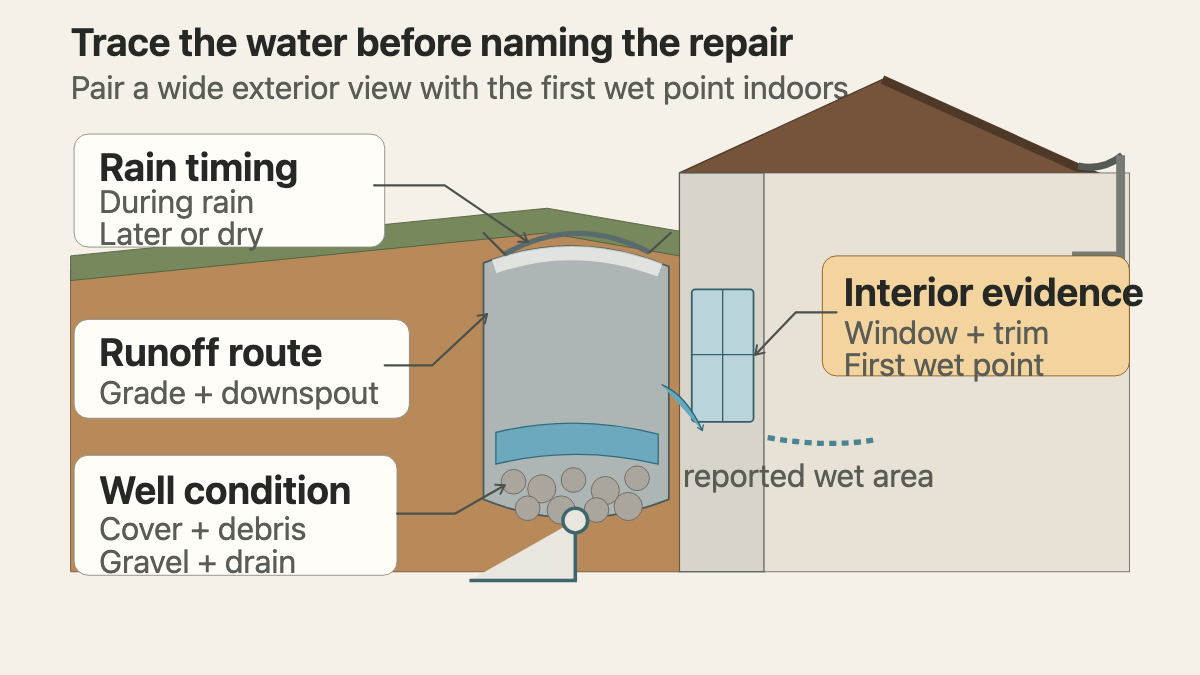
Next, trace the exterior route. Ask where the nearest roof downspout discharges and whether the gutter is overflowing above that corner. Note whether the ground appears to slope toward the well, whether mulch or soil has built up beside it, and whether a driveway, walk, patio, or stair sends runoff toward the opening. A caller does not need to judge the grade. “Water runs across the pavers toward the north well” is enough.
The University of Minnesota Extension's basement moisture guidance treats gutters, downspouts, surface grading, window wells, aggregate, and subsurface drainage as connected parts of the water route. That is the right structure for intake. A wet well may involve concentrated roof runoff, surface water, the well assembly, its drain connection, the window opening, or several of those at once.
Ask for one wide exterior photo taken from safe ground. It should show the well, several feet of surrounding grade, the foundation wall, the nearest downspout, and nearby paving or planting beds. A tight photo of brown water proves that water is present but hides how it arrived.
Record the well as a set of components
A useful work order separates what the caller can observe. Ask about the cover first. Is there one? Does it span the opening, sit flat, look cracked, or appear shifted? Do not promise that a new cover will solve the leak. A cover can limit direct rain and debris, but it does not explain water arriving across the grade or through another path.
Then document the well itself:
- Is the barrier metal, masonry, plastic, wood, or unknown?
- Does it look attached to the foundation, or has a side pulled away?
- Are there leaves, mulch, soil, ice, or other debris inside?
- Is gravel visible, and is water sitting above it?
- Can the caller see a drain opening or pipe without entering the well?
- Is the well bent, rusted through, cracked, leaning, or displaced?
- Which basement window does it serve, and can that window still open?
InterNACHI's window-well inspection guidance points inspectors toward covers, debris, drainage, barrier condition, waterlogging, and the window itself. Those are observations, not a phone repair plan. The field professional still has to inspect the connection between the well and wall, the drainage path, surrounding runoff, and any concealed conditions.
Do not ask the caller to probe gravel, clear a drain, pry up a heavy cover, or stand beside an unstable edge. If leaves are safely reachable from ground level and the company has an approved instruction, follow that policy. Otherwise, preserve the condition for the visit.
Match the exterior report to the first wet point indoors
The interior photo should begin wide enough to show the whole window and nearby wall. Then request close-ups of the first visible wet location, staining, damaged trim, peeling paint, damp drywall, or water on the floor. Ask whether moisture first appears at a window corner, along the sill, below the frame, beside the well, or farther down the wall.
This detail keeps different paths separate. The U.S. Department of Energy explains in its window water-management guidance that a window interrupts the wall's water-control layer. Proper flashing is intended to direct water outward. Reception should therefore record both the well condition and the exact interior location. It should not assume every wet surface below a window came over the top of the well.
Ask what was done before the call. Did someone remove standing water, run a wet vacuum, place towels, move storage, operate a sump pump, or apply sealant? Record the action and time. That helps the technician understand why the water level or stain may look different on arrival.
Also ask about prior work and available records. A window invoice, waterproofing proposal, drain-service note, home inspection report, rain-day video, or old photo of the well can shorten the field investigation. Capture dates when possible.
Preserve emergency escape and access details
Find out how the basement room is used. A window serving a bedroom or another required escape opening carries a different access concern from a small utility-room window. Ask whether the window opens, whether a ladder or steps are present, and whether the cover can be opened from inside. Record stored items, furniture, locks, security bars, snow, or debris that may obstruct access.
Do not tell the caller that an opening is code-compliant. Local requirements and the property's construction control that decision, and older online references may cite outdated model-code editions. The office can flag possible egress use so the inspector checks operability, dimensions, cover hardware, and local rules.
Confirm how the technician will reach both sides. Are there a locked gate, dog, tenant notice, narrow side yard, deck, dense shrubs, snowbank, or stored items below the window? Ask who will be present and who can authorize work. If the caller is a tenant, buyer, property manager, or neighbor, identify the owner and the person who controls access.
Read back a field-ready note
A strong handoff sounds like this:
“Owner reports water in the north basement window well during steady rain. The level rose to the lower window frame and is now holding. Water is seeping at the lower-left corner of the window and has wet approximately two feet of carpet beside the wall. No sewage, fuel odor, broken glass, or water near electrical equipment is reported. The caller will not enter the well or touch the outlet below the adjacent window.
“Wide exterior photos show a clear cover shifted toward the house, leaves at the bottom, a downspout discharging near the uphill side, and pavers sloping toward the well. Gravel is visible beneath the water; no drain opening is visible from safe ground. The metal well appears attached, with no reported bowing. The room is used as a bedroom, and the owner says the window opens but has not tested the cover from inside during the storm.
“Interior photos show the first wet point at the lower-left frame, damp painted trim, and water on carpet below. A wet vacuum was used at 8:10 p.m. Similar pooling occurred once last spring. Exterior access is through an unlocked side gate; the dog will be secured. Inspector to verify runoff, well and cover condition, drainage, window opening, wall interface, egress access, and interior moisture path.”
That note does not choose a drain repair, cover, flashing detail, or waterproofing system. It gives the field professional the rain event before it disappears. An AI receptionist can collect the same approved fields after hours, but the final diagnosis still belongs at the window well, with the wall, grade, drain, and wet interior in view.