The morning after a hard storm, a homeowner calls and says there is “water all over the basement.” That could mean a damp line where the wall meets the floor. It could mean water poured through a window well. It could also mean a floor drain backed up or a sump stopped during a power outage. Those calls do not belong in one generic estimate slot.
A waterproofing office should first screen for immediate hazards and active cleanup needs. Then capture the storm timeline, the first place water appeared, how it moved, what was happening outside, and how the sump or drains behaved. The field assessor needs observations. Reception should not promise a cause, a repair, or insurance coverage from the phone.
Screen hazards before routine scheduling
Start with the conditions in the basement now. Ask whether water is still entering, how deep it is at the deepest point, and whether the level is rising. Find out whether water has reached outlets, extension cords, appliances, the electrical panel, a furnace, or other powered equipment. If electricity and water may be in contact, use the company’s safety script and route the caller to the appropriate emergency or utility help. Do not ask anyone to walk through water to inspect a panel or unplug equipment.
Ask what the water looks and smells like. A sewage odor, waste material, or a floor-drain backup calls for a different response than clear seepage at a wall joint. The FEMA urban flooding guide treats sewer backup, surface flooding, below-grade openings, cracks, and sump systems as separate paths that may need different mitigation.
Rapid inflow, a new wall bulge, falling masonry, or a door or window that suddenly will not open should leave the normal assessment queue. Follow written company policy for structural and emergency routing. Reception can record what the caller sees without labeling it “hydrostatic pressure” or “foundation failure.”
Standing water may also create a cleanup deadline. The U.S. Environmental Protection Agency says water-damaged areas and items should be dried within 24 to 48 hours to help prevent mold growth. A caller with soaked carpet, drywall, insulation, or stored materials may need water extraction or restoration work before a waterproofing assessment. The waterproofing visit still matters because drying the room does not correct the source.
Record the storm and the first wet location
“The basement flooded after rain” is a starting point. Ask when the rain began, when the caller first noticed water, and whether the basement had stayed dry during earlier showers. A leak that appears within minutes of runoff reaching a stairwell presents a different trail than dampness that emerges several hours after the rain stops.
The most useful question is simple: “Where did you first see water?” Record a fixed reference point. Examples include the lower left corner of the east window, the wall-floor joint behind the water heater, a crack below the electrical meter, the floor drain near the laundry sink, or the sump pit at the back corner.
Then ask how the wet area changed. Did a narrow line spread along one wall? Did water run down from a window? Did several isolated spots appear? Did the floor drain overflow? Did the sump pit rise until water crossed the slab? Avoid rewriting the caller’s report as a diagnosis. “Water appeared at the wall-floor joint after three hours of rain” is useful. “Footer drain failed” goes beyond the evidence.
Request a wide photo that shows the room and a closer photo of the first wet location. Ask the caller to mark the spot with painter’s tape only if the area is safely accessible. Photos taken during the storm are especially useful because a dry stain the next day may hide the direction of flow.
Connect the basement evidence to the outside
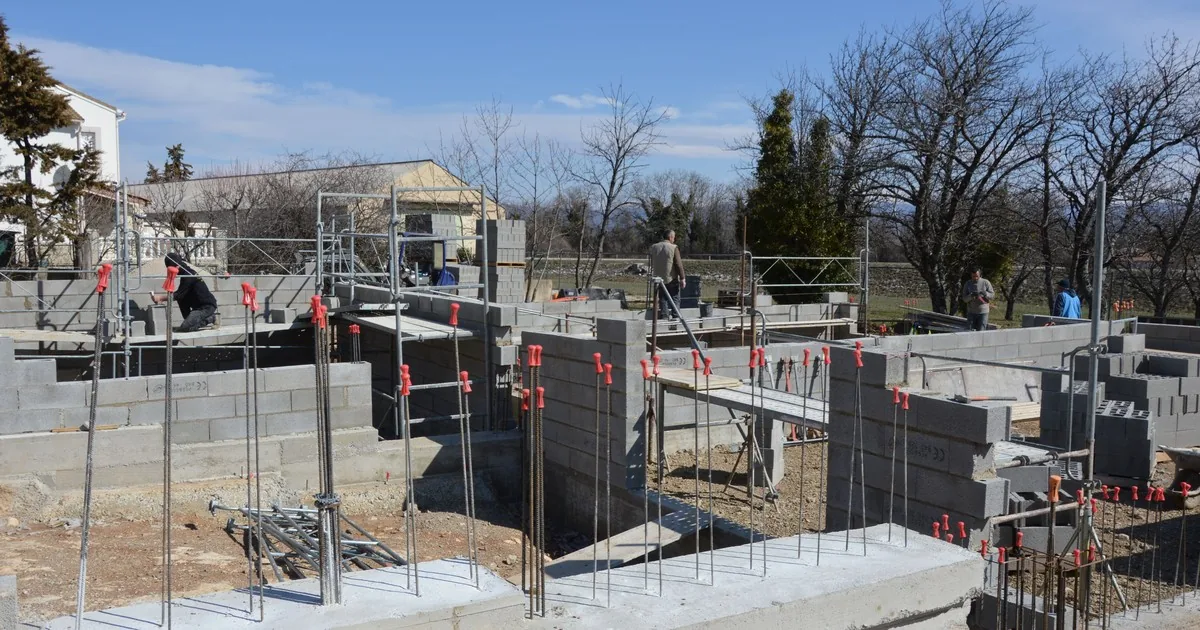
A basement assessment should not begin and end inside. The EPA moisture-control guidance includes site drainage and foundations in the same moisture-control system. HUD’s Moisture-Resistant Homes guide likewise addresses grading, foundation drainage, basement walls, and interior finish choices together.
Ask what was happening directly outside the first wet location. Was a gutter overflowing? Where does the nearest downspout discharge? Did water pond beside the wall? Is the soil visibly sloped toward the house? Does a patio, driveway, or walkway meet the foundation there? Is the opening below a deck or porch where access will be limited?
Window wells and basement stairwells deserve their own questions. Ask whether the well filled, whether a cover is present, and whether the caller saw water cross the window frame. For an exterior stairwell, record whether the drain was visible and whether water crossed the door threshold. A caller can take ground-level photos. Do not ask anyone to climb a ladder, enter moving water, remove a drain cover, or excavate beside the foundation.
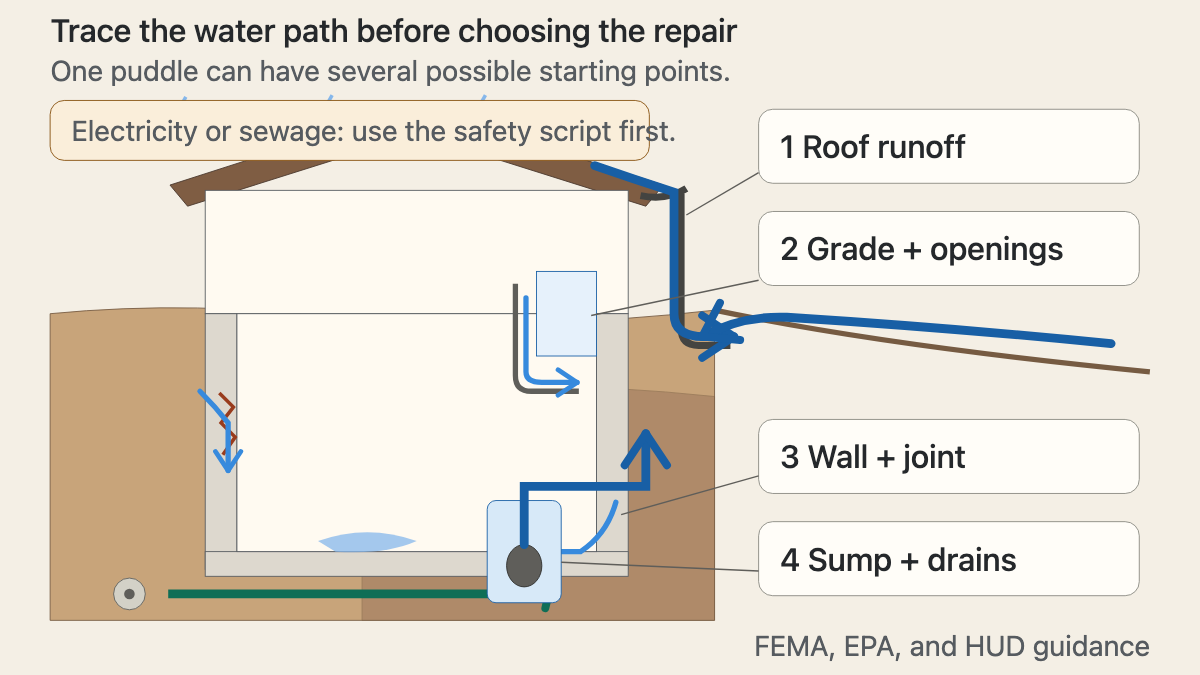
The cutaway shows why the office should resist picking a repair from one symptom. Water at the slab edge might be related to surface drainage, an opening, below-grade seepage, a foundation drainage system, or more than one condition during the same storm. The assessment should trace the path on site.
If the caller’s main complaint is standing water across the yard or runoff from a neighboring grade, the landscape drainage intake guide helps document the broader site. Keep that work distinct from promises about foundation waterproofing.
Capture the sump, drains, and prior work
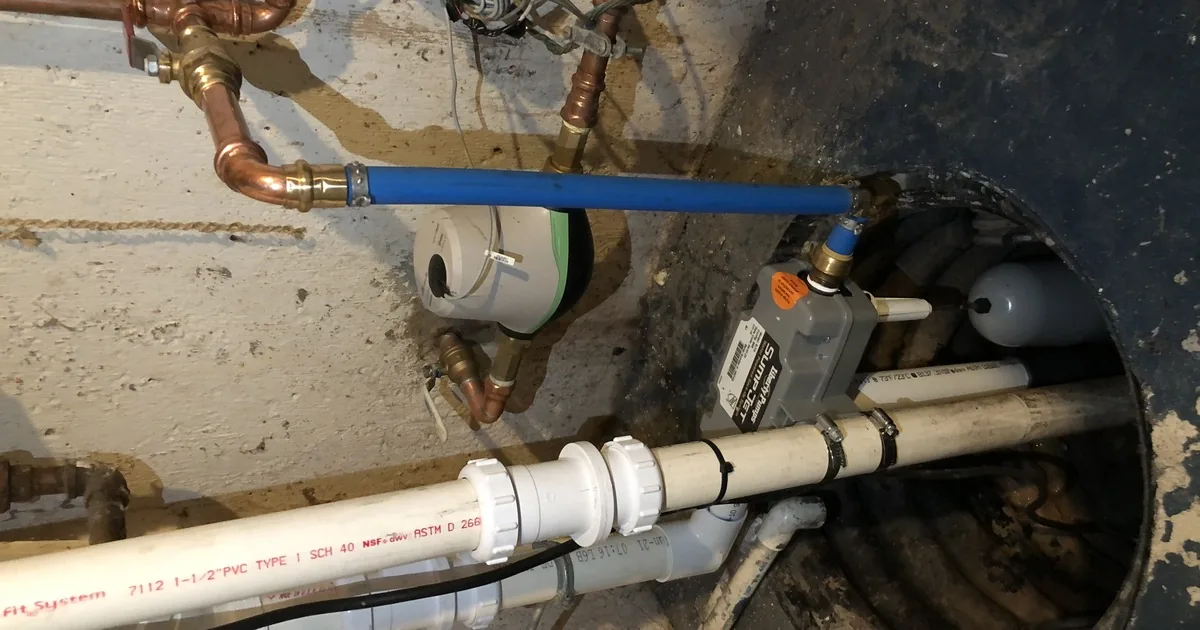
Ask whether the basement has a sump pit and pump. Record whether the pump ran during the storm, ran continuously, cycled normally, made an unusual sound, lost power, or did not start. Ask whether a backup pump, battery, generator connection, high-water alarm, or second pit is present. Do not direct the caller to reach into the pit or test live electrical equipment.
A sump failure with active rising water may need plumbing or emergency routing. The sump-pump failure call guide covers that path. If the caller reports sewage, widespread contaminated water, or soaked finishes, use the basement flood restoration intake for the cleanup handoff.
For floor drains, ask whether water rose out of the drain or merely collected near it. Record odor, debris, and whether toilets or other drains behaved differently during the storm. A waterproofing contractor may need a plumber or sewer specialist involved. The receptionist should preserve the distinction between “water came from the drain” and “water ended up at the drain.”
Previous work matters. Ask for invoices, warranties, permits, photos, and the contractor’s name when available. Record interior drainage channels, wall membrane, exterior excavation, crack injection, window-well drains, a backwater valve, overhead sewer work, or a newer sump system in plain terms. Do not tell the customer that an old warranty covers the current event.
Build the assessment ticket around evidence
Before booking, the appointment record should answer these questions:
- Is the water still entering, rising, near electricity, or suspected to contain sewage?
- When did the rain start, when was water first seen, and where exactly did it appear?
- Did water enter through a window, door, wall, crack, wall-floor joint, drain, or sump area?
- What did the nearest gutter, downspout, grade, window well, stairwell, patio, or driveway do during the storm?
- How did the sump and floor drains behave, and what backup equipment exists?
- What prior waterproofing, drainage, plumbing, or foundation work is documented?
- Which photos and records are attached, and what access limits will the assessor face?
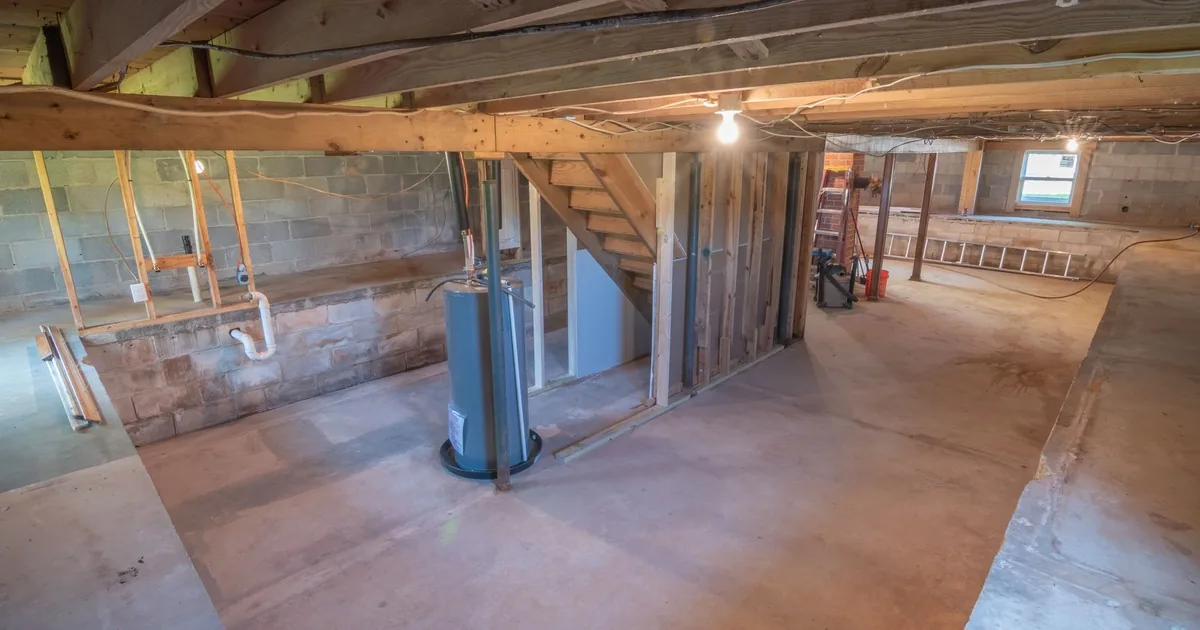
Confirm the address, building type, finished or unfinished basement areas, tenant or owner status, parking, pets, gates, and who can approve diagnostic or inspection work. Ask whether stored items, finished walls, shelving, or mechanical equipment block the wet area. The assessor may need exterior access on the same side of the building.
A useful read-back sounds like this:
“Water was first seen at 7:10 a.m. along the north wall-floor joint, about two feet left of the basement window. Rain began around midnight. The caller reports a narrow wet line extending six feet along that wall and no water from the floor drain. The sump ran during the storm and the pit did not overflow. No sewage odor, rising water, electrical contact, new wall movement, or active inflow was reported during intake.
“Outside that location, the nearest downspout ends beside a concrete walkway. The caller saw ponding between the walkway and wall. The window well did not fill. Wide interior, close interior, and ground-level exterior photos are attached. Interior drain tile and a sump were installed by a prior owner; no records are available. The north wall is partly blocked by shelving, and the homeowner can clear access before Tuesday’s assessment. Cause, repair scope, structural condition, and coverage remain onsite determinations.”
That ticket lets the assessor arrive with a timeline, a mapped starting point, exterior clues, equipment behavior, and access details. An AI receptionist can capture the same approved fields after hours, while the company’s written safety rules control urgent routing and the field professional decides what the building needs.