
A homeowner calls and opens with one sentence: “I need a price to fix my foundation.” The office has no photos, no inspection report, and no clear description of the concern. Quoting a repair would be premature. Booking a generic sales visit may waste the customer’s time too.
The useful response is to define the next decision. Ask what the customer sees, which part of the property is involved, what access exists, which reports or prior repairs are available, and what deliverable they expect after the visit. Then schedule the company’s correct inspection or estimate appointment. Diagnosis, repair design, and price come after the property has been evaluated.
Turn the price request into the right appointment
Start by asking what prompted the call today. A buyer may have a home-inspection report and a ten-day contingency deadline. A homeowner may have found a crack after moving shelving. A property manager may need a budget proposal for work already described by an engineer. These are different appointments even if every caller asks for an “estimate.”
Identify the requested outcome. Does the caller want an on-site evaluation, a repair proposal, an independent structural opinion, pricing against existing plans, or a second proposal for a defined scope? Do not assume those services are interchangeable.
A-1 Engineering’s comparison of contractor estimates and structural assessments draws a useful boundary. A contractor estimate describes proposed work and price. An engineering assessment addresses structural condition and may support plans or design within the engineer’s professional scope. A foundation company should state which service it provides, whether engineering is included or separate, and what the customer will receive.
Ask who owns the property and who can authorize the visit. For a sale, record the buyer, seller, agents, access contact, and deadline. For a rental, separate the occupant from the person approving work. If another contractor or engineer supplied a scope, ask for the original document before scheduling a bid against it.
Build one inspection record around the property
The first call should create a map, not a diagnosis. Locate the reported condition by room, wall, exterior side, crawl-space bay, slab area, or fixed feature. “Crack on the north basement wall below the kitchen window” gives the inspector a starting point. “Foundation problem” does not.
Record the caller’s observations in plain words. These may include a wall crack, sloping floor, sticking door, gap at trim, displaced masonry, water entry, or a prior patch that reopened. The Texas Real Estate Commission’s foundation guidance lists visible conditions such as cracks, sloping floors, binding doors, and masonry separation in its standards for Texas inspectors. It also explains that the required inspection is visual. Specialized testing can sit outside that minimum scope.
That distinction belongs in the phone script. The office can say, “I’ll record what you see so the inspector knows where to begin.” It should avoid saying that one crack proves settlement or that a sticking door identifies the repair.
Access often determines whether the visit can answer the customer’s question. Ask whether the area is finished or exposed, whether a crawl-space hatch is reachable, and whether stored items block the wall. Note locked gates, tenant permissions, pets, standing water, low clearance, and utilities near the concern. Never ask a caller to enter an unsafe crawl space, remove structural material, or move a heavy appliance for a photo.
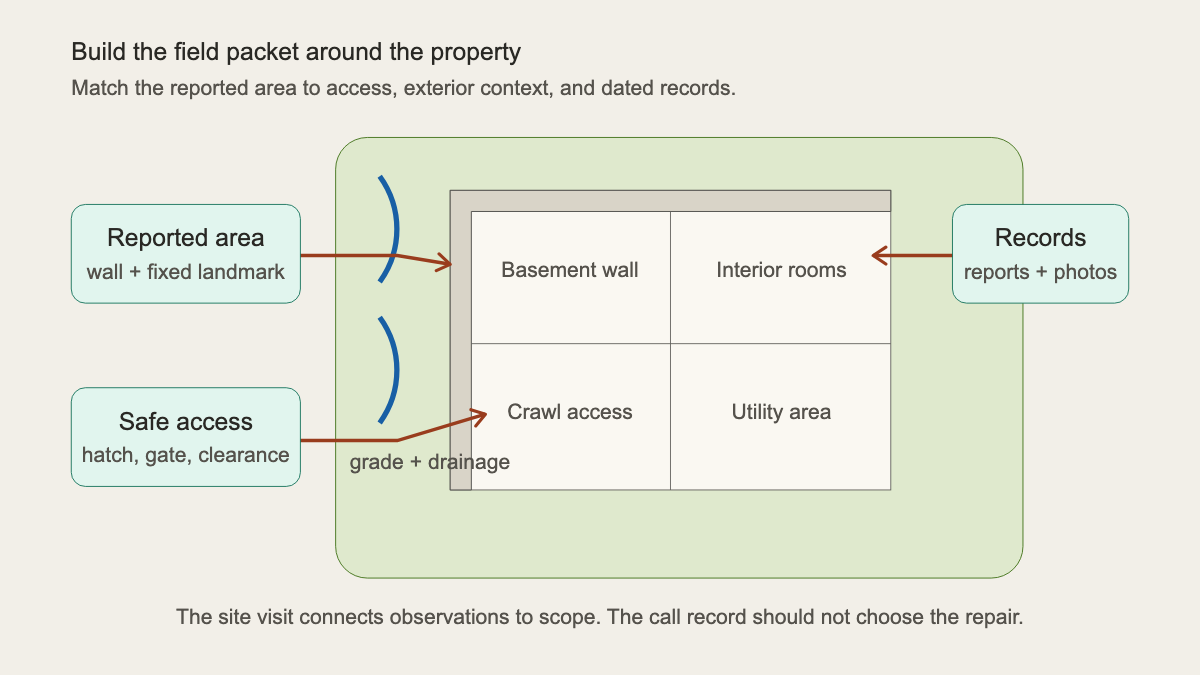
Request useful records only when the company can receive and review them. Dated wide and close photos, a home-inspection report, an engineering letter, old proposals, repair invoices, permits, warranties, and a survey can all matter. Keep the original file and date attached to the job. A caller’s summary of an old report should not replace the report itself.
For crack-specific intake, use the separate foundation crack inspection guide. A visibly curved basement wall has its own bowing-wall routing and evidence workflow. This estimate page begins after the office has identified the service request and assembled the inspection record.
Ask what the written estimate will actually contain
A price without scope is hard to evaluate. Before the appointment, tell the customer what the company normally delivers: perhaps a written proposal, annotated diagram, photographs, system description, line items, exclusions, or a separate recommendation for engineering. State the real company process. Do not promise a stamped plan, permit-ready drawing, or structural opinion unless that service is part of the appointment.
Anchor Foundation Repair’s post-inspection guide describes findings, proposed work, specifications, diagrams, and related tasks as useful proposal contents. The exact document will vary, but the principle is sound. A customer should be able to identify where work is proposed, what will be installed or changed, what preparation is included, and what remains outside the proposal.
A useful office checklist asks whether the estimate will address:
- the property area and observed condition tied to the proposal;
- the proposed repair locations, quantities, materials, or named system;
- site preparation, excavation, access, protection, cleanup, and restoration;
- work by others, including plumbing, electrical, landscaping, engineering, or finish repair;
- permits, inspections, testing, reports, and documents included in the price;
- payment schedule, change-order process, expected sequence, and proposal expiration;
- warranty terms, exclusions, transfer rules, and the party issuing the warranty.
Phone staff do not need to interpret every clause. They do need to prevent a vague appointment expectation. If the company gives budget ranges at intake, label them under company policy and explain what facts can change them. Never present a price for a site-specific repair as final before the required inspection.
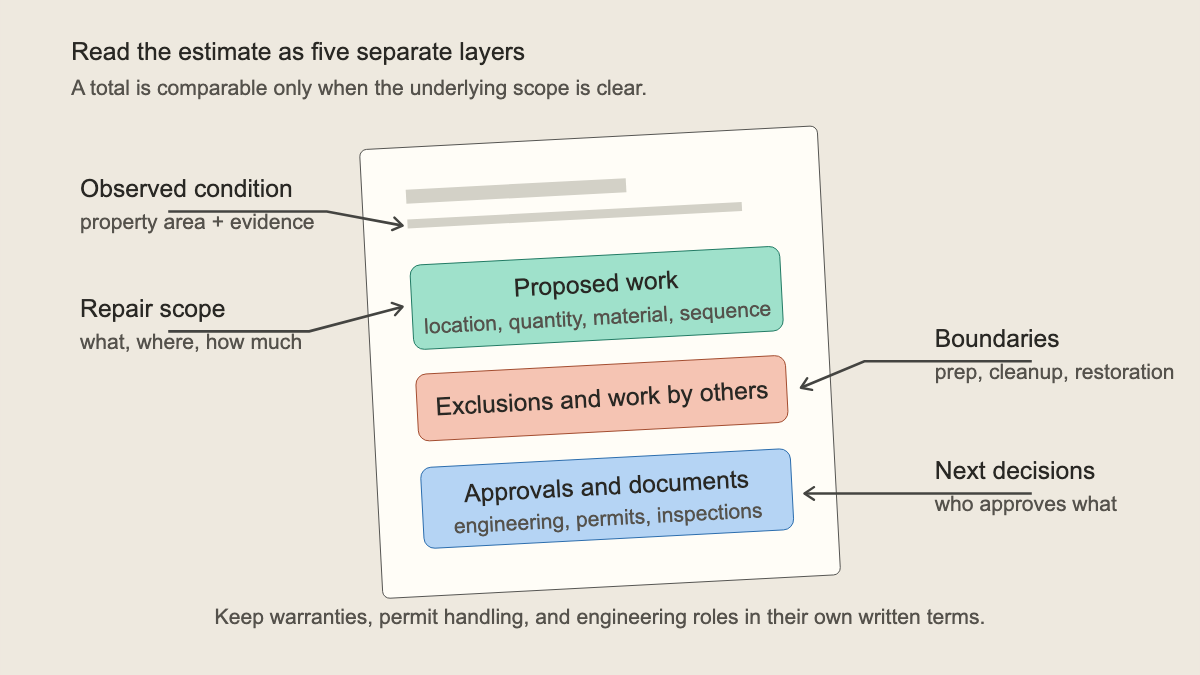
When a caller is comparing proposals, ask whether each contractor evaluated the same area and received the same records. Two totals may describe different quantities, access assumptions, finish restoration, drainage work, engineering, or permit handling. The office can explain its own proposal. It should not diagnose a competitor’s document over the phone.
Keep permits, warranties, and engineering specific
Local approval is a property fact, not a generic promise. The City of Oakland’s foundation repair and replacement page requires local planning review and a building permit for the work it describes. Another city may classify the project differently.
Capture the property address and jurisdiction early. Then state who checks requirements, who prepares documents, who submits, which fees are included, and when that determination happens in your company’s process. “We handle the permit” is incomplete if engineering, city fees, correction responses, or final inspection scheduling are excluded. Phone staff should never promise approval or a permit date.
Treat warranties with the same precision. Ask whether the caller is discussing a manufacturer warranty, contractor workmanship warranty, prior transferable warranty, or a new proposal term. Record the document. Do not convert “lifetime” into a coverage promise before someone reads the definitions, exclusions, maintenance duties, and transfer conditions.
Engineering can also be included, referred, owner-provided, or unnecessary for the initial appointment. State which one applies. If the field inspector decides whether engineering is needed, say exactly that. The receptionist should not tell the homeowner that an engineer will approve a contractor’s preferred system.
Close the call with a documented next step
Read back the appointment type, reported area, available records, access conditions, decision-maker, requested deliverable, and deadline. Then explain what happens next in one or two sentences.
A clean handoff sounds like this: “You are scheduled for a repair-estimate inspection Tuesday at 10. The concern is the north basement wall below the kitchen, with a crack first noticed after last week’s rain. The wall is exposed except behind one storage shelf. Your home-inspection report and 2022 repair invoice are attached. The owner will meet the inspector. After the visit, our estimator will prepare the written scope and identify any engineering or permit step required before work can be scheduled.”
An AI receptionist can collect the same fields after hours and route the record under company policy. The company still controls inspection scope, professional referrals, pricing, warranties, and permit statements.
The customer asked for a number. Give the estimator the property record needed to produce one that means something.