A homeowner calls after a plumber repaired a line below the hall bathroom. She says the water is off, the pipe passed its test, and a bedroom door has started rubbing. The office now has two separate facts: a documented plumbing repair and a reported building change. Joining them into a diagnosis over the phone would be a mistake.
A strong foundation inspection intake starts by confirming that the leak has been controlled. Then it records the plumber's finding, exact repair location, dates, affected materials, and any cracks, floor changes, or sticking openings the homeowner noticed. The field professional can compare those facts at the property.
The most important question is simple: “Is water still active anywhere now?” Active water, a rushing sound, standing water near electrical equipment, or an unsafe area needs the company's urgent routing procedure. A routine foundation appointment can wait until the immediate hazard and plumbing source are addressed.
Keep the plumbing finding and foundation concern separate
A plumber may have identified a failed supply line, drain line, fixture connection, or service line. Ask for the plumber's wording. “Hot-water line repaired beneath the hallway” is useful. “The leak ruined the foundation” is a conclusion unless a qualified professional has already documented it.
The distinction matters because water near a foundation can come from several places. Pacific Northwest National Laboratory's building-science guidance lists plumbing leaks, stormwater runoff, groundwater, moist-air movement, and water vapor as separate threats. A house can also have more than one moisture problem at the same time.
Ask whether the plumber located the failed section, repaired or rerouted it, and tested the system afterward. Record the test name only if it appears on the report or the caller can identify it. Do not translate “they checked it” into a pressure test, camera inspection, or passed result.
The discovery date may differ from the leak's start date. The U.S. Environmental Protection Agency's moisture-control guide notes that small leaks inside concealed cavities can continue unnoticed. If the homeowner first saw a wet baseboard on Tuesday, that establishes when the problem was found. It does not establish when the pipe began leaking.
Build a timeline before discussing cause
Use dates tied to records or direct observations. Start with when the caller first noticed water, unusual water use, a sound, an odor, a warm floor area, or another clue. Add the plumber's visit, leak-location work, repair, post-repair test, drying work, and the date each building symptom was noticed.
A useful sequence might read: “Water bill changed in June. Warm floor noticed July 8. Plumber located a hot-water line leak July 10. Line rerouted July 12. Hall door began rubbing in August.” That record gives the inspector events to verify without saying which event caused another.
Ask whether a crack, slope, or sticking opening existed before the leak was found. Listing photos, a move-in inspection, family photographs, contractor estimates, and prior foundation reports can supply comparison points. Preserve where the comparison came from. “Crack absent in a dated listing photo” carries more weight than “the crack is new” with no date or source.
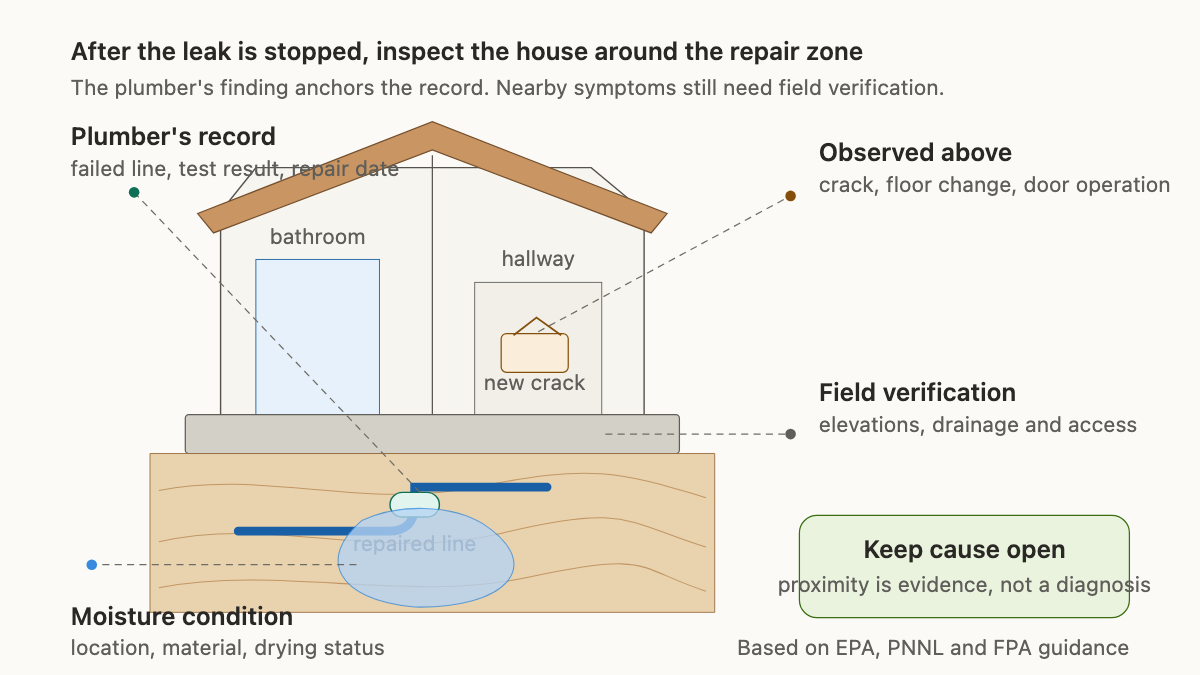
The Foundation Performance Association's maintenance and inspection guide says leaking plumbing lines and drains can create local high-moisture conditions that may contribute to differential movement in expansive soils. That is a conditional mechanism, not a verdict for every house. Soil, foundation design, leak volume, duration, drainage, vegetation, and prior conditions all matter.
Map observations around the reported repair
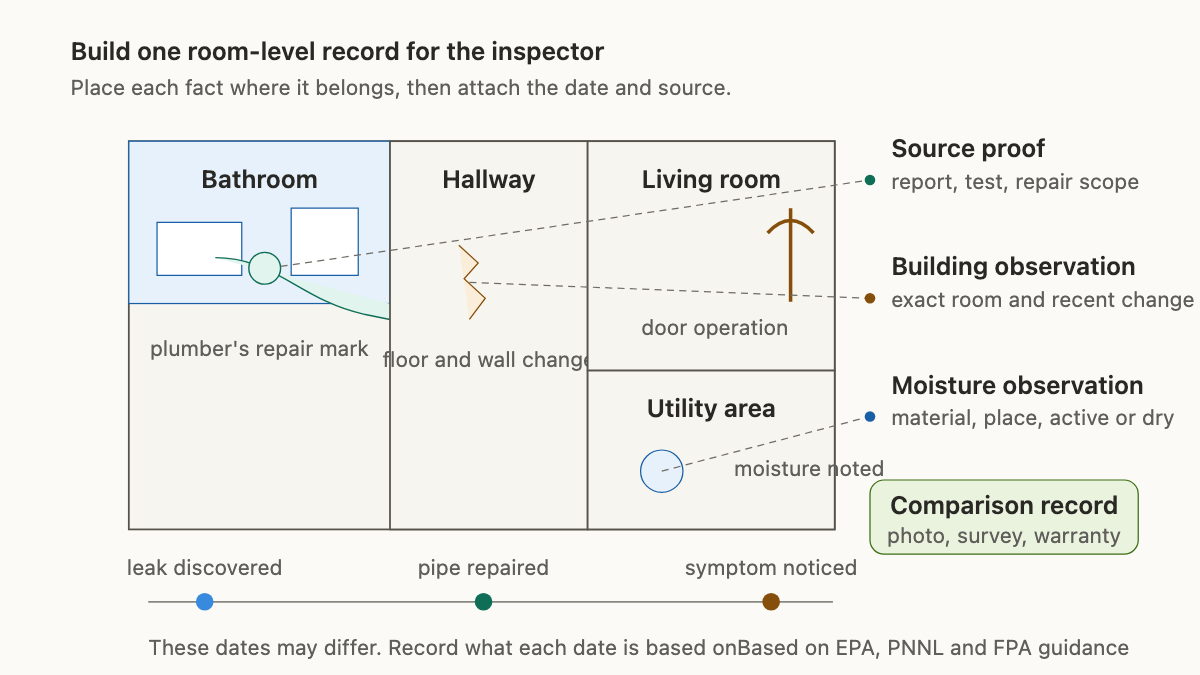
Give every symptom a place. A ticket that says “cracks after leak” leaves the inspector guessing. A ticket that says “diagonal drywall crack above the west corner of the hall door, first photographed three weeks after the repair” provides a location, form, and comparison date.
Capture the caller's observations in plain language:
- the room, wall, doorway, window, floor area, or exterior side involved
- what changed and when the caller first noticed it
- whether a door or window still opens, closes, and latches
- whether the floor feels sloped, raised, soft, hollow, damp, or separated from trim
- whether water, staining, swelling, odor, loose flooring, or damaged finishes remain
- the nearest fixture, repaired line, access opening, or plumber's location mark
- any exterior ponding, irrigation, downspout discharge, excavation, or drainage change nearby
Do not turn “raised tile” into heave or “soft floor” into settlement. The office is collecting a field map. If the main complaint is a visible crack, the foundation crack inspection intake guide covers location, direction, recent change, and comparison evidence in more detail. If the caller leads with a dip or slope, use the uneven-floor intake guide.
Ask what is wet, open, or inaccessible
The field team needs to know whether the repair left an open slab, tunnel, wall cavity, removed flooring, excavation, or drying equipment. Record who controls access and whether another contractor must be present. Never ask the caller to enter a tunnel, crawl into a wet area, remove a cover, lift flooring, or approach damaged electrical equipment for a better description.
Ask which materials became wet and whether a restoration company measured or dried them. The EPA advises drying wet materials before they are enclosed or covered by finishes. Reception should not declare a material dry based on elapsed time, touch, or appearance. Save any moisture reports and drying logs for field review.
A persistent musty odor, recurring damp spot, or stain that returns after drying belongs in the ticket. So does a dry repair area with a building symptom elsewhere. The absence of visible water today does not rewrite the earlier plumbing report, and the presence of a crack does not prove that water caused it.
Request the documents that preserve the handoff
The best inspection record often begins with attachments the office did not create. Ask whether the customer can send these through the company's approved channel:
- plumber invoice and written leak-location or repair report
- post-repair test result, if one was provided
- dated photographs before, during, and after access or repair
- drying or restoration records
- prior foundation inspections, elevation surveys, repair plans, permits, and warranties
- earlier home-inspection reports or listing photos that show the same rooms
- insurer or property-manager correspondence when it affects access or scheduling
Do not interpret policy coverage or tell the caller what an insurer should pay. Record the claim contact, inspection deadline, and requested report format, then let the appropriate professional address coverage and causation.
Book the visit with a narrow promise
Before closing the call, confirm the property address, foundation type if known, repair area, current access, pets, occupants, gate instructions, and the person who can discuss the plumbing work. Note whether tile, cabinets, stored belongings, landscaping, or a patched slab limits access.
Read back the record: “I have the plumber's repair under the hall, the July 12 repair date, the August door change, the drywall crack above that opening, and the report you will send.” Then explain what happens next. The inspector will evaluate the visible conditions and determine whether measurements, monitoring, plumbing follow-up, drainage work, engineering, or another specialty is appropriate.
Reception should not promise piers, leveling, crack repair, or a finding that the leak caused movement. If the inspection later supports a proposal, the foundation repair estimate guide helps separate observations, recommended scope, exclusions, and next steps.
The field team should arrive with a small property history: the pipe that failed, the place it was repaired, the materials that got wet, the dates that can be proven, and the building changes the homeowner can point to. That is enough to begin a real inspection without inheriting a diagnosis from the phone call.