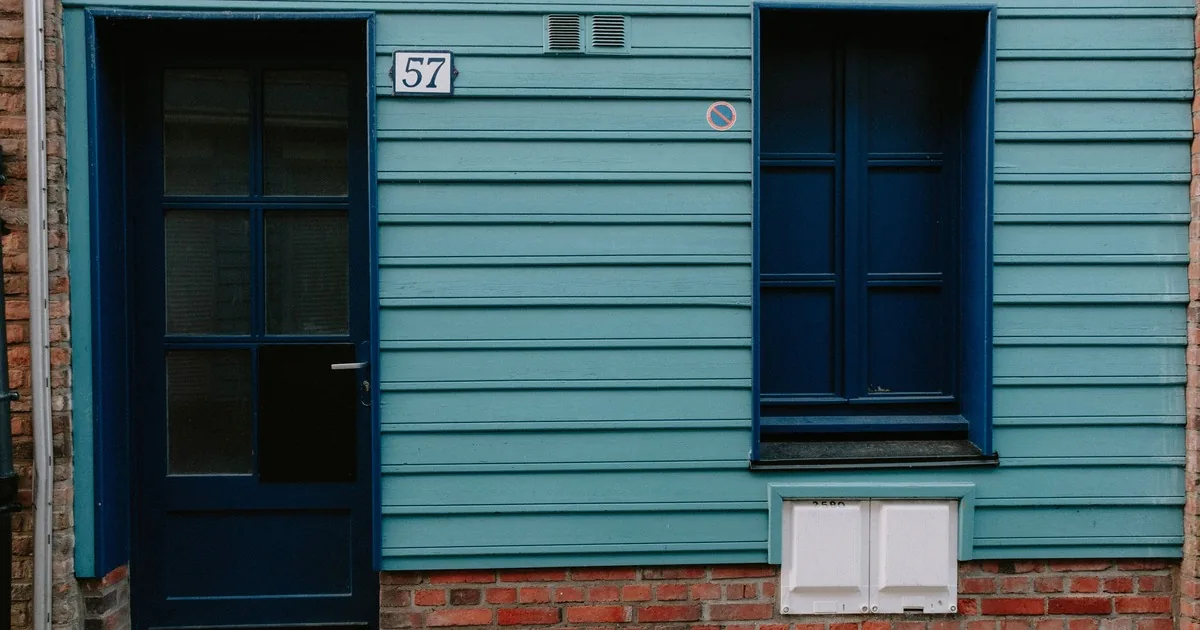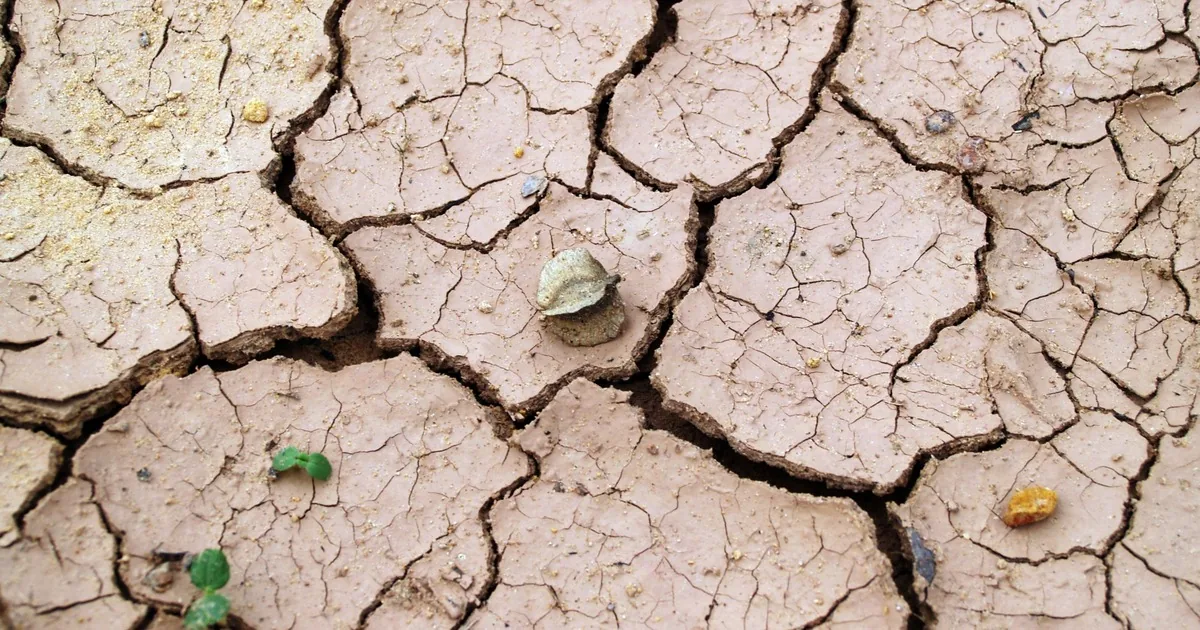
A homeowner calls in late summer and says, “The soil pulled away from the house, two doors started rubbing, and now there is a crack over the dining-room window.” The worst response is a diagnosis. The best response is a record: what changed, where it changed, when it appeared, and whether it is still changing.
Foundation movement after drought can involve shrinking fine-particle soil, uneven moisture around the building, drainage, vegetation, a leak, an older repair, or a condition unrelated to the dry spell. Reception cannot sort those causes by phone. It can give the inspector a clean map of the symptoms and the site.
Start with four facts. Record the affected side or room, the first date noticed, the current effect on normal use, and the most recent change. Then ask about the dry-weather timeline and nearby water conditions. That sequence keeps a vague “my foundation moved” call from becoming an equally vague appointment.
Why dry weather changes the inspection conversation
North Dakota State University Extension explains that clay and other fine-particle soils shrink as they dry. A gap can open beside a basement wall, and soil shrinkage may reduce support under part of a foundation. The building can then show sticking doors or windows and cracks in wall or ceiling finishes.
Those observations matter, but none proves that drought caused structural damage. A door may rub because of a loose hinge. Drywall can crack at an old joint. A soil gap can show that the ground beside the house dried without proving what happened under the footing or slab.
Uneven conditions deserve special attention. The Foundation Performance Association's maintenance and inspection guide says uniform soil-moisture changes tend to produce more uniform movement. Non-uniform changes may produce differential movement and more visible distress. One side of a house may be shaded by mature trees while another faces afternoon sun. A downspout may wet one corner. A plumbing leak may affect a small area that the caller thought was dry.
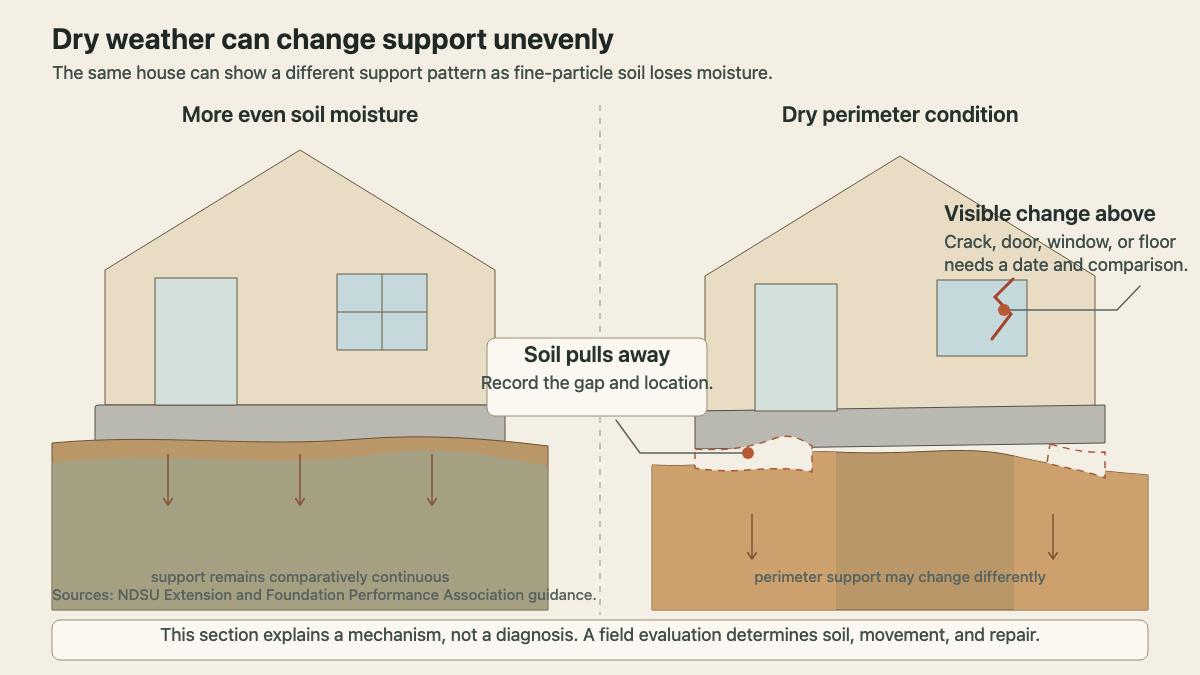
That is why the intake should preserve contrast. “The west bedroom door started rubbing in August, but the east-side doors still work normally” gives the field team something to examine. “All the doors are bad” does not.
Screen current safety and loss of use first
Ask whether anyone is in immediate danger before discussing the drought. Follow the company's emergency policy for a gas odor, damaged utility line, sudden collapse, visibly leaning masonry, broken glass under stress, or an area that cannot be entered safely. A caller who reports rapid change during the last day also needs prompt review under company policy.
For a stable call, describe the practical effect. Can the exterior door still open and latch? Is a window stuck shut in a bedroom? Does the floor feel newly sloped, soft, or separated from a wall? Has a crack opened enough to expose the outdoors? These answers set inspection priority without declaring the foundation failed.
Keep the caller out of risky investigation. Do not ask anyone to crawl under a house, probe beneath a slab, force a jammed opening, climb near damaged masonry, or alter a support. Existing photos and room-level observations are enough for booking.
Record the dry-weather timeline
“The drought did it” is a conclusion. Replace it with dates and events.
Ask when the caller first noticed unusually dry ground or a perimeter gap. Then ask when each building symptom appeared. Record whether the condition changed after rain returned, after irrigation resumed, after a tree was removed, or after a leak or drainage repair. If the caller has a dated photo from spring, a home-inspection report, an elevation survey, or paperwork from prior foundation work, note that it exists and request it through the company's approved channel.
The Foundation Performance Association's monitoring guidance treats repeated comparable observations, rainfall, drainage, landscaping, leaks, and irrigation as useful context for professional evaluation. One snapshot shows one moment. It cannot establish whether movement is seasonal, stable, or progressive.
Reception should capture the caller's own comparison in plain language. “The crack was not visible in the listing photo from May” is useful. So is “the closet door rubbed last summer, worked normally in spring, and started rubbing again last week.” Preserve the source and date of the comparison.
Map each symptom to a place
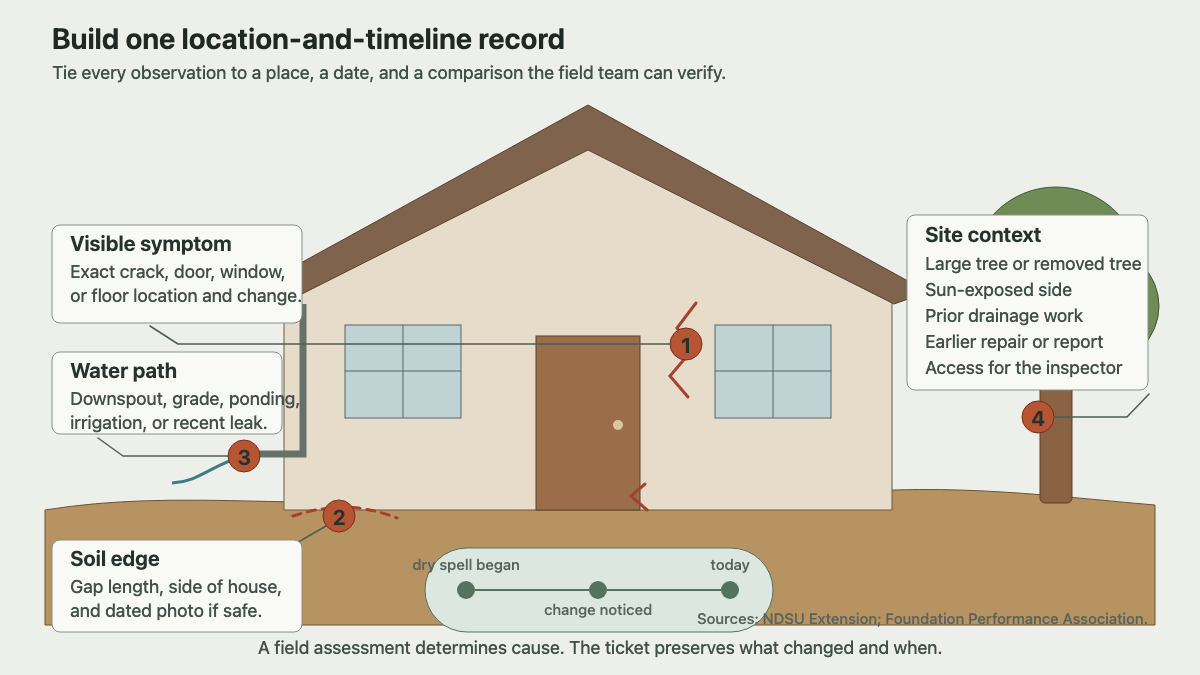
A useful ticket lets the inspector picture the property before arrival. Start at the outside and move around the building in one direction. Record the side of the house, the nearest room, and a fixed feature such as a window, door, chimney, garage corner, or utility entry.
For each observation, capture:
- what the caller can see or feel, using the caller's words
- the exact room, wall, opening, or exterior side
- when it was first noticed and whether it changed
- whether a dated photo, prior report, or earlier measurement exists
- nearby trees, downspouts, irrigation, ponding, grading changes, or known leaks
- any prior repair and whether the caller has its plan or warranty paperwork
Keep separate observations separate. A stair-step mortar crack on the north wall, a sticking hall door, and a soil gap along the west side may or may not share a cause. The inspector gets to connect them after seeing the building.
If the call centers on one visible crack, use the more detailed foundation crack inspection intake guide. If the main complaint is a slope, dip, or bounce underfoot, the uneven-floor intake guide gives the office a room-by-room framework.
Handle watering questions carefully
Callers often ask whether they should soak the ground before the inspector arrives. Avoid improvised advice. Soil, foundation type, drainage, water restrictions, and local practice differ.
NDSU discusses maintaining relatively constant moisture and applying water evenly during extended dry periods in the conditions covered by its guidance. The FPA guide warns against pouring water directly into a gap where soil has pulled away from the foundation. Concentrated water can travel through that opening and wet one area differently from the rest.
The safe office response is narrow: follow the company's written maintenance guidance, local restrictions, and any instructions already provided by the property's engineer or foundation professional. Record what the caller has already done, including sprinkler schedules, soaker-hose placement, hand watering, or a sudden return to heavy watering. Do not design a watering plan during intake.
Set the field visit up for a real answer
Before booking, confirm the foundation type if the caller knows it, the building age, occupied areas, access limits, pets, locked gates, and the decision-maker who will attend. Ask whether floor coverings, stored items, landscaping, or additions block the affected area. Note any sale, insurance, tenant, or contractor deadline, but do not promise a report format or completion date until the office confirms it.
Use a close that states the boundary clearly: “I have the west-side soil gap, the dining-room crack, the two rubbing doors, and the dates you noticed each one. The inspector will evaluate the property and explain whether more measurement or another specialist is needed.”
That wording protects the inspection. It also gives the caller a concrete next step.
The field professional may compare elevations, review drainage, look for plumbing or site moisture issues, recommend monitoring, or refer the owner to an engineer. Reception should not promise piers, leveling, drainage work, or any other repair. If the caller later requests bids, the foundation repair estimate guide helps the office separate inspection findings from proposal details.
A strong drought-related ticket reads like a small property history. It names the west bedroom, the August start date, the downspout at that corner, the missing spring crack, and the older survey waiting in the caller's email. The inspector arrives with evidence to verify, not a diagnosis inherited from the phone call.