A property manager calls at 3:40 on Friday. Unit 214 is empty, painters have temporary keys, the former tenant returned two copies, and the new resident arrives Monday morning. The request sounds simple: “Rekey the apartment before move-in.”
The useful intake starts with the unit and deadline, then maps every opening, existing key system, person who currently has access, and party authorized to approve changes. Confirm whether the unit is legally vacant before anyone changes access. Record mechanical keys, electronic credentials, common-area access, and the final handoff as separate parts of the job.
Confirm possession before discussing the locks
Ask whether the former tenant has surrendered possession and whether management is authorized to enter and alter the unit. A scheduled move-out date, an unpaid balance, or a set of keys on the counter does not prove that the tenancy has ended. If possession is disputed, an eviction is pending, or belongings remain under uncertain circumstances, stop the routine booking and route the call to the property manager’s legal process.
This boundary matters because rekeying can be a normal turnover task or an unlawful lockout, depending on the facts and local law. The Texas State Law Library’s lockout guide, for example, explains that changing locks during an active tenancy is tightly controlled and cannot replace the eviction process. Other states and cities use different rules. Reception should capture the location and possession status, then leave the legal conclusion to the owner, manager, or counsel.
Ask for the exact turnover date, new move-in date, and earliest approved service window. If contractors are still working, note who needs access before the new key takes effect. A locksmith cannot build a sensible handoff around “sometime this weekend.”
Name every opening in the unit
“Front door” misses half the job when a rental has a patio door, garage entry, storage cage, mailbox, or keyed interior room. Walk the caller through the property by opening, without asking them to expose key codes or dismantle hardware.
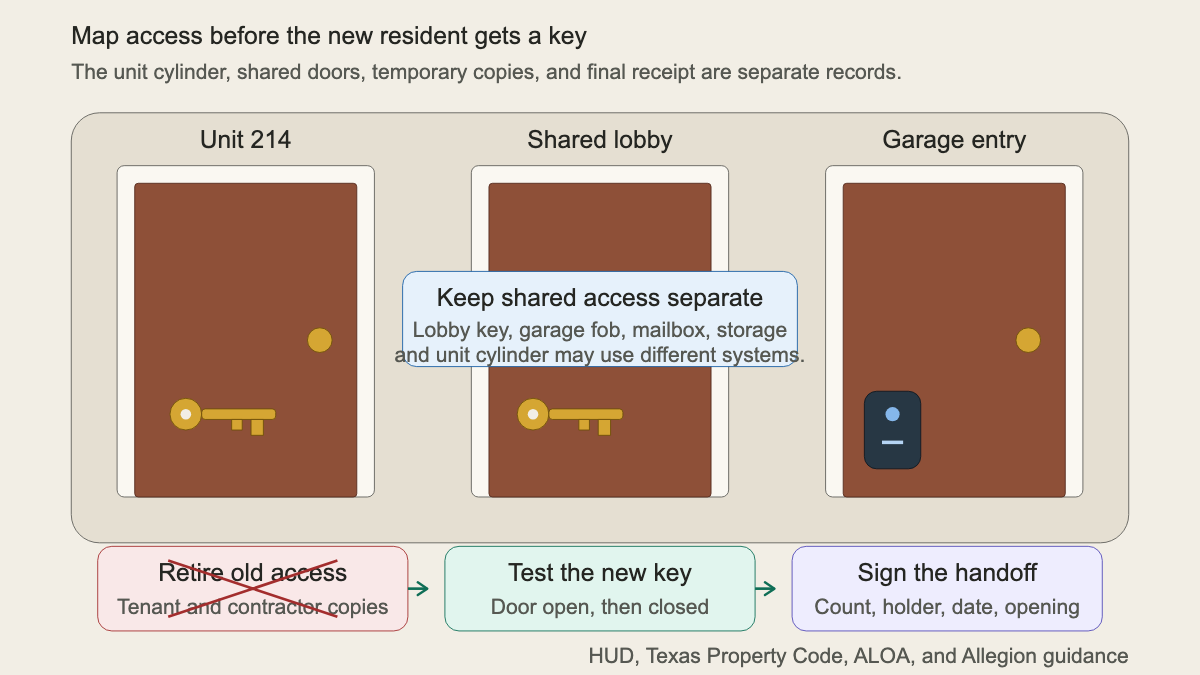
Start with the primary unit entrance. Record the building, unit number, floor, door location, and whether the opening has a knob, lever, deadbolt, mortise lock, interchangeable core, keypad, smart lock, or an unfamiliar device. Then ask about secondary exterior doors, an attached garage, private storage, locked utility closets, and any door shared with an adjoining space.
Common-area credentials belong on a separate line. The same resident key or fob may also operate the lobby, garage, package room, elevator, laundry room, or pedestrian gate. Changing the apartment cylinder may leave those permissions untouched. Conversely, changing a credential in a building system may affect more than one opening if the record is wrong.
HUD’s move-in and move-out form guidance treats doors, hardware, and locks as specific inspection items. That is a good model for the call: identify and inspect the opening, not merely the key that happened to come back.
Separate rekeying from hardware repair
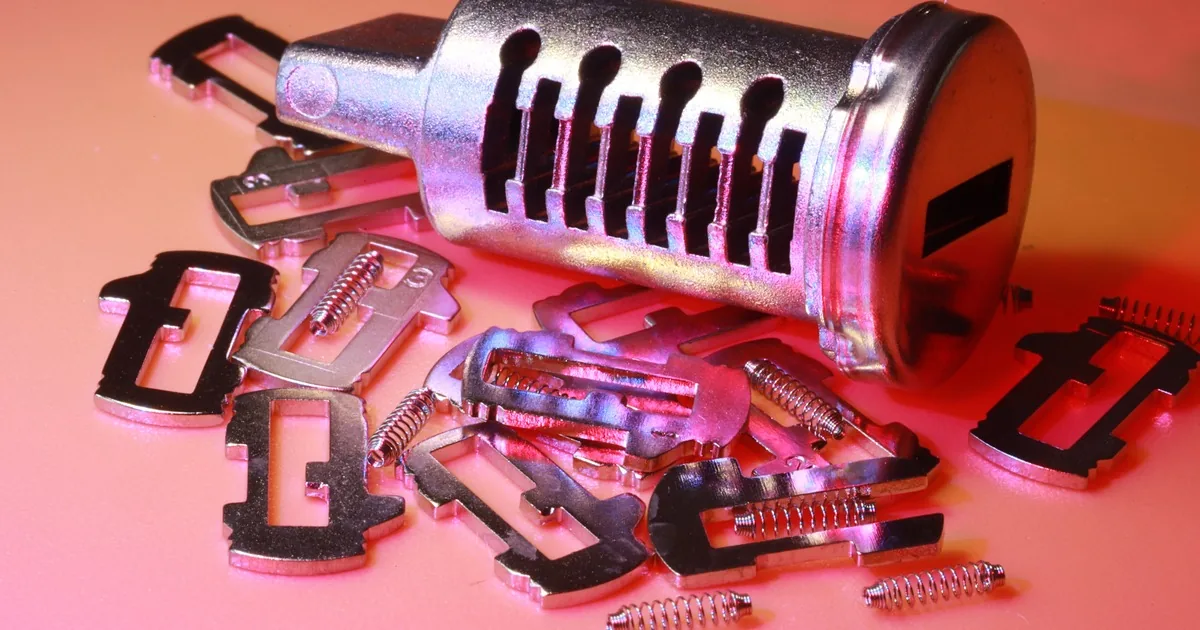
Rekeying changes which key operates a serviceable cylinder. It does not repair a loose lever, bent latch, split frame, dragging door, missing strike screw, or deadbolt that will not align. Ask how each lock worked during the move-out inspection.
Useful observations are plain and physical. Does the key turn without unusual force? Does the latch retract? Can the deadbolt extend with the door closed? Must someone lift or pull the door to lock it? Is any trim loose? Are there pry marks, a broken key, fresh damage, or parts missing?
ALOA’s consumer guidance on changing locks recommends rekeying after taking possession because all prior copies may not have been returned. That addresses old-key access. The existing hardware still has to be sound. A damaged cylinder or failed lockset may need replacement, while a misaligned opening may need adjustment or door work.
Photos help the locksmith prepare. Request one image of the whole door from inside, one from outside, and clear views of the lock faces and any brand markings. Ask the caller to keep keys, unit numbers, access codes, key cabinet records, and residents out of the frame. A photograph can identify a hardware family, but it cannot confirm the pinning, master-key relationship, or condition inside the cylinder.
Record the existing key system without exposing it
Ask whether the unit is keyed independently, keyed alike with another unit opening, or part of a master-key system. If the caller does not know, mark it unknown. Never ask for bitting numbers, a photograph of a code tag, or a full master-key chart in ordinary call notes.
For a managed building, capture the name of the key system, the locksmith or dealer that maintains it, and whether management has a control key for removable cores. Ask who may authorize new keys and how many resident, management, and emergency copies are required. If the building uses restricted blanks, note the approved purchaser and where the authorization record is kept.
Allegion’s key-control guidance makes the administrative problem clear: a lock limits access only when issued keys are tracked, unauthorized duplication is controlled, and keys are recovered when a holder leaves. Its key-management material also separates key issuance, returns, overdue keys, key rings, and holder assignments. Those are useful intake categories even when a property uses a paper log.
Do not promise that an existing cylinder can join a master-key system. Compatibility depends on the hardware, keyway, system records, authorization, and available combinations. The technician or system owner must verify that work.
Count every credential still in circulation
Returned keys are one data point. Ask how many copies were originally issued, how many came back, and which copies are known to remain with occupants, cleaners, leasing staff, maintenance workers, vendors, real estate agents, or contractors. Record unknown copies as unknown. Do not turn “the tenant says that is all of them” into a verified count.
Then cover electronic access. Does the unit use a keypad, mobile credential, card, fob, garage remote, intercom directory, or smart-lock account? Identify who administers each system and whether the old resident’s permission has been revoked. Mechanical rekeying does not delete a mobile credential. Deactivating a fob does not change the emergency override key.
Temporary turnover access needs an owner too. If painters receive one key on Friday and cleaners arrive Saturday, decide who signs it out, who receives it back, and when that copy stops working. A key left in a lockbox through move-in defeats an otherwise careful rekey.
Put the deadline and service sequence on one ticket
The office should know whether the locksmith is working in an empty unit, between vendor visits, or minutes before a resident handoff. Ask when the unit will be accessible, whether parking or elevator reservations are required, and who will meet the technician. Record alarm instructions through the property’s secure process, not in free-form notes.
The job may need a sequence such as contractor access first, final rekey after cleaning, management test, and resident handoff. Keep the sequence tied to named people and times. If the unit will receive new hardware during painting or door replacement, ask whether the locksmith should inspect now and return after that work.
Local duties can set the outside deadline. Texas Property Code Section 92.156, for instance, generally requires key, card, or combination-operated security devices to be rekeyed at the landlord’s expense by the seventh day after a tenant turnover date, subject to the statute’s details and exceptions. That is a Texas example, not a nationwide rule. The caller should verify the requirement for the property address and its housing program.
Close the job with a controlled handoff
Before scheduling, read the ticket back. A complete note might say:
“Building C, unit 214, second-floor corridor entrance. Management reports possession surrendered Thursday and authorizes access changes. New resident receives keys Monday at 9 a.m. The unit has one lever and one deadbolt at the corridor door, plus a keyed storage cage. Both unit locks operate normally during the move-out inspection. The storage padlock is excluded. The unit is on the building’s documented master-key system, maintained by the approved locksmith. Two resident keys were issued and returned; one painter key is checked out until Saturday at 4 p.m. Lobby and garage fobs are administered separately. Property manager Elena Ruiz will meet the technician, approve work, test the new keys, and sign for three resident copies and one sealed management copy.”
That note gives the locksmith authority, scope, system context, current holders, deadline, and handoff. It also exposes the remaining risk: the painter key must be returned or retired before the final release.
At completion, the property manager should record which openings were changed, which old keys were tested and rejected, how many new keys were issued, who received them, and what work remains. Keep sensitive key-system data in the approved system. The ordinary work order needs enough detail to prove the handoff without becoming a map of the building’s access hierarchy.
For broader property-management dispatch fields, use the property-manager locksmith work-order guide. The rekey and lock-change quote guide helps when the hardware scope is still uncertain.
An AI receptionist can collect the unit, openings, possession status, credential types, authorization, and deadline after hours. Human review should handle disputed possession, legal questions, master-key authorization, and any promise about compatibility. On Monday morning, the new resident should receive a tested key and a clean receipt, not a mystery ring inherited from the turnover crew.