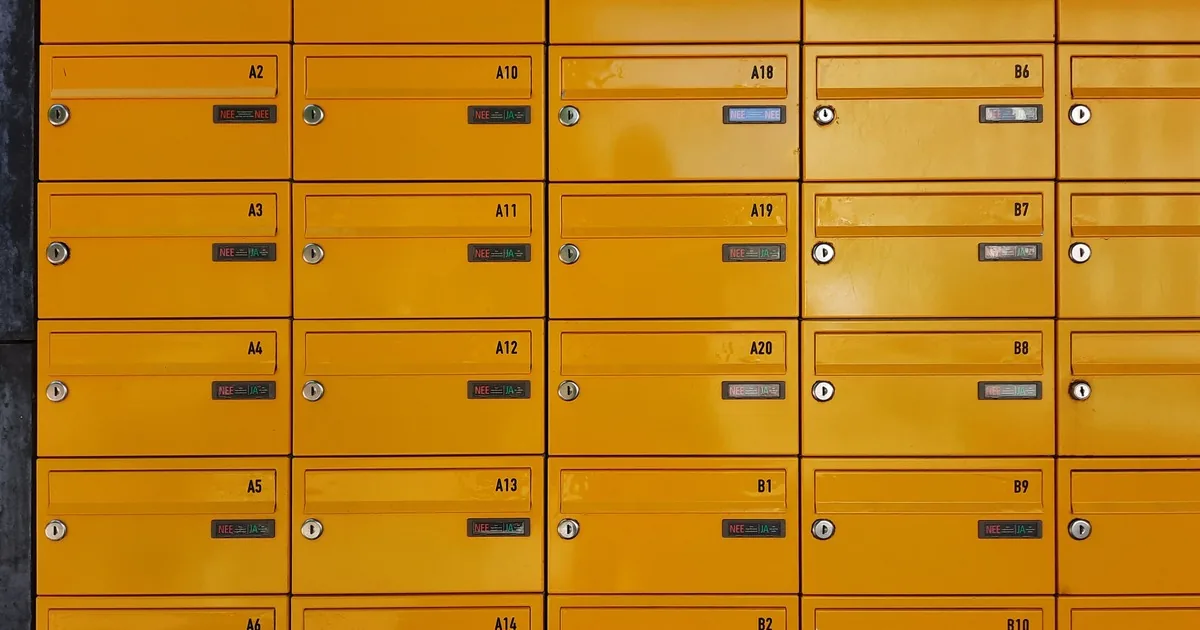
“My mailbox key is gone. Can you replace the lock today?” Before a locksmith office offers a time, it needs to know what the caller means by mailbox. A blue Post Office Box inside a postal facility, a neighborhood Cluster Box Unit, an apartment mail panel, and a locking box beside a house may look like versions of the same problem. They can have different owners and different service paths.
Start with location and control. Ask where the box stands, who assigned the compartment, and whether the local Post Office, a landlord, an HOA, or the caller manages it. Then identify the exact lock, the key state, visible damage, and who can authorize work. Ownership cannot be settled from a phone description or a photo alone.
Identify the mailbox before accepting the job
Ask the caller to describe the setting in plain language. Is the box inside a Post Office? Is it one compartment in a freestanding neighborhood bank? Is it built into an apartment lobby wall? Is it a private box on a porch, wall, curbside post, or rural route?
Get the service address, apartment or unit number, compartment label, and location of the bank. Do not copy any key code into open notes. If the caller knows the property manager, association, building owner, or local Post Office contact, record that too.
USPS says the property owner is responsible for repair of a personal mailbox. Its mailbox basics guidance also directs lock and key issues for a postal-owned Cluster Box Unit to the local Post Office. The important word is “postal-owned.” Many apartment and neighborhood banks are supplied or maintained through private property arrangements, so the office should confirm ownership before routing or declining the call.
A clean intake note might read: “Unit 14B, compartment B17 in a wall-mounted lobby bank. Property manager says the building owns the equipment and will send written work authorization.” Compare that with: “Compartment 6 in a neighborhood cluster box; resident says the Post Office issued the keys; ownership not yet confirmed.” Those are different tickets.
Separate the customer lock from carrier access hardware
A mailbox bank can contain more than one kind of lock. The small cylinder on an individual compartment is the customer lock. A separate postal access lock may release a larger panel or door so a carrier can reach many compartments for delivery.
USPS Handbook PO-632 describes the USPS master access lock as Postal Service equipment furnished for carrier access. A locksmith receptionist should never treat that lock as a resident cylinder or promise to service it. If the caller points to a lock on a large shared panel, note its position and pause the booking until the responsible postal or property contact identifies it.
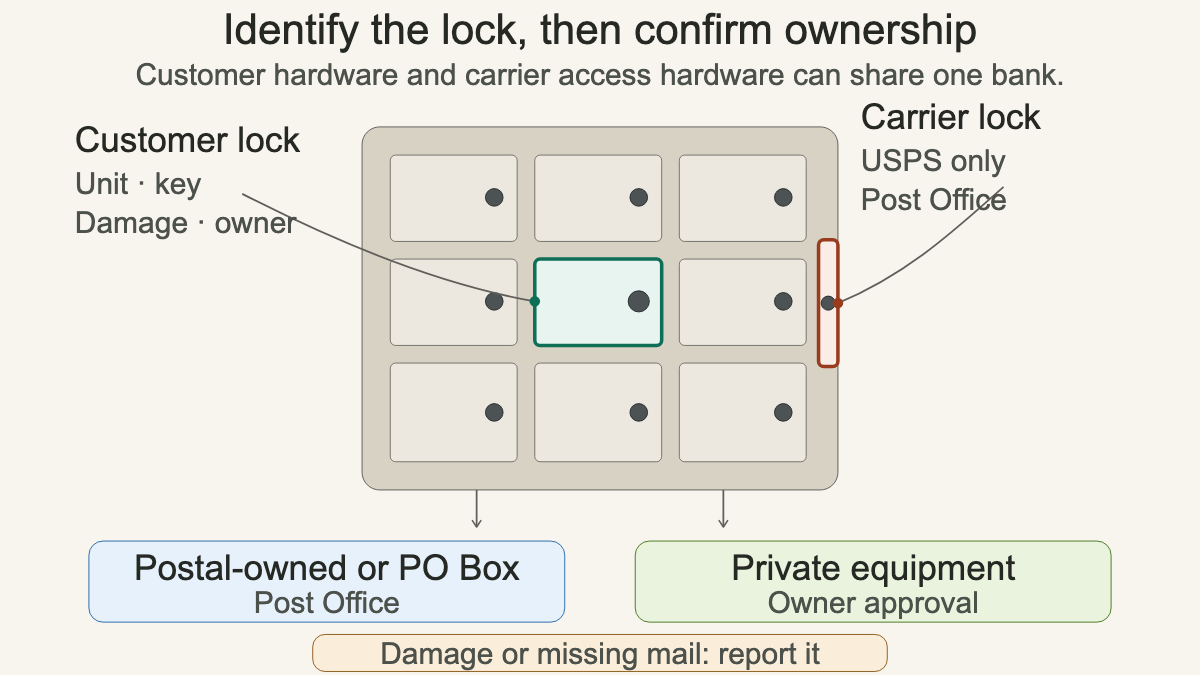
Use photos carefully. Request one wide image of the full mailbox bank and one close image of the affected compartment and lock. Ask the caller to cover visible names, addresses, tracking labels, and exposed mail. Do not request a photo of a working key, postal access key, key code, or inside mechanism.
Record the key state and what the door does
“Lost key” and “bad lock” should not share one checkbox. Ask whether the caller has any key, whether every issued key is missing, and whether the problem began with a key that stopped working.
If a key is present, ask what happens without encouraging force. Does it enter fully? Does it turn? Does the cylinder rotate while the compartment stays shut? Is the key bent or cracked? Is part of a key already broken inside? A fragment in the cylinder belongs in the broken-key service intake, with the mailbox ownership details attached.
Also record the door state. Is the compartment closed and locked, open but unable to lock, hanging loose, bent, or separated from its hinge? Is the lock face spinning? Are there pry marks around one door or damage across the whole bank? Did the issue appear after a freeze, impact, attempted break-in, painting, mailbox replacement, or recent tenant turnover?
For a postal-owned cluster box, the USPS cluster-box FAQ says the Postal Service keeps no duplicate customer key. When every key is lost, USPS may need to install a new lock and issue a new set. Reception should send that caller to the local Post Office, not quote a private lock change on postal-owned equipment.
Treat damage and tampering as a separate path
A clean cylinder with missing keys is one situation. Fresh pry marks, a forced panel, missing mail, several open compartments, or a person actively tampering with the bank changes the call.
Ask whether the caller sees active tampering, immediate danger, or evidence that mail may have been taken. Follow the shop’s emergency policy. The U.S. Postal Inspection Service has a mailbox vandalism reporting path, and active crime should be reported to local emergency services. Reception can give the official reporting direction. It should not investigate, confront anyone, or promise that a new customer lock will restore a damaged shared enclosure.
Preserve the caller’s words: “Lower panel bent near three compartments; caller found door B17 open; missing mail unknown; property manager notified.” Avoid conclusions such as “burglary confirmed” or “only the lock is damaged.” A technician or equipment owner needs to inspect the bank.
Verify the person who may authorize service
Mailbox calls involve access to private correspondence, so “I live here” is only the start of the record. Capture the caller’s name, callback number, relationship to the property, unit, compartment, service address, and the person who will meet the technician. Explain the shop’s identification and authorization policy before dispatch.
For an apartment, condominium, or managed property, identify the resident, property manager, association contact, equipment owner, billing contact, and person allowed to approve added work. A tenant may use the compartment but lack permission to alter building-owned hardware. A manager may approve the visit but need the resident present before the compartment is opened.
Do not accept a texted lease, driver’s license, utility bill, or photo as automatic proof. Reception collects documents through the shop’s approved channel. Authorized staff decide whether the record meets company policy and local requirements.
If the confirmed job is a private lock replacement, ask whether the cylinder must match a specific mailbox make or model. Record any manufacturer label without promising compatibility. A compartment door, cam, latch, and mounting pattern may limit the available part. The shop should also decide whether it services the box while closed or requires owner-provided access to the rear of the bank.
Book a bounded visit, not a blind lock replacement
State what the appointment covers. The first visit may be an inspection, an authorized opening and cylinder replacement, or a parts-identification call. The office should say which one.
Explain the service charge, included labor, key quantity, parts assumptions, and who can approve additional work. If the box type or ownership remains uncertain, do not give a final price. The FTC’s contractor guidance recommends written estimates that identify the work, materials, timing, and price. A small mailbox job still benefits from that clarity.
Keep the scope separate from a general home rekey. A caller who also wants apartment entry locks changed can use the rekey and lock-change intake. The mailbox work keeps its own authorization and equipment record.
Read the ticket back before booking: “You are the resident of Unit 14B. The affected door is compartment B17 in the lobby bank. The property manager confirms the building owns the bank and will email authorization. Both resident keys are lost. The compartment is closed, there is no visible pry damage, and the shared panel is intact. The manager will meet the technician and approve any part change after inspection.”
An AI receptionist can collect those fields after hours and route the ticket under the shop’s ownership, authorization, and damage rules. It should not identify postal property from a photo or accept a carrier access lock as ordinary customer hardware.
That readback gives the locksmith the box, the lock, the owner, and the approval path before anyone rolls a truck.