A homeowner calls about coating a two-car garage and asks for a price before moving the cars. The floor is “in pretty good shape,” except for a crack near one wall, dark marks under the SUV, peeling gray paint by the door, and a wet corner after hard rain.
That description already contains four different field questions. A useful garage floor coating estimate call should capture the slab’s condition, water history, contamination, existing finish, dimensions, use, access, and required return-to-service date. The office can then schedule the right assessment and give the estimator a floor map. Product selection and preparation belong with the person who inspects the concrete and checks the selected system’s instructions.
Treat the call as a slab-assessment request
“Do you install epoxy floors?” sounds like a product question. For the office, it should open a substrate conversation.
The American Concrete Institute’s guide to concrete protection systems says the condition assessment can include structural integrity, moisture or water, contaminants, environmental conditions, traffic, cracks, surface voids, and other factors that affect installation. It also says preparation requirements vary with the protection system and its manufacturer.
That is why a call taker should avoid approving “epoxy,” “polyaspartic,” or any other system from a brief description. Record what the customer wants from the floor, then gather the facts the estimator will need to evaluate it.
Start with the address and garage type. Is it attached, detached, under living space, or part of a larger workshop? Ask when the slab was placed if the caller knows, whether it has ever been coated, and whether the project covers the whole floor or one bay. Get approximate length and width, but label those dimensions as caller-supplied. Storage cabinets, stem walls, steps, curbs, posts, and utility platforms can change the actual coated area.
Next, ask for wide photos from the open garage door and close photos of every crack, peeling patch, stain, repair, drain, and damp area. A video walk-through can help when the floor has several distinct zones. Photos support routing. They do not replace the site visit.
Map the slab before discussing a coating system
A caller may report “one crack” without mentioning that it runs through a previous patch, crosses a joint, or widens near the door. Another may call an old coating “paint” because it is gray. The office does not need to identify the material. It does need to locate it.
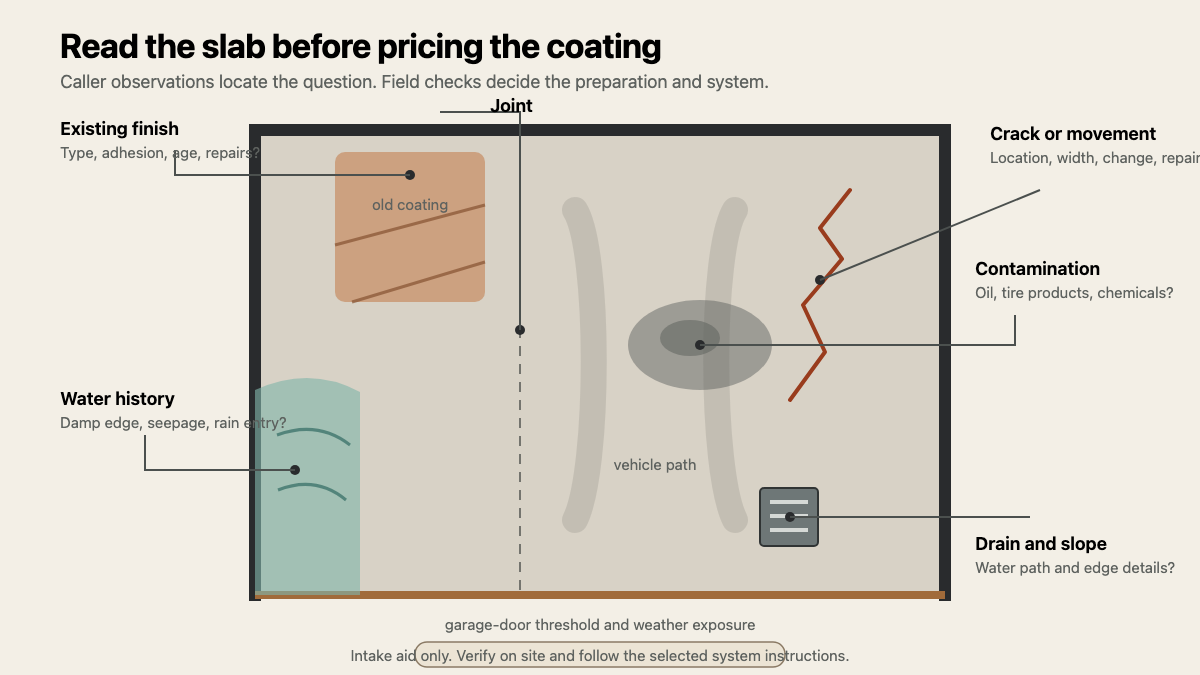
Build the floor map in plain language. “Peeling gray area inside the left bay, about three feet from the door” is more useful than “bad spot.” Mark control joints separately from random cracks. Note whether a crack looks repaired, whether its edges are level, and whether the caller has seen it change. Do not label it structural or cosmetic from the phone.
Ask about surface defects that may alter the scope:
- Cracks, spalls, pits, pop-outs, soft areas, or crumbling edges
- Saw-cut or formed joints, including any old joint filler
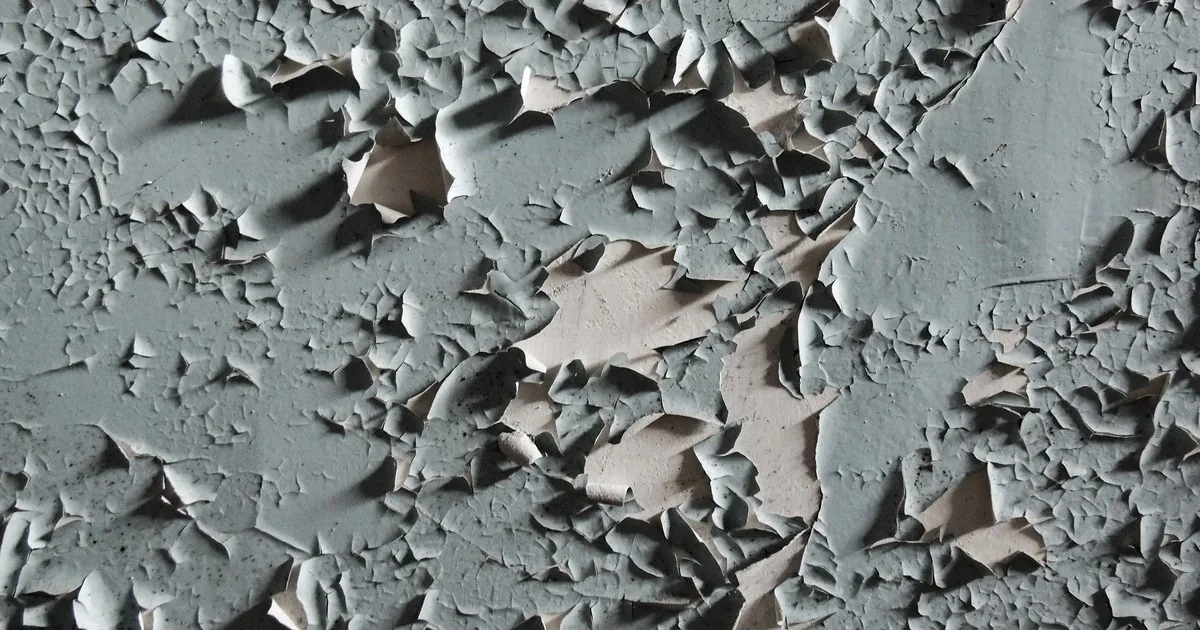
- Paint, sealer, epoxy, adhesive, tile residue, or unknown finish
- Oil, brake fluid, cleaners, fertilizer, road salt, rust, or battery stains
- Patches, resurfacing, prior crack repairs, or a previous coating failure
- Drains, slopes, curbs, steps, stem walls, and the garage-door threshold
- Areas that sound hollow, shed dust, stay dark, or feel damp
ICRI’s surface-preparation guideline overview starts with the substrate condition, the material to be installed, and job-site conditions. Its stated goal is a clean, sound, roughened surface without material that interferes with bonding. That work may involve specialized preparation and testing.
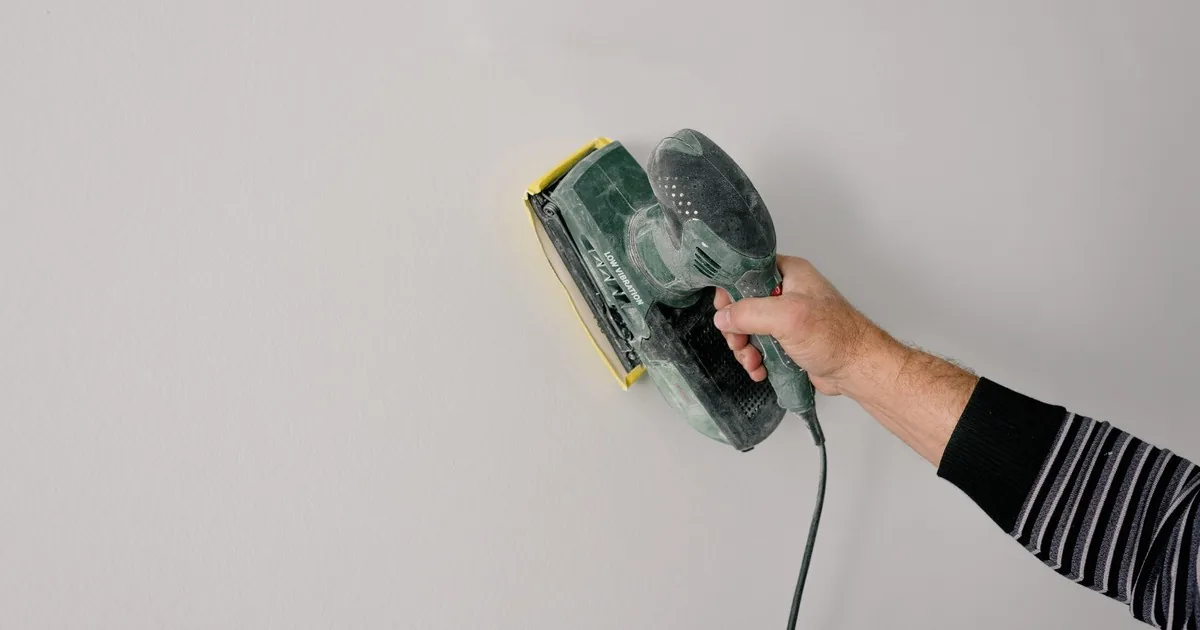
Do not tell the homeowner to grind the slab before the estimate. Grinding can erase evidence the estimator needs to see, damage edges and joints, spread contamination, and expose the worker to concrete dust. OSHA treats concrete grinding as a crystalline-silica construction task that requires appropriate exposure controls.
Ask for the garage’s water history
A floor that looks dry during the call can have a long water story. Ask what happens during heavy rain, snowmelt, irrigation, pressure washing, and humid weather. Does water enter under the garage door? Does a wall or slab edge darken? Has the drain backed up? Has the customer seen white residue, bubbles, peeling, or a musty storage area?
The office should write down the customer’s observations without turning them into a moisture diagnosis. “Dark at the rear wall after rain” is useful. “Hydrostatic pressure” is a conclusion the call does not support.
ACI’s guide for moisture-sensitive flooring materials includes epoxy coatings within its scope. It separates moisture movement, testing, drying, vapor retarders, surface preparation, repairs, and manufacturer recommendations. In practice, that means a visual check and a caller’s “it feels dry” cannot approve a coating.
Sherwin-Williams’ resin-flooring guidance on blistering and disbondment also discusses moisture movement, slab condition, contamination, curing, repairs, testing, and preparation. Its product examples and limits apply to the systems named there. The estimator should use the current instructions for the system proposed on this job.
If the caller reports active water entry, recurring dampness, widespread peeling, or a history of failed coatings, flag the appointment for moisture evaluation before treating it as a routine color-and-flake estimate. The Answara guide to concrete moisture testing before floor installation explains the difference between collecting a moisture history and promising a test result.
Capture what happens on the floor
A garage used for parking two daily drivers has different service demands from a home gym, woodworking shop, motorcycle repair bay, dog-washing area, or storage room that rarely sees tires. Ask the caller to describe the real use, including seasonal use.
Vehicle questions should cover how many vehicles park inside, tire locations, fluid leaks, road salt, and whether a trailer, jack, lift, or rolling tool chest crosses the floor. Workshop questions should cover chemicals, welding, grinding, heavy equipment, dropped tools, and washdown. If the space doubles as a gym or hobby room, note concerns about texture, cleaning, bare feet, movable mats, or sunlight near the open door.
The call should also capture the desired appearance without treating a sample photo as a specification. Ask whether the customer wants a solid color, decorative broadcast, clear finish, or simply an easier-to-clean surface. Ask where slip resistance matters, especially near the door, steps, sinks, or wash areas. The estimator can match those priorities to a compatible system after seeing the slab.
This is also the right place to ask why the customer is coating now. A recent move, failed DIY kit, new cabinetry, planned workshop, or home sale can change the sequence and deadline. If an existing finish is peeling or bubbling, link the job to the broader coating-failure inspection intake instead of assuming another coat will solve it.
Get access and scheduling facts into the estimate
Surface work needs an empty, reachable floor. Ask what currently sits in the garage and who will move it. Wall-mounted cabinets may stay. Freestanding shelves, freezers, motorcycles, lawn equipment, boxes, and ceiling-hung items can affect access and dust containment. Record whether the garage has a second exterior door, a usable driveway, nearby power, water, and any community rules on contractor hours or parking.
Then ask for the deadline in operational terms: “When must the first vehicle be back inside?” That answer is better than “We need it done Friday.” The selected coating system, slab temperature, humidity, preparation, repairs, number of coats, and manufacturer instructions all affect the work sequence and return to service. The office should never promise a universal one-day turnaround.
Attached garages add household coordination. Ask whether children, pets, or occupants with access concerns will be home. Find out how the family enters the house if the garage route closes. If the garage contains a furnace, water heater, electrical panel, laundry equipment, or another service point, mark it for the estimator. The contractor can then plan access and protection around equipment that must remain available.
A good appointment handoff also states who will make decisions. If one homeowner requests the estimate while another chooses colors or approves the scope, schedule around both when possible. The general painting estimate scheduling guide covers that decision-maker check in more detail.
Hand the estimator a floor-condition packet
Before confirming the visit, read the scope back: garage size, current use, existing finish, crack and joint locations, water history, contamination, repairs, contents, access, desired appearance, and required vehicle return date. Attach the photos in that same order.
The packet should separate observations from open questions. For example: “Caller sees peeling near the door and darkening at the rear wall after heavy rain. Existing coating type, slab moisture condition, crack movement, preparation method, repair scope, and coating compatibility require field verification.” That sentence tells the estimator what to inspect without pretending the office has solved it.
An AI receptionist can collect the same fields after hours and request the photo set. Keep diagnosis, testing, preparation approval, and product selection with the qualified estimator and the selected manufacturer’s instructions.
When the estimator arrives, the floor should already have a story: where cars sit, where water appears, what failed before, what must be moved, and when the garage has to work again. The site visit can then focus on the concrete instead of rebuilding the call from scratch.