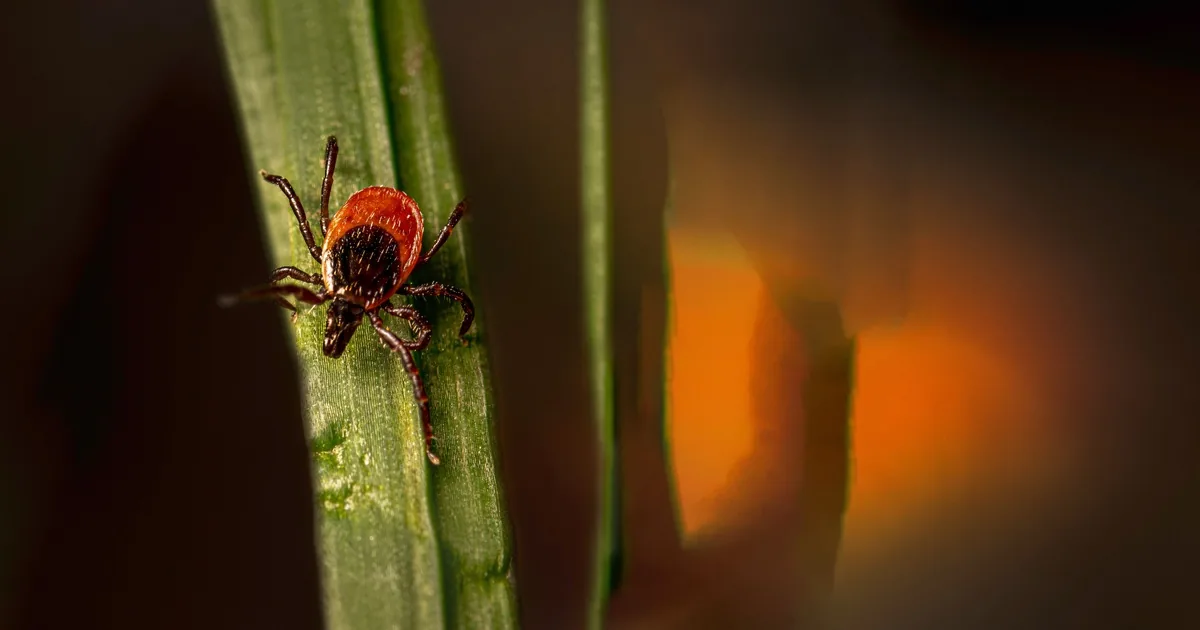
A homeowner calls after pulling a tick from the dog. They want the whole acre sprayed before the children use the swing set this weekend. The back lawn is open and sunny, but its far edge meets woods, leaves have collected behind a stone wall, and the dog follows a worn path through a side gate into the brush.
The office needs a map before it gives a treatment answer. Ask where the tick was found, when it was noticed, which parts of the property people and pets use, where lawn meets brush or woods, what wildlife visits, which gardens or water features need protection, and what products have already been applied. Book the company’s approved inspection or quote. Leave tick identification, pesticide selection, medical questions, and pet-product advice to the qualified person responsible for each.
Start with the tick that prompted the call
“Ticks in the yard” can mean an attached tick found on a child, one crawling on a dog after a trail walk, or several ticks collected from a kennel. Those reports should not receive the same note.
Ask who or what the tick was on. Record whether it was attached or crawling, where on the body or pet it appeared, when it was found, and what outdoor places had been visited during the previous day. Include parks, trails, neighboring lots, fields, dog runs, and the customer’s own yard. The CDC notes that ticks occur in grassy, brushy, wooded, and animal-used areas, and that many people encounter them near home.
A clear photo may help a qualified reviewer, especially if it includes the tick beside a familiar object for scale. If the company accepts saved specimens, use its written collection instructions. Reception should not name a species from “small and brown,” estimate how long a tick was attached, or assess disease risk.
Route health concerns out of the sales conversation. A caller with a tick attached to a person, a new rash, fever, or other symptoms needs medical guidance from an appropriate healthcare source. The pest control appointment can still be documented, but it does not answer a clinical question. The same boundary applies when an animal seems ill. Send that concern to a veterinarian.
Divide the yard into edges, routes, and use areas
Lot size matters for quoting, but square footage alone says little about where an inspection should begin. Ask the caller to describe the property as zones.
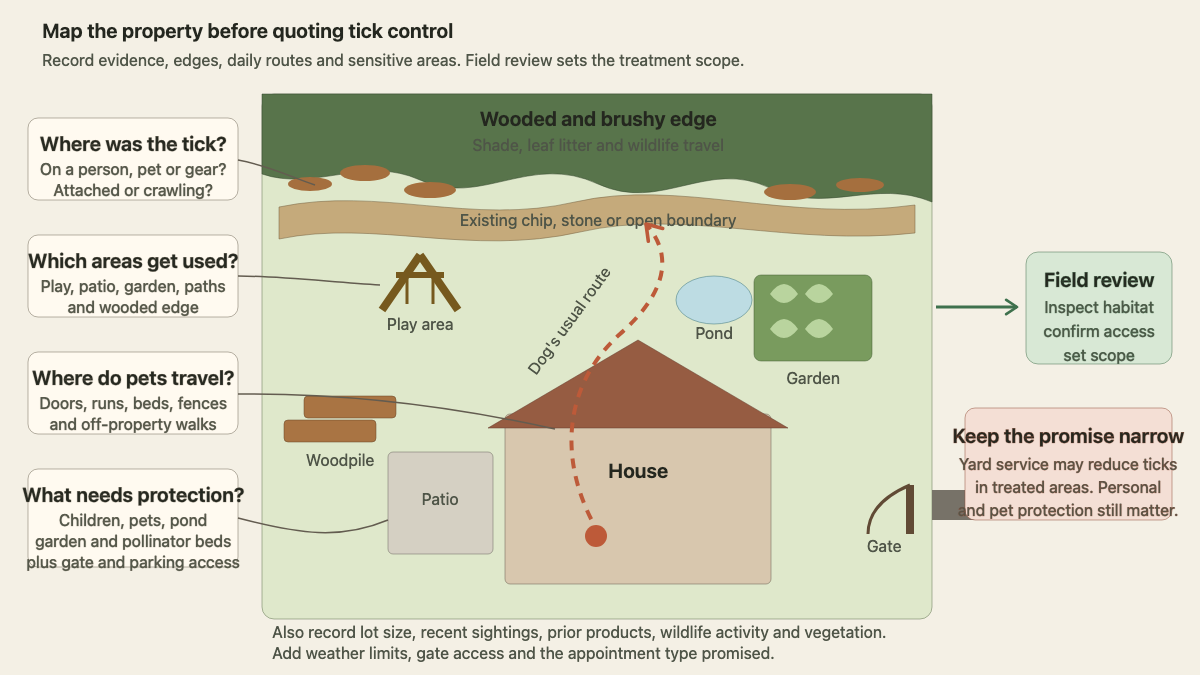
Start at the house and move outward. Record doors used by people and pets, patios, decks, play equipment, vegetable beds, pool areas, sheds, kennels, paths, fences, and gates. Then locate the transition from maintained lawn to taller grass, shrubs, leaf litter, stone walls, woodpiles, or woods. Ask which zones are sunny and open and which stay shaded or damp.
Cornell IPM’s landscape guidance treats habitat and human use as separate parts of the problem. It recommends open, sunny activity areas, less leaf litter, trimmed vegetation, and separation between frequently used spaces and wooded edges. It also warns that habitat advice aimed at blacklegged ticks may be less useful for other species. That is a good reason to record the property without announcing a universal plan over the phone.
Ask for a rough lot sketch or four to six ground-level photos when the company accepts them. Useful views include the rear property line, both side yards, the main pet route, the play or seating area, and the gate a technician would use. Do not ask anyone to enter dense brush or expose themselves to collect better evidence.
Put pets and their routes on the same map
The question “Do you have pets?” is too shallow. List every dog and cat that lives at the address or visits regularly. Ask which doors they use, where they rest outside, whether they enter woods or tall vegetation, and whether they visit dog parks, trails, farms, boarding facilities, or another property.
The CDC’s pet tick guidance says pets can encounter ticks outdoors and carry them into the home. It recommends daily checks for pets that go outside. Those facts support better intake, but they do not turn a receptionist into a veterinary adviser.
Record the name and date of any veterinarian-directed prevention the owner volunteers, along with where the pet spends time. If the caller asks which collar, topical product, or oral medication to use, direct the question to their veterinarian. This is especially important for cats because products and exposures that may be acceptable for dogs can be unsafe for them.
A brown dog tick report may also include indoor activity or a kennel, while another caller may have found a tick only after a wooded hike. Reception does not have to settle that distinction. It does need to capture indoor sightings, pet bedding locations, kennels, crates, attached garages, and the rooms where the pet rests so the field team can decide what requires inspection.
Record wildlife and property conditions without blaming the customer
Ask whether the caller regularly sees deer, mice, chipmunks, raccoons, stray animals, or ground-feeding birds. Note tracks, droppings, burrows, damaged fencing, spilled birdseed, open trash, and gaps below sheds. Keep the wording observational. “Deer cross the rear yard most evenings” is useful; “deer caused the infestation” reaches beyond the evidence.
Firewood, stone walls, dense groundcover, shaded leaf packs, brush piles, and stored materials belong on the record. So do recent landscaping changes. A customer may have cleared brush last month, installed a new fence, expanded a play area, or moved a woodpile beside the shed. Ask what changed and when.
Water features need special attention because they can limit product choices and access. Record ponds, streams, drainage swales, wells, pools, birdbaths, and irrigation. Add vegetable gardens, fruit trees, beehives, pollinator beds, chicken runs, and any area the customer does not want treated. The technician needs those facts before selecting a lawful, label-compliant approach.
Ask what has already been tried
Customers may have used a hose-end spray, granules, essential-oil products, a lawn service, homemade tick tubes, or a treatment intended for another pest. Ask for the product name, application date, areas covered, and who applied it. A label photo is more reliable than a bottle described as “the natural one from the hardware store.”
Do not advise a second application, a stronger mix, or a combination of products. The CDC tells property owners to follow labels and check local health or agricultural guidance for timing, product choice, and residential application rules. Those rules vary, and the product label controls where and how a pesticide may be used.
Also ask about recent mowing, leaf removal, brush clearing, fencing, and changes to play or seating areas. These are useful scope details. They should not be presented as proof that the yard is safe or unsafe.
For callers who are also asking about standing water and biting insects, keep the tick inquiry separate from the mosquito control plan intake. The same yard can need two different inspections, service plans, and expectations.
Set expectations before discussing a price
A quote should describe what the company is actually offering: an inspection, a measured treatment area, a recurring program, habitat recommendations, or some combination allowed by company policy. Avoid “We spray the whole yard” unless that phrase accurately describes the approved service and the technician has enough information to confirm it.
The CDC states that outdoor pesticides can reduce ticks in treated areas, but it also says people should not rely on spraying to reduce infection risk. Cornell reviews the same gap from another angle: an intervention may reduce questing ticks without proving a reduction in human encounters or tickborne disease. The office should promise only the service it can perform.
A clean booking record includes:
- service address, lot size, property type, and the appointment type requested
- where each tick was found, whether it was attached, the date, safe photos, and identification uncertainty
- lawn, woods, brush, leaf litter, stone walls, woodpiles, sheds, gates, paths, and shaded areas
- patios, play equipment, gardens, pools, ponds, wells, pollinator beds, and other sensitive zones
- dogs, cats, kennels, outdoor routes, pet resting areas, and off-property exposure
- deer, rodents, stray animals, bird feeders, trash, fencing, and recent landscape changes
- prior products, dates, application areas, the applicator, access limits, parking, and weather concerns
Read the scope back in plain language: “Tick found attached to the dog Sunday after time in the rear yard and neighboring trail. Half-acre lot. Mowed center lawn meets woods across the back, with leaf litter behind a stone wall. Children use a swing set about 20 feet from that edge. Dog exits through the east gate and follows the fence line. Vegetable bed, small pond, and beehive are marked as sensitive areas. Customer used a hose-end product three weeks ago and will send the label photo. Quote visit booked; treatment method and area are pending field review.”
That note gives the technician a property to inspect. It does not sell certainty the yard cannot provide.
An AI receptionist can collect the same approved fields after hours and route medical concerns, pet-product questions, pesticide exposures, uncertain service areas, and sensitive-site issues to a person. The useful automation is a complete map and an honest handoff.