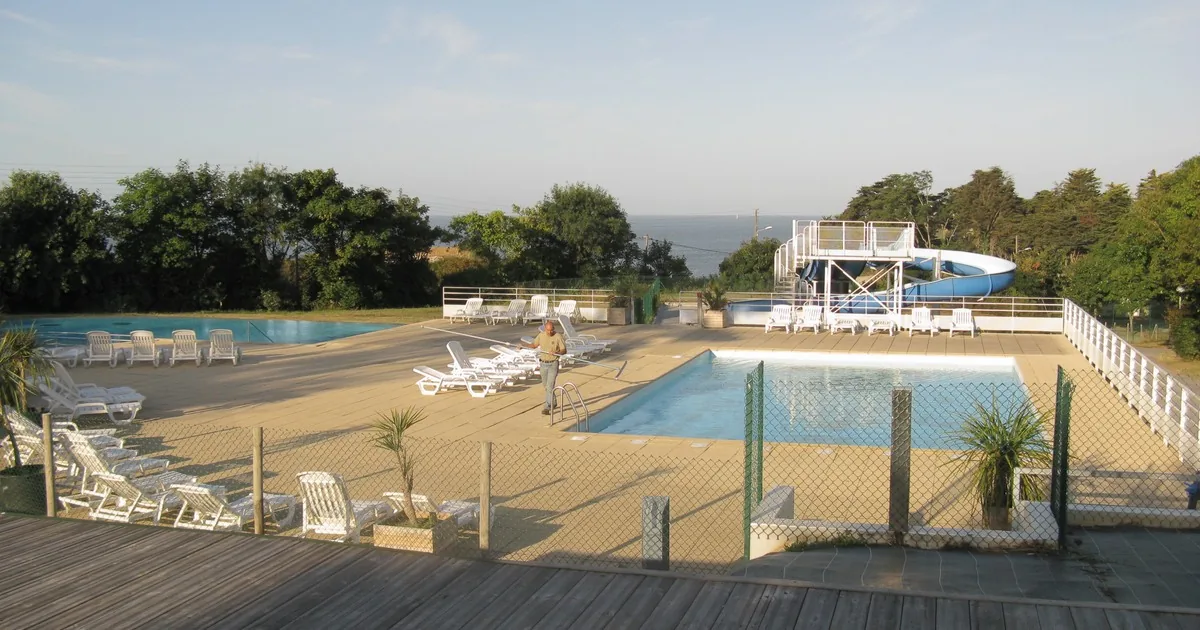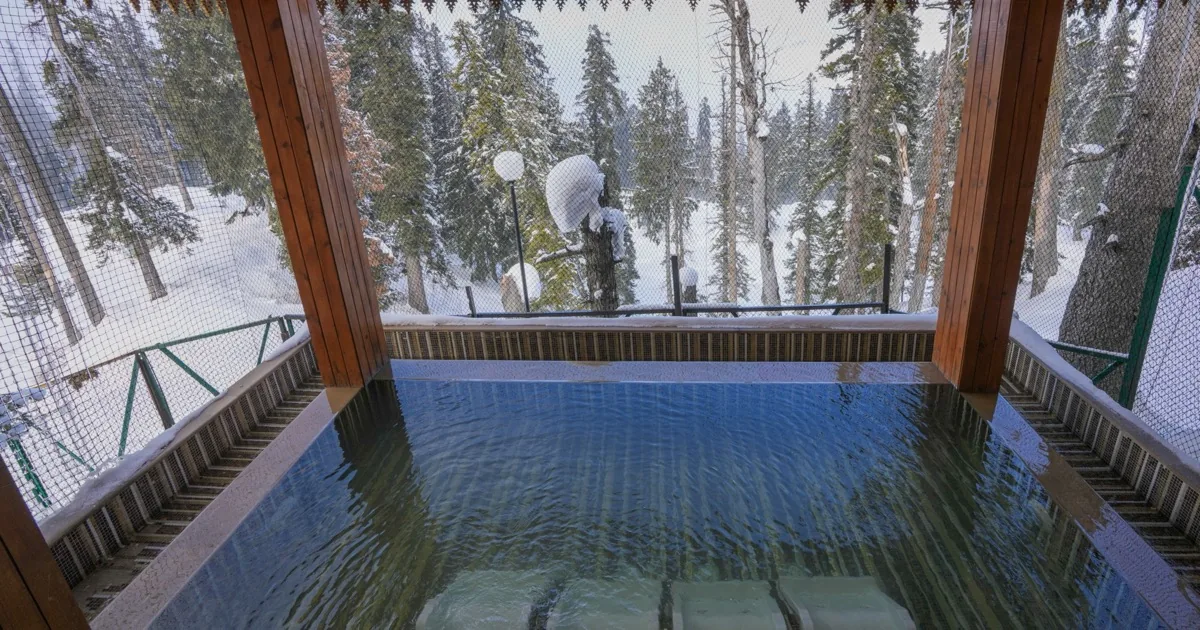
“I need the pool closed next Friday” sounds like a complete request. It rarely is. The crew may arrive to find an attached spa, two pumps, a heater, a salt system, a waterfall line, a torn cover, and a locked equipment enclosure that nobody mentioned.
A pool-closing call should establish the climate and deadline first. Then identify the pool shell, plumbing openings, equipment, optional systems, water and cover readiness, active problems, and site access. The office is building a scope record, not teaching winterization over the phone.
Use the company's own service definitions. A “full closing,” “winterization,” or “partial close” can mean different work in different markets, and some warm-climate pools remain in operation through winter. Confirm what the caller expects and what your company actually provides before assigning a time slot.
Confirm the service and the date
Start with the service address. The property's climate, exposure, and operating plan affect whether the owner needs a freeze-climate closing, a lighter seasonal service, or continued operation. Pentair's winterization guidance distinguishes pools in freezing regions from pools in warmer areas that may stay open.
Ask when the customer wants the pool out of service and why that date matters. A homeowner leaving town, a seasonal property manager, and a family planning one last weekend of swimming have different scheduling constraints. Record the deadline as a request until the office confirms crew availability and preparation requirements.
Clarify whether this is the first closing under the current owner. If the pool was closed by your company last season, find the old work order. It may show equipment, cover hardware, stored plugs, valve notes, and access instructions. Still ask what changed. A new heater, remodeled spa, replaced pump, added water feature, or altered automation can make last year's record incomplete.
For a new customer, ask who handled the prior closing and whether there is a service report. Do not assume “the pool company took care of everything” identifies the system or the scope.
Map the whole pool system
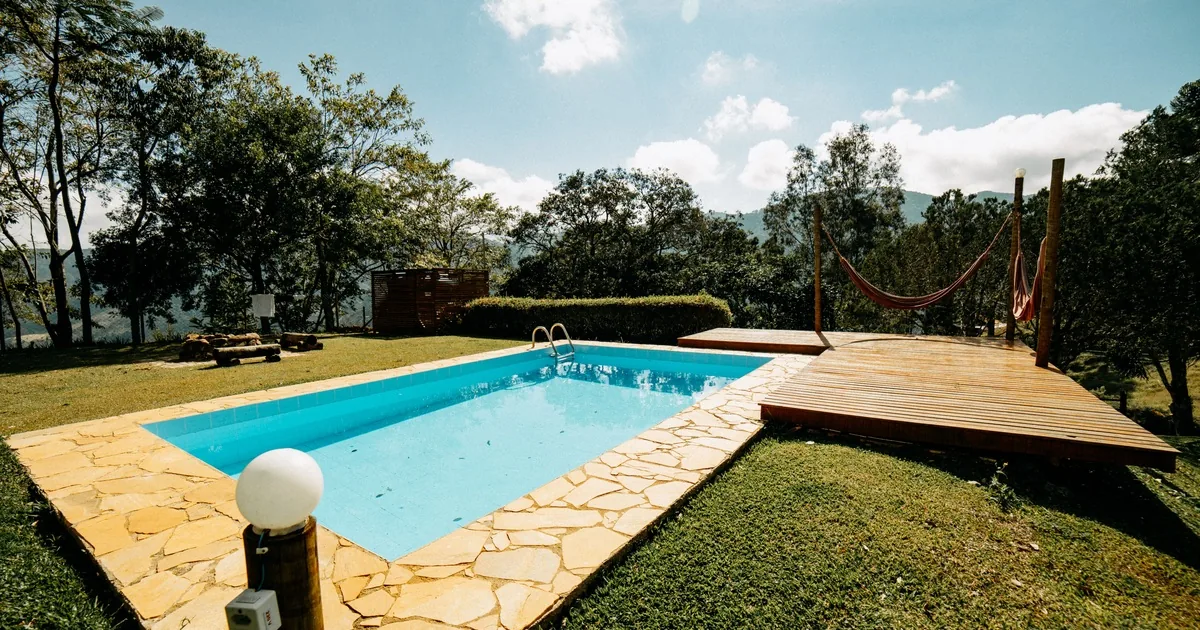
A useful intake follows the water path. Start with the pool itself: inground or above ground, shell material if known, approximate dimensions, attached or separate spa, and any unusual shape or shallow shelf that affects cover handling. Mark uncertain answers as unknown.
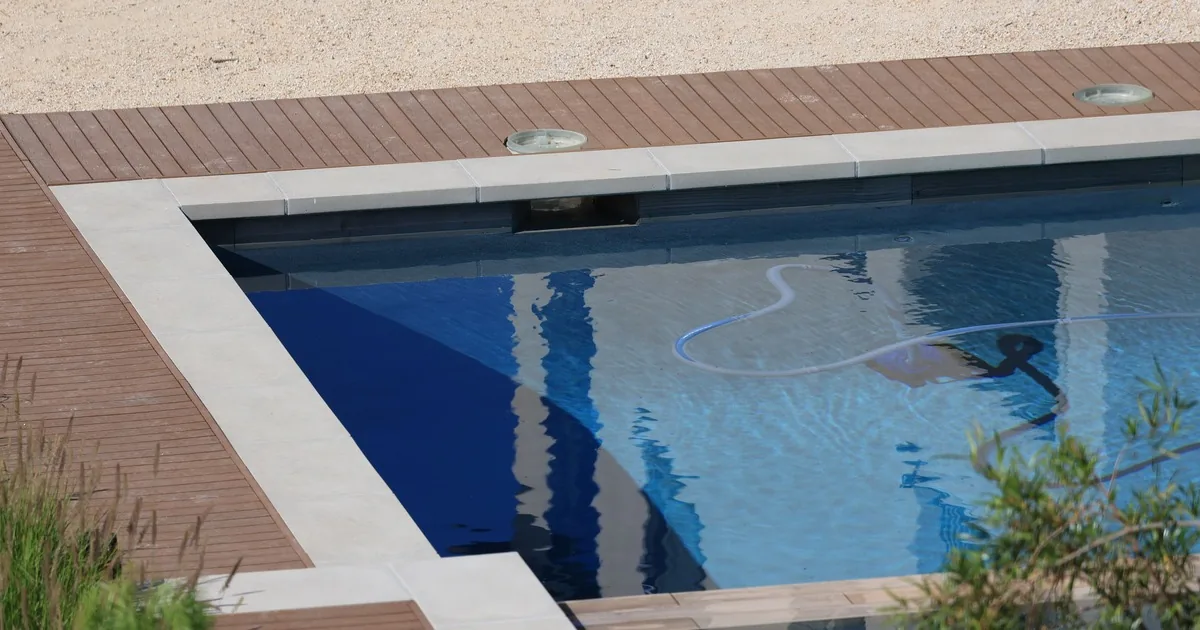
Then ask about the openings and branches. How many skimmers are visible? Are there wall returns, a main drain, vacuum line, cleaner line, or dedicated spa suction and return? Does the property have a waterfall, deck jet, slide, bubbler, fountain, solar loop, or other water feature? The caller does not need to name every valve. Photos of the pool and equipment area can preserve more useful evidence than a long guess.
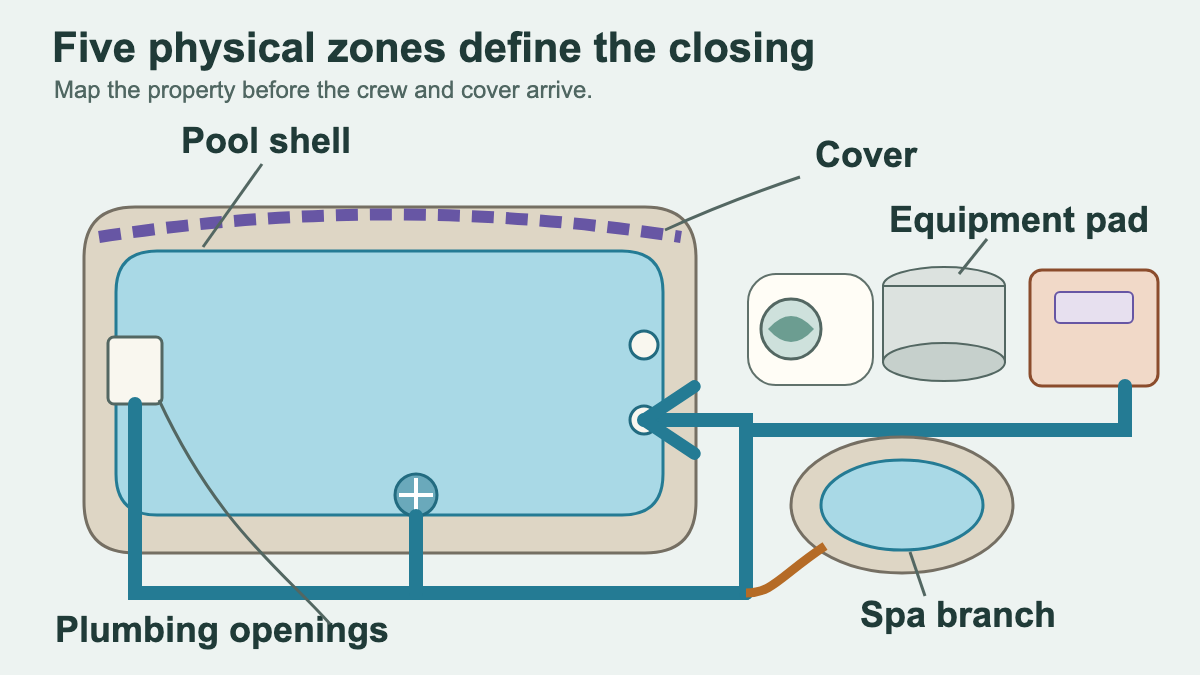
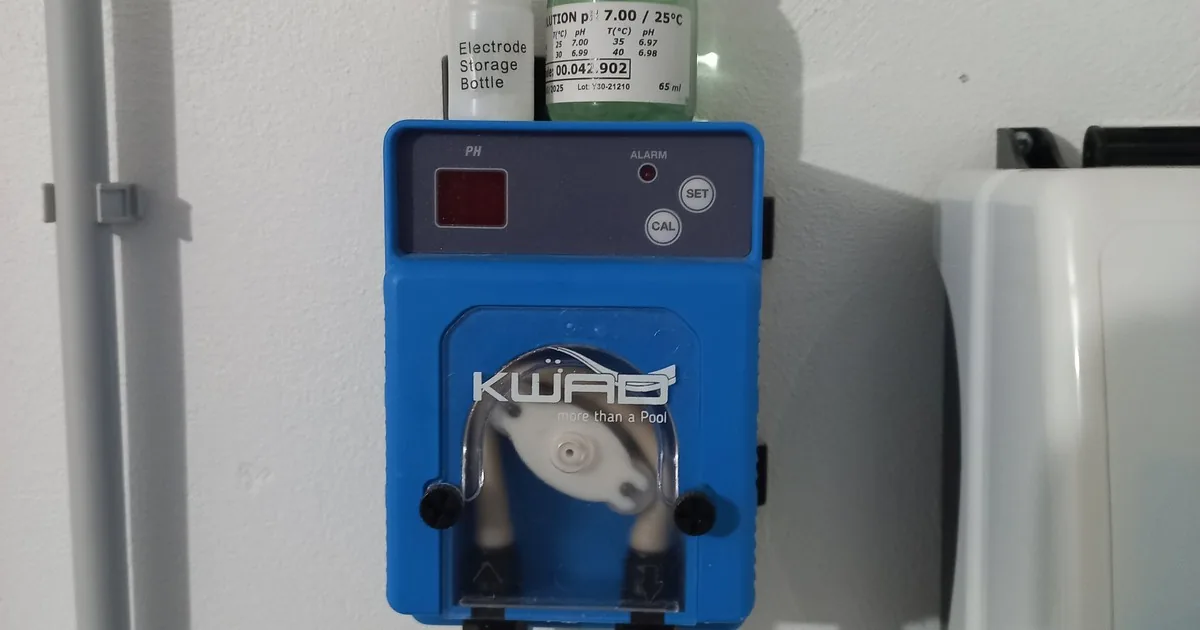
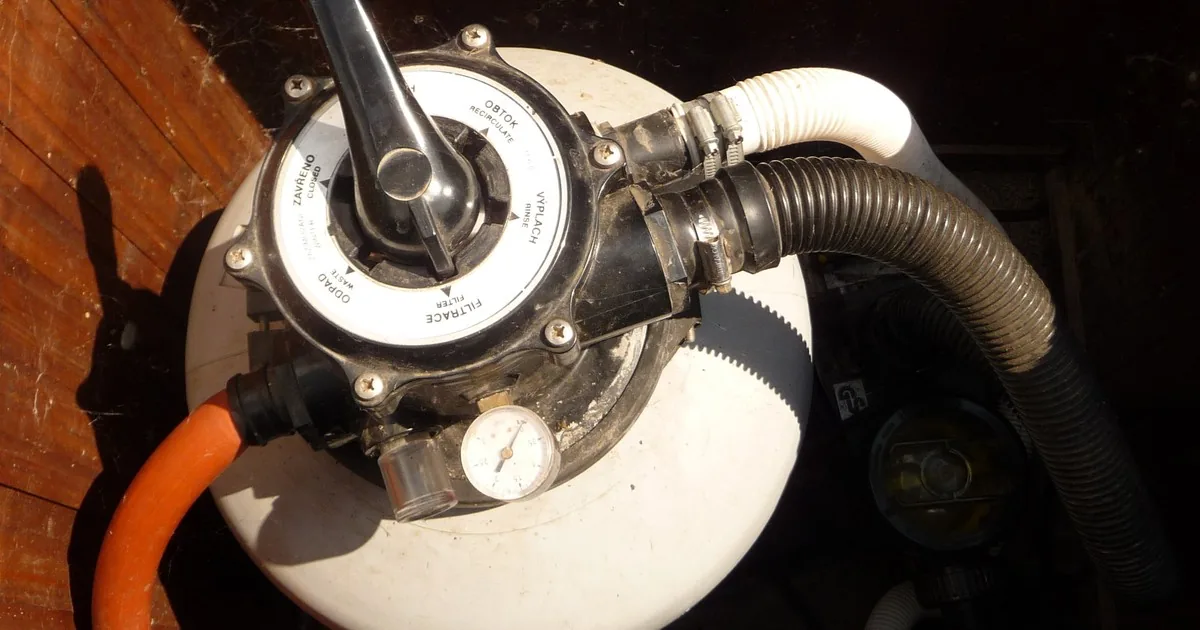
Move to the equipment pad. Record the number of pumps and filters, the filter type if known, heater type, sanitizer, automation controller, booster pump, cleaner, and any separate equipment serving a spa or water feature. Ask for one wide photograph of the whole pad and closer images of equipment labels that are safely visible. Never direct a caller to remove a panel, open a filter, operate a gas valve, or reach into electrical equipment.
The Pool & Hot Tub Alliance winterizing guide describes work across water preparation, plumbing, equipment, and the cover. That breadth is why a ticket that says only “standard inground closing” can fail before the crew unloads.
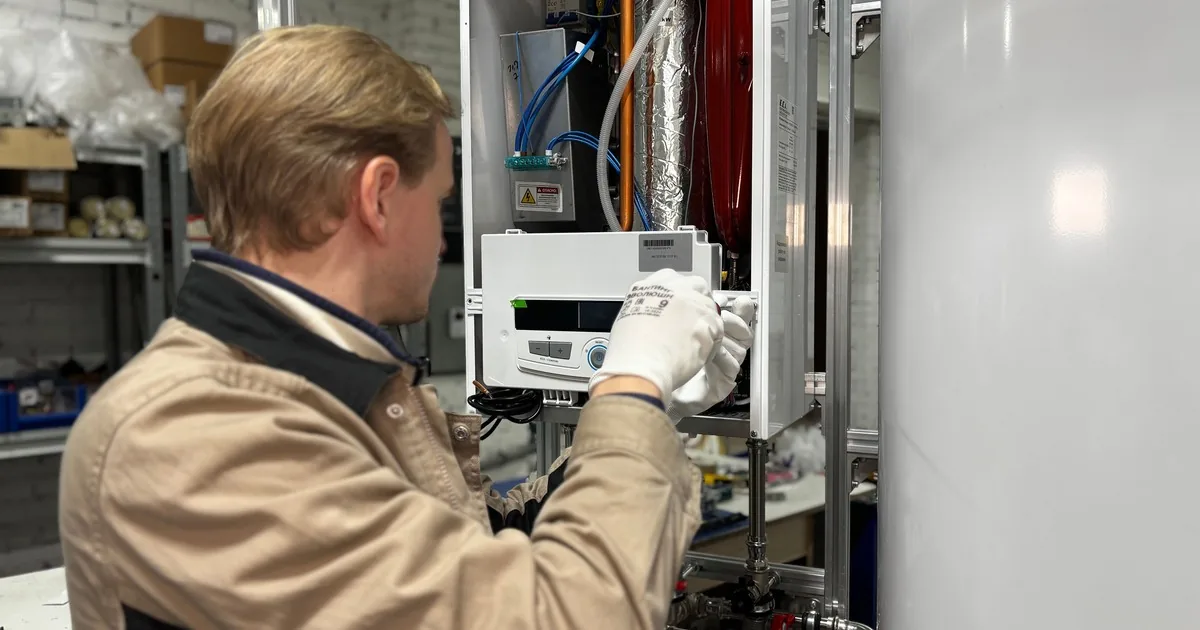
If the caller's main concern is a pump, filter, or heater fault that needs diagnosis, separate that request from the seasonal close. The pool pump and filter repair intake guide covers the evidence needed for a repair dispatch.
Check water and cover readiness
Ask what the company requires the customer to complete before arrival. Keep the answer tied to your written procedure because water preparation and equipment operation vary by service, pool, and product. Pentair tells owners to clean and prepare the water, while leaving specific draining, line, equipment, and cover work to the professional. It also advises owners to keep certain circulation equipment running until the professional arrives, subject to product warnings.
A practical booking record should include:
- Current water condition, including heavy debris, visible algae, unusual discoloration, or a level far outside the normal operating range
- Whether the pool is still circulating and whether any equipment has already been turned off or disconnected
- Cleaner, ladder, handrail, toys, and removable accessory status
- Winter or safety cover type, current storage location, visible damage, missing hardware, and whether it fits this pool
- Any company-specific water test, cleaning, chemical, or preparation requirement sent to the customer
- Who will receive and confirm the preparation instructions
Do not promise that a damaged or missing cover can be solved during the closing visit. Custom fit, anchors, hardware, repair, and replacement may require a separate assessment or lead time. Ask for wide and close photos of tears, worn straps, damaged springs, missing anchors, or abrasion. The office can route those images before the scheduled date.
Keep the safety language precise. The CPSC's residential pool barrier guidance treats barriers, alarms, and power safety covers as protective layers. A seasonal cover does not give the office a basis to tell an owner that fences, gates, alarms, or other locally required safeguards can be ignored. Preserve normal access controls before, during, and after the visit.
Record existing problems before shutdown
A closing protects a system for the off-season. It does not automatically diagnose or repair every problem already present.
Ask whether the pool is losing water, pulling air, making a new noise, tripping a breaker, displaying an error, leaking at the pad, or failing to circulate. Record when the symptom started and whether recent work preceded it. If the customer says, “The pump has been dry for three days, but just close it,” the ticket must preserve that fact.
Use a brief safety screen. Ask about damaged wiring, repeated breaker trips, burning odor, smoke, unusual heat, gas odor near a heater, or water around electrical equipment. Follow company emergency policy for any positive answer. Do not ask the caller to restart equipment to reproduce a symptom.
Also record structural and cover concerns: a loose coping stone, damaged skimmer, cracked fitting, torn liner, failing anchor, broken ladder socket, or deck work near the cover perimeter. The field team can decide whether closing can proceed, whether another trade is needed, or whether the job must be divided into separate visits.
Keep observations separate from conclusions. “Water appears below the middle tile line and the owner adds water every two days” is usable. “Underground return line is broken” is an unsupported phone diagnosis.
Capture access and responsibility
Seasonal properties produce avoidable access failures. Ask whether the homeowner, tenant, property manager, or caretaker will meet the crew. Record gate codes, locked equipment enclosures, alarm instructions, pets, parking limits, narrow side yards, and any neighborhood restrictions on service vehicles.
Confirm who can approve additional work. If the caller is a tenant or caretaker, identify the owner or manager who controls spending and changes to the appointment. If your policy requires a card, signed scope, cover approval, or preparation acknowledgment before dispatch, assign that step to a named person.
Ask where loose equipment and cover parts are stored. A shed, basement, garage loft, or off-site storage unit can add time and may require customer access. Record whether the route has stairs, a narrow gate, mud, snow, construction, or a locked door.
Weather may move the appointment. Explain the company's rescheduling policy without promising that a requested date is protected under every condition. The office should also state what happens if the pool is not prepared, the cover is unavailable, or required access is missing.
Read back a field-ready closing ticket
Before ending the call, read the scope back in physical order. That exposes missing details better than a generic confirmation.
“First-time customer at a freeze-climate seasonal property. Inground vinyl pool with one skimmer, four visible returns, an attached raised spa, and a small waterfall. Equipment pad has two pumps, one cartridge filter, a gas heater, a salt system, and automation. Customer reports normal circulation and no active leak, breaker trip, burning odor, gas odor, or damaged wiring. Mesh cover is stored in the garage; one strap appears worn, and photos are attached for review. Ladder and cleaner are still in the pool. Owner wants service before leaving town on October 18, understands the date is pending confirmation, and will provide gate and garage access.”
That note tells the scheduler what must be reviewed and gives the crew a recognizable property before arrival. If the scope still says “unknown” in several places, request photos or a pre-closing assessment rather than forcing the job into a standard slot.
The pool service resource hub can support related scripts for equipment repair and seasonal work. When spring arrives, use a separate pool-opening scheduling intake. Opening has its own water, equipment, cover, and access questions.
An AI receptionist can collect these fields after hours if it stays inside the same boundaries as trained office staff. It should document the system, send preparation instructions approved by the company, stop on safety concerns, and avoid teaching technical winterization. A solid closing ticket begins with one concrete request: “Please describe the pool, attached systems, equipment pad, and cover so we can confirm the right service scope.”