A homeowner calls and says, “The house smells like septic.” That sentence could describe one bathroom after a week away, a basement floor drain, the yard beside a tank lid, or wet ground over the treatment area. Those are different service notes.
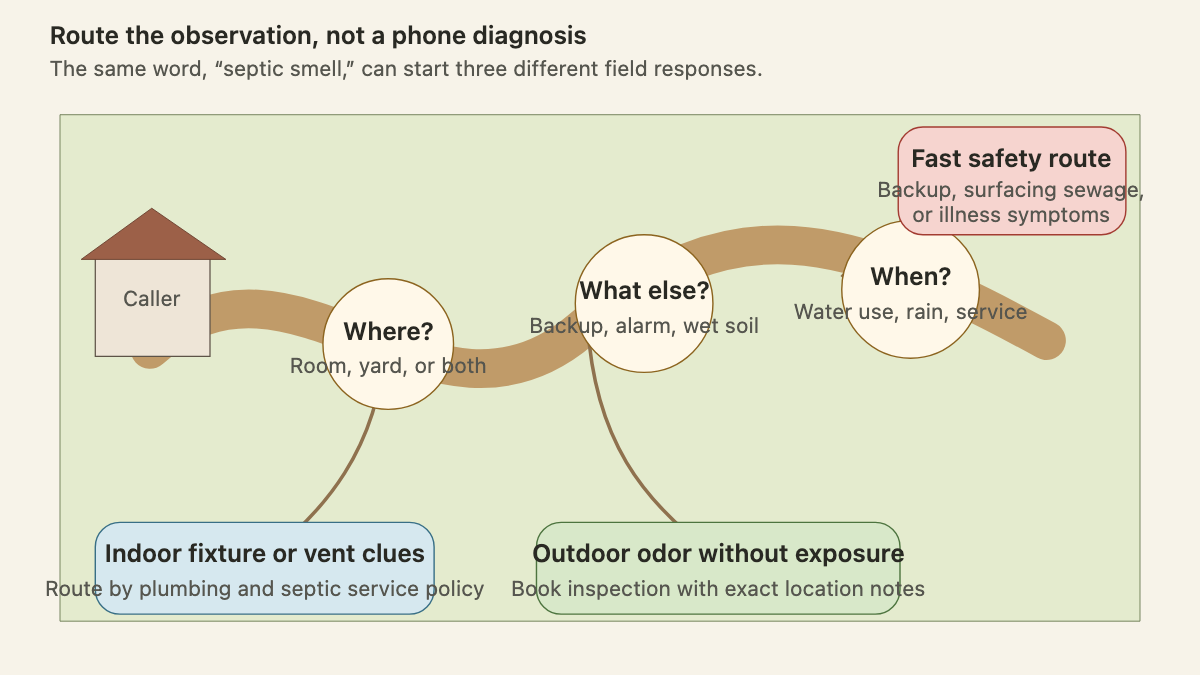
Start by locating the odor. Ask whether it is indoors, outdoors, or both; name the room or part of the property; record when it began and whether it comes and goes. Then screen for sewage backup, slow or gurgling drains, an active alarm, wet or spongy ground, and anyone feeling ill. Recent rain, freezing weather, pumping, plumbing work, heavy water use, and the last known maintenance date belong in the note too.
Do not tell the caller the tank is full or the drainfield has failed. The U.S. Environmental Protection Agency says a foul odor can have several explanations and cannot be diagnosed exactly from a distance. The office’s job is to capture observations, protect the caller, and route the right professional.
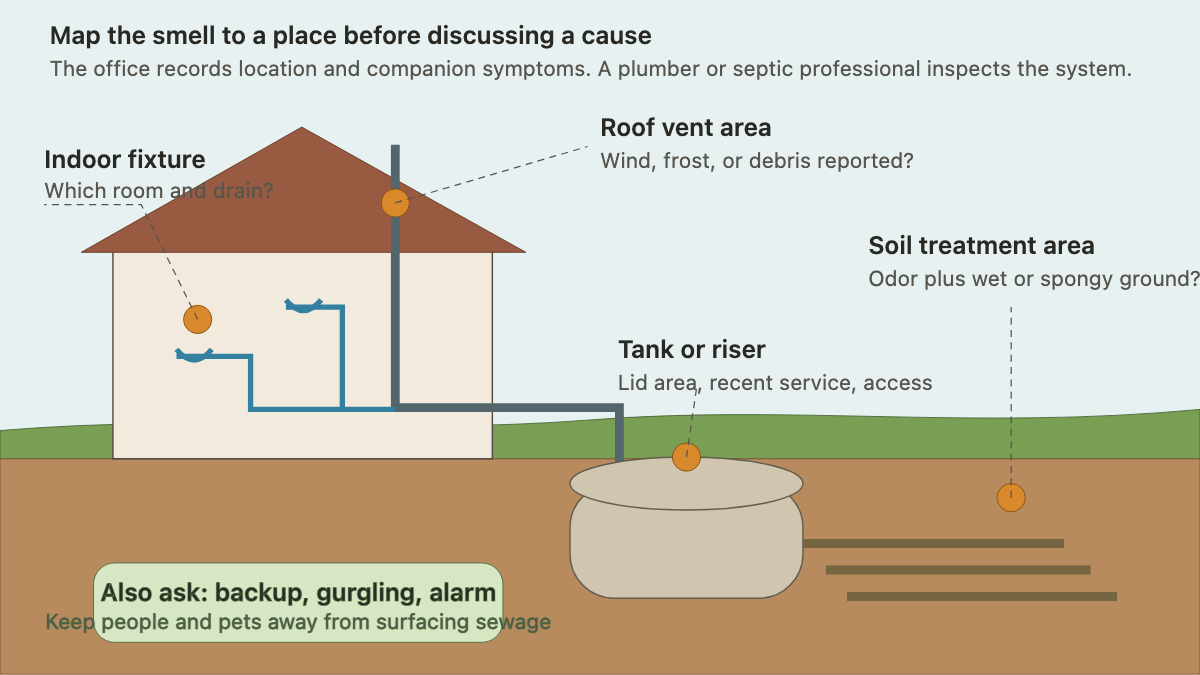
Put a pin on the odor
“Inside” needs another question. Is the smell strongest in a bathroom, basement, laundry room, kitchen, crawl space, or across the whole house? If it is near a fixture, ask which one. A rarely used shower, sink, tub, or floor drain is different from an odor that appears at every drain when a toilet flushes.
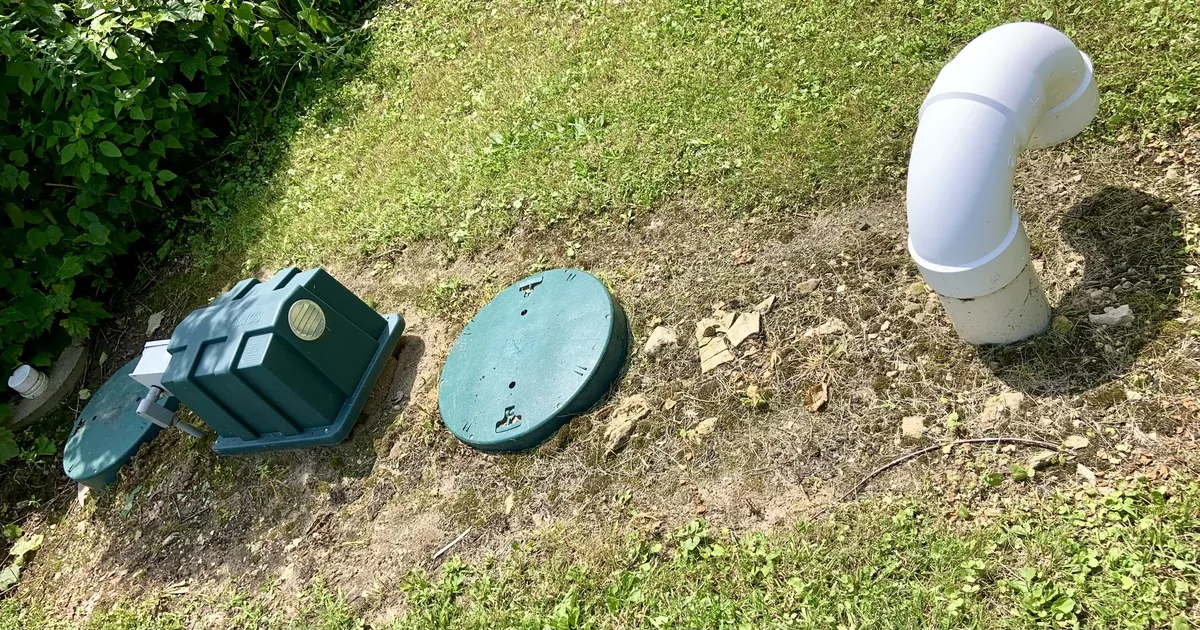
For an outdoor complaint, ask the caller to describe the location without walking into a questionable area. Useful reference points include the house wall, roof vent area, septic tank or riser, pump tank, treatment unit, drainfield or mound, ditch, and property line. Ask how far the smell seems to extend. The caller may notice it only beside one lid, across the backyard, or when standing downwind of the house.
Timing sharpens the picture. Record whether the odor is constant or occasional and whether it appears after showers, laundry, rain, pumping, a power outage, a cold snap, or a shift in wind. Ask if the complaint began after a plumber, septic crew, landscaper, or excavator worked on the property. These details guide inspection. They do not prove a cause.
Screen for the conditions that change urgency
An odor-only complaint can usually enter the normal inspection workflow. Odor plus sewage backup, surfacing wastewater, or illness symptoms requires faster safety handling under the company’s policy.
Ask these questions before offering a routine appointment:
- Is sewage backing up through a toilet, tub, shower, sink, or floor drain?
- Is there standing liquid or unusually wet, soft, or spongy ground near the tank or treatment area?
- Is a septic alarm sounding or flashing?
- Are toilets gurgling or several fixtures draining slowly?
- Has anyone entered a tank, opened an access cover, or come into contact with sewage?
- Is anyone in the building experiencing headache, nausea, dizziness, or drowsiness while the indoor odor is present?
If sewage is visible, tell the caller to keep people and animals away and follow the company’s urgent-response script. EPA describes surfacing untreated wastewater as a direct public-health hazard. Its guidance also says to avoid contact with sewage that backs into a building and to contact the local health or regulatory agency for guidance when needed.
A caller who feels ill while an indoor odor is present should move to fresh air and seek emergency or medical guidance under your approved safety script. North Dakota State University Extension identifies headache, nausea, dizziness, and drowsiness as possible symptoms associated with sewer-gas backup. Reception should not assess exposure severity or give a safe concentration.
Never direct a homeowner to enter a tank. Do not ask them to remove a heavy lid or climb onto a roof. A short intake call should reduce risk, not turn the caller into the inspector.
Use indoor clues to choose a plumbing-aware route
The University of Minnesota Onsite Sewage Treatment Program says indoor septic odor commonly points to a plumbing pathway. Its examples include a dry basement floor-drain trap, a loose cleanout plug, a blocked or frozen roof vent, and an improperly sealed ejector-pump basket. North Dakota State University Extension also identifies dry traps and blocked or frozen vents as routes for sewer gas to enter a home.
That evidence supports a routing rule, not a diagnosis. If the odor is confined to one infrequently used fixture and there is no backup, alarm, or outdoor symptom, the office may use its plumbing-first workflow. If the company handles plumbing and septic work, assign the trade based on its service map. If separate vendors are involved, explain that the caller may need a plumber, a septic professional, or both after the first inspection.
Ask whether running water changes the smell, but avoid improvised repair instructions beyond an approved script. Ask whether toilets gurgle, a cleanout was opened, a basement ejector pump is present, or the problem started during freezing weather. Record the answers exactly.
A useful note says: “Odor strongest beside the basement floor drain in a room unused for six weeks. No backup, alarm, slow drains, or outdoor odor reported. Caller notices the smell continuously since Monday.” That is better than “probable dry trap,” because the first version preserves evidence for the plumber.
Use outdoor clues to focus the septic inspection
Outdoor odor can originate near a vent, tank access, treatment component, or soil treatment area. Wind can also carry odor away from its source. EPA notes that roof vents equalize system pressure and that blocked vents, freezing, downdrafts, and location-specific conditions can create odor indoors or outdoors. Odor alone does not establish failure.
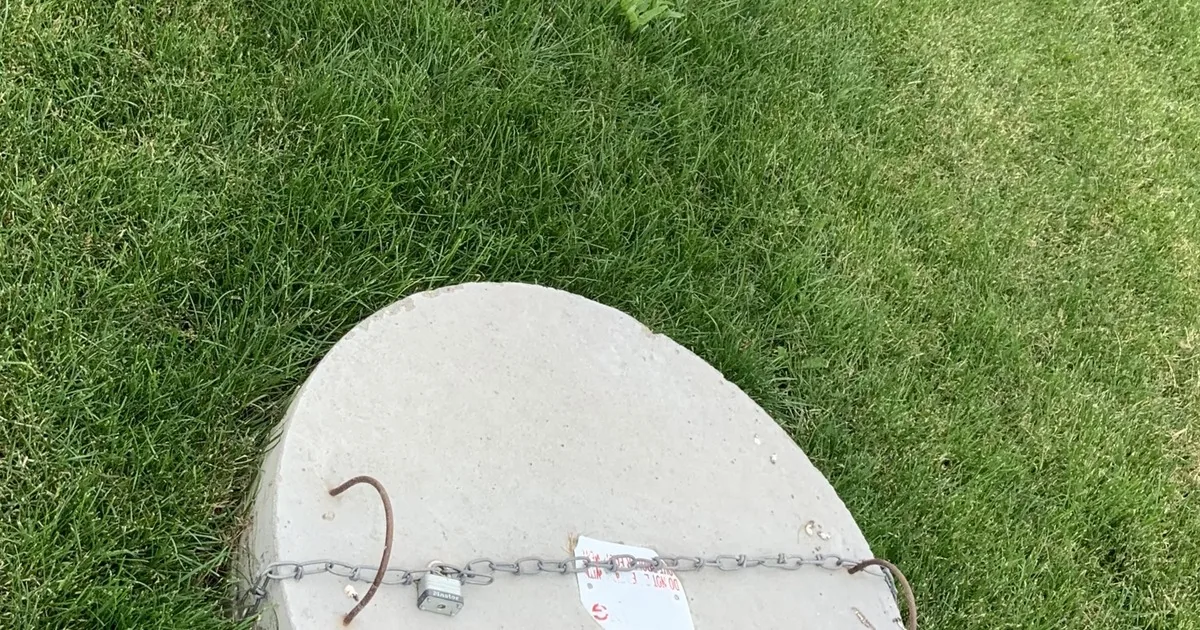
Ask the caller whether the ground is firm and dry from a safe distance. If the smell is strongest near a tank lid or riser, record whether service occurred recently and whether the cover looks displaced. Do not ask the caller to touch it. If the smell is near a pump or treatment unit, capture any alarm status, power interruption, service contract, and equipment label the caller can read safely.
Strong odor near a drainfield, mound, or soil treatment area deserves a direct question about wet or spongy soil. EPA lists standing water, damp spots, sewage odor, and bright green spongy grass among possible signs of a malfunction. Minnesota’s program warns that strong treatment-area odor with wet or spongy soil may indicate sewage reaching the surface. That combination should move the call out of the ordinary odor-only queue.
Recent weather matters. Heavy rain may make wet ground harder to interpret, while a long dry period makes a new soft patch more distinctive. Freezing conditions can affect vents. Wind can push vented odor toward a patio or open window. The service note should state the observation and the weather context separately.
Ask about the system and recent work
Once immediate hazards are screened, collect the records that help the technician arrive prepared. Confirm the service address, owner or tenant status, best onsite contact, access instructions, pets, gates, and parking limits. Ask whether the caller knows the system type and where the tank and treatment area are located.
Maintenance history matters, but “It was pumped recently” is incomplete. Ask for the date, company, and work performed. Pumping, inspection, filter service, alarm repair, plumbing repair, excavation, landscaping, or a new appliance can each add context. Request the invoice or service report when available.
Also capture household changes. A home that was vacant and is now occupied has a different recent-use pattern. So does a house hosting guests, running repeated laundry loads, or recovering from a water leak. Keep the language factual: “Six guests arrived Friday; odor began Sunday after multiple laundry loads.” Do not write “system overloaded” unless a professional has made that finding.
For callers who also report slow drains, use the separate intake for slow drains on septic systems. If an alarm is active, follow the septic alarm call-routing guide. Those pages own the deeper questions for each companion symptom.
Hand dispatch a note that preserves the evidence
The final work order should answer five practical questions: where the odor is strongest, when it occurs, what else is happening, what changed recently, and what the caller was told to do next. Include negative findings only when they were actually asked. “No backup reported” means more than silence in the form.
A complete note can read: “Sewage odor outdoors at 18 Maple Ridge Road, strongest beside the green tank riser and detectable near the back patio when wind blows toward the house. Began two days after pumping on August 28. No indoor odor, backup, slow drains, alarm, wet ground, or visible sewage reported. Ground appears firm from the walkway. Homeowner has the pumping invoice and will secure two dogs before the Tuesday inspection. Office advised caller not to open the riser.”
An AI receptionist can collect these fields after hours and apply the company’s routing policy. The cause stays open. The technician arrives with a map of the complaint, the recent service date, the safety screen, and a caller who knows exactly what happens next.