“We bought five acres and need a well. Can you tell me what it will cost?” The caller may have a parcel number, a rough house plan, and a closing date six weeks away. Or they may be standing beside an occupied farmhouse whose old well has already been abandoned. Those are different projects, even if the opening question sounds the same.
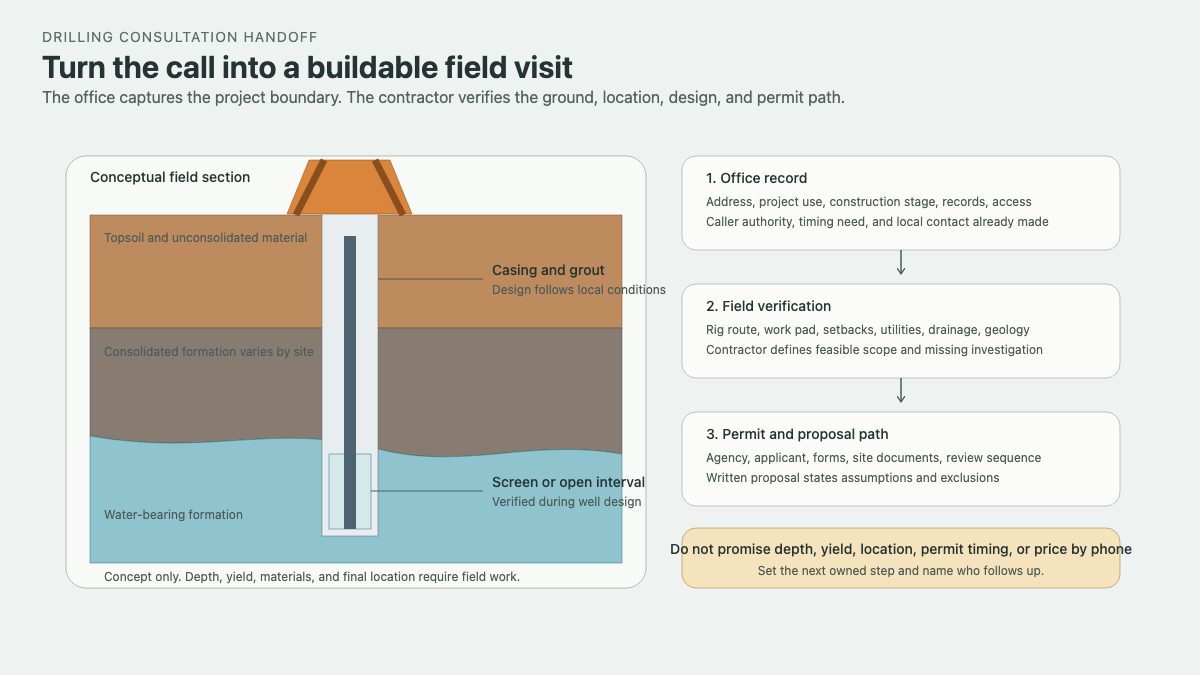
For a new well drilling consultation, capture the exact property, the caller’s authority to arrange work, the project stage, every planned water use, available records, and the physical route for drilling equipment. Ask which local agency the caller has contacted and what that office said. Then schedule a field review or estimator callback. Do not promise a well location, depth, yield, permit approval, completion date, or firm price from the first phone description.
That boundary makes the call more useful. The office owns a clean project record. The contractor owns the site and construction assessment. The permitting authority owns its decision.
Identify the property before discussing the well
Start with the service address. Raw land often has no street number yet, so ask for the tax parcel number, lot number, subdivision and county, nearest road, and a dropped map pin. Record the property owner’s name exactly as it appears on the deed or current purchase documents. A nickname for the farm is not enough for a permit search.
Next, establish who is calling. Is this the owner, buyer under contract, builder, general contractor, real estate agent, tenant, or family member? Ask who can authorize a site visit and who will approve a proposal. If the caller is buying the property, record the closing date and whether the current owner has agreed to access. Do not assume a buyer can authorize drilling before closing.
Ask about the project stage in plain terms. Has the land closed? Is there a surveyed building site? Has the septic area been evaluated? Are house plans still changing? Is temporary construction water the immediate need, or is this the permanent domestic supply? These details help the contractor decide what can be assessed now and what still depends on another decision.
Existing records can shorten the first review. Ask whether the caller has a boundary survey, site plan, septic plan, neighboring well information, prior permit file, abandoned-well record, easement, or geotechnical report. Request copies, not summaries. A caller saying “the county approved everything” should be recorded as caller-reported until the office sees the document.
Define how the water will be used
“Water for the house” is incomplete. The National Ground Water Association describes modern wells as supplies for drinking, irrigation, and other purposes. The intake should name the uses because a full-time residence, seasonal cabin, livestock operation, irrigation system, workshop, and second dwelling do not present the same demand picture.
Ask how many buildings will use the well and which ones are occupied. Record bedrooms and bathrooms as project facts, but avoid converting those counts into a pump size or promised capacity. Add planned loads that are easy to miss during a fast call: an accessory dwelling unit, barn washdown, livestock waterers, greenhouse, pool filling, fire-protection storage, large irrigation zones, or a shop process.
Timing matters too. Will demand be steady all year or concentrated during summer? Is the owner building in phases? Could a second home or barn be added later? The contractor may need to discuss those plans during design. The receptionist only needs to preserve them accurately.
If the property already has a well, stop calling the request “new drilling” until the goal is clear. The caller may want a replacement well, a second well, a deepened well, or service on the existing system. Record whether water is available now, why the current well is considered inadequate, who made that assessment, and whether a written report exists. For a pump-only request, use the separate well pump replacement call guide.
Put site constraints into one property sketch
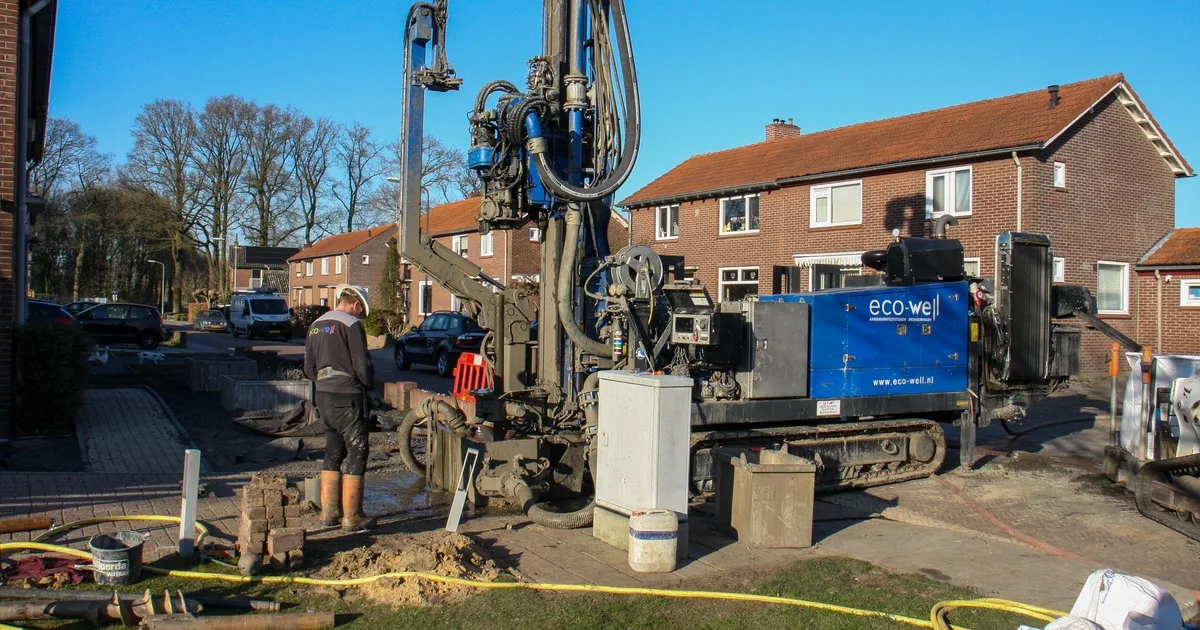
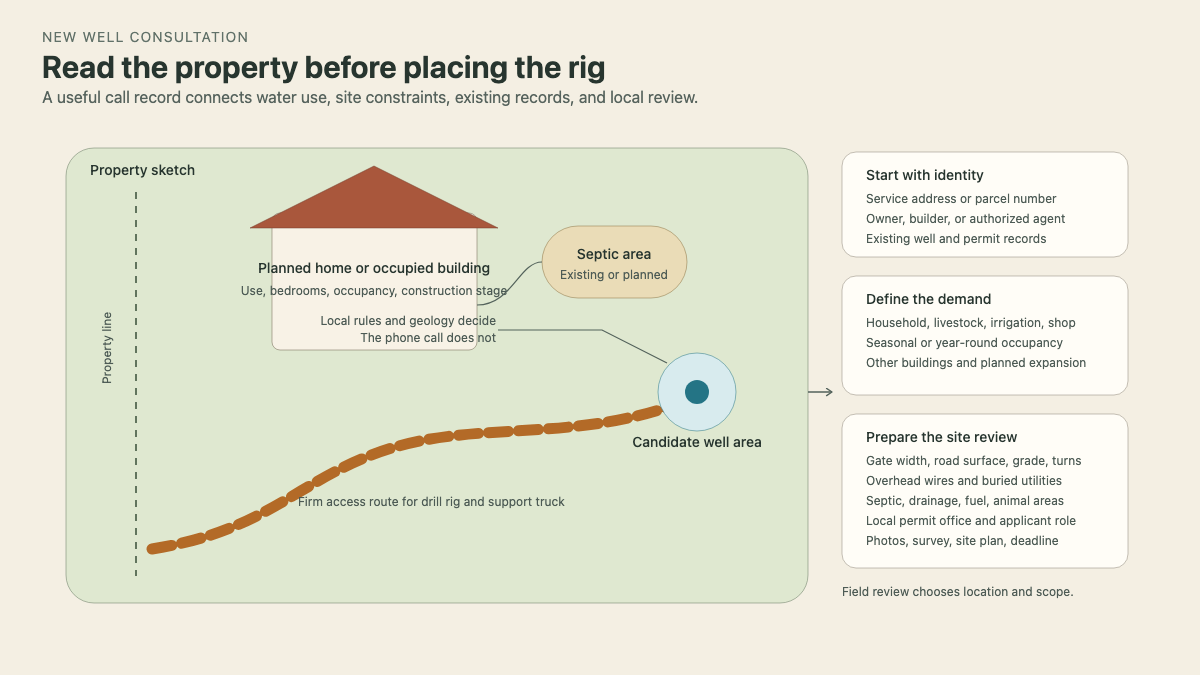
A drilling rig needs a route, a stable working area, and room for support equipment. Ask where a truck can enter the property. Capture gate width, road surface, steep grades, sharp turns, soft ground, culverts, low branches, overhead wires, locked access, and any seasonal condition the caller knows about. A wide photo from the road toward the proposed building area often explains more than “easy access.”
Ask the caller to mark known features on a survey or simple property sketch: buildings, property boundaries, driveways, septic components, drainage areas, ponds, streams, buried utilities, fuel storage, animal areas, and the proposed construction footprint. Label each item as existing, planned, or uncertain. Do not ask the caller to choose the final well location.
The EPA’s private well overview says well location and construction depend on local geologic and groundwater conditions. It also notes that proper siting helps direct surface runoff away from the well. Those are field and local-rule questions. The sketch prepares the conversation without pretending to answer them.
Do not publish a universal setback in the call script. Distances, approval paths, and required documents vary by jurisdiction and site. Ask which agency governs private wells at the address, then verify with that agency or the contractor’s current local process.
Keep the permit conversation factual
A good permit question is, “Which office have you contacted, and what application or instructions did they give you?” A bad answer from the office is, “We always get the permit in two weeks.” Even when that statement was true on the last job, a different county, water district, basin, property use, or incomplete application can change the path.
The Colorado Division of Water Resources provides a useful official example. Its well permitting page says permit files can contain allowable uses, original applications, construction records, and pump installation records. It also publishes different forms and additional rules for certain basins. Colorado’s system is not a national template. It shows why the intake needs the jurisdiction, intended use, existing permit records, and applicant role.
Record whether the owner, builder, contractor, engineer, or another professional is expected to submit documents. If the caller already has an application number, copy it exactly. Ask what remains outstanding and who said so. Never interpret permit language or promise that a proposed use will be allowed.
The same restraint applies to schedule questions. Replace “The permit should be quick” with an owned next step: “Avery will review the parcel and agency information tomorrow morning, then tell you what our company can handle and what must come from the local office.”
Separate the consultation from a phone quote
A firm drilling price may depend on facts that cannot be verified at the desk. The contractor may need to inspect access, review local records, understand the formations commonly encountered in the area, define casing and completion assumptions, and identify work excluded from the drilling proposal. The office should explain what its first visit or consultation includes and whether there is a fee.
Ask what the caller means by “price.” Do they need a budget range for land planning, a proposal for a lender, a construction bid, or immediate drilling? If the company offers a preliminary range, label it according to company policy and state the assumptions. Do not invent a per-foot number during the call.
The NGWA’s homeowner material on having a well drilled encourages owners to ask about contractor qualifications, written proposals, and finished-well documentation. That gives the office a sensible handoff: explain the consultation, collect the records, and let a qualified professional define the written scope.
Build a work order that earns a useful callback
A strong intake note can be read in under a minute and still carry the project:
- Parcel 18-042-006, Hart County; caller is the buyer under contract, with owner-approved site access; closing is November 2; planned three-bedroom year-round home plus two livestock waterers; septic evaluation and boundary survey attached; no existing well record found by caller
- Gravel entrance is twelve feet wide with one tight turn; overhead utility line crosses the drive; upper building area is dry today; locked gate; caller available Tuesday morning; county environmental health office sent an application link, but no application has been filed
Then state the boundary: “New domestic well consultation requested. Final location, construction, yield, permit path, schedule, and price are unconfirmed.”
An AI receptionist can collect these fields after hours when the contractor supplies its service area, safety stops, and local escalation rules. A person still reviews the parcel and owns the proposal. Close with a name and a time: “Maya will review your survey, site photos, and county information by 10 a.m. tomorrow and call you to confirm the field-review appointment.”