“My garage door is grinding so loudly that the neighbors can hear it.” The caller wants to know what broke and how much it will cost. The office has heard the word grinding hundreds of times, but that word alone cannot choose a part, technician, or appointment length.
A useful noisy-garage-door intake captures five things: the caller’s description of the sound, where it comes from, when it starts, what the door does at that moment, and whether anything looks loose, crooked, or damaged. Record the observation in the caller’s own words. Leave the diagnosis to the technician.
That distinction matters. Manufacturer guidance lists several possible sources for common sounds, while industry safety guidance treats rough movement and high-tension hardware as separate concerns. “Squeal,” “scrape,” and “bang” are clues. They are not work-order conclusions.
Start with the door’s current position
Before discussing the sound, establish what is happening now. Ask whether the door is fully open, fully closed, partway down, or stuck. Find out whether a vehicle or person needs to pass through the opening. If the door is moving unevenly, jerking hard, hanging crooked, or resting in an unstable position, stop the routine sound interview and route the call under the company’s urgent safety procedure.
The office should also ask whether the noise followed an impact. A car may have touched the bottom section. A trash cart might have caught the edge. Wind can move objects into the track area. “It started this morning” is a much different service note from “It started immediately after the left side hit a bicycle.”
A single sharp bang deserves its own question: did the door’s movement change right afterward? Do not tell the caller that a spring broke. Ask whether the door stopped, dropped, became crooked, or would no longer open. The Door & Access Systems Manufacturers Association warns that springs, cables, and bottom brackets involve dangerous tension. Callers should not touch, loosen, pull, or inspect those parts at close range.
If a cable appears loose or frayed, use the company’s cable call triage procedure. A noisy but stable door can stay in the normal service-intake flow.
Capture the sound in the caller’s words
Ask, “What does it sound like to you?” Then write down the answer without translating it. One person’s grinding is another person’s rumble. A caller may imitate a repeated click, describe a metal scrape, or say the opener hums while the door stays still. Those phrases are more useful than a dropdown that forces every complaint into squeaking, grinding, or banging.
Next, ask whether the sound is new. If it has been present for months, note whether it became louder, moved to another part of the cycle, or began alongside a movement problem. If it started today, record what happened during the previous cycle. A new sound after an impact, power interruption, repair visit, or manual operation gives the technician useful context without pretending to prove a cause.
Do not tell every squeaking caller that the door needs lubrication. DASMA says noisy springs can result from normal use and do not necessarily indicate a problem. Clopay’s manufacturer guide also lists multiple possible sources for common noise categories, including door and opener components. The office can say, “The technician will inspect where the sound is coming from and how the door is moving.”
Locate the noise across the opening
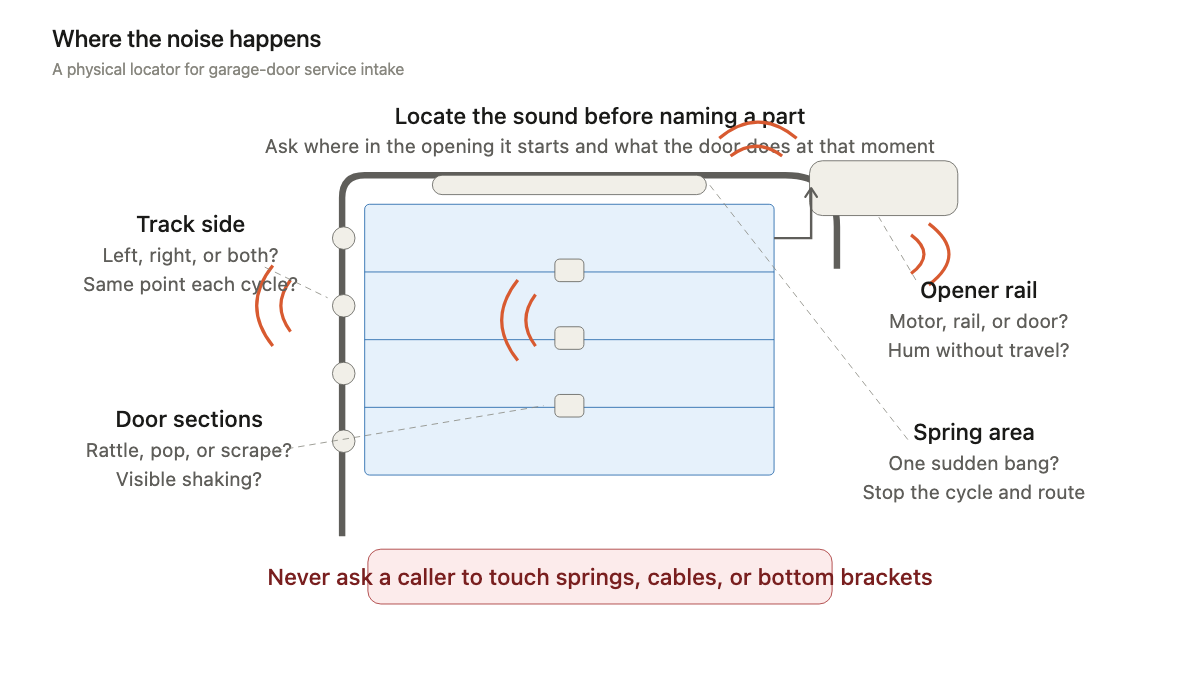
A caller standing in the driveway may say the sound comes from “the top.” That could mean the opener hanging from the ceiling, the rail, the curved track, or the spring area above the door. Give them simple location choices while they remain outside the door’s travel path.
Ask whether the sound seems closest to the left track, right track, center of the door, ceiling-mounted opener, or area above the top section. Then ask whether it stays in one place as the door moves. A scrape that occurs at the same point on the left side each cycle creates a better note than “door makes noise.”
Video can help when company policy allows it. Ask for one recording made from a stationary, safe position with the whole opening visible. The caller should not walk under a moving door, hold a phone near the track, or place a hand on a vibrating component. If recording another cycle would require operating a visibly damaged or unstable door, skip the video.
Tie the sound to one moment in the cycle
Location is half the record. Timing is the other half.
Ask whether the noise happens while opening, closing, or in both directions. Does it begin as soon as the motor starts, halfway through travel, near the curved track, or when the door reaches the floor? Is it continuous, rhythmic, or one isolated event? Record what the door does at the same time: moves normally, slows, shudders, reverses, stops, or continues while the sound changes.
The LiftMaster noise-support structure distinguishes sound from the door hardware and sound from the opener mechanism during technical assessment. The receptionist does not need to run that assessment. A call note that separates “sound at the door” from “sound at the ceiling opener” gives the technician a clean starting point.
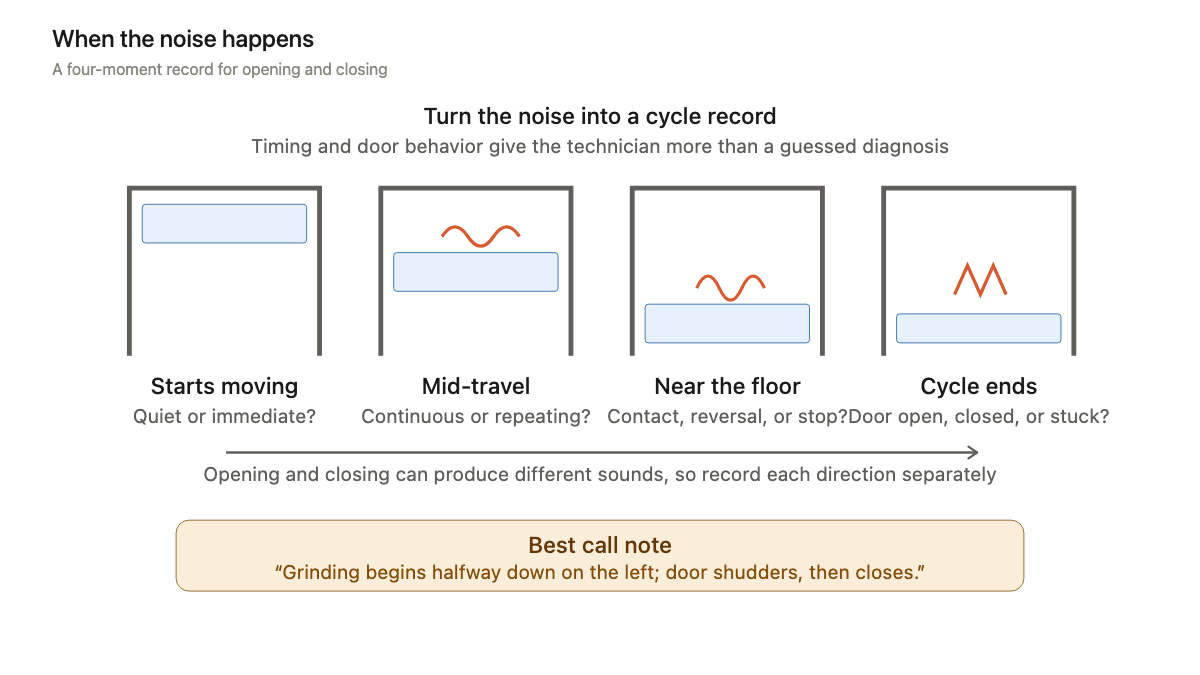
Opening and closing may produce different observations. “Quiet on the way up, three scrapes halfway down, then closes level” is specific. So is “motor hums, door does not move, lights remain on.” Neither sentence names a failed part.
Collect the details the technician cannot see from the driveway
Once the cycle record is clear, capture the equipment and access details. A solid work order should include:
- Door count and the exact door involved
- Approximate door width, number of sections, and material if known
- Opener brand and model from a safely visible label or an existing customer record
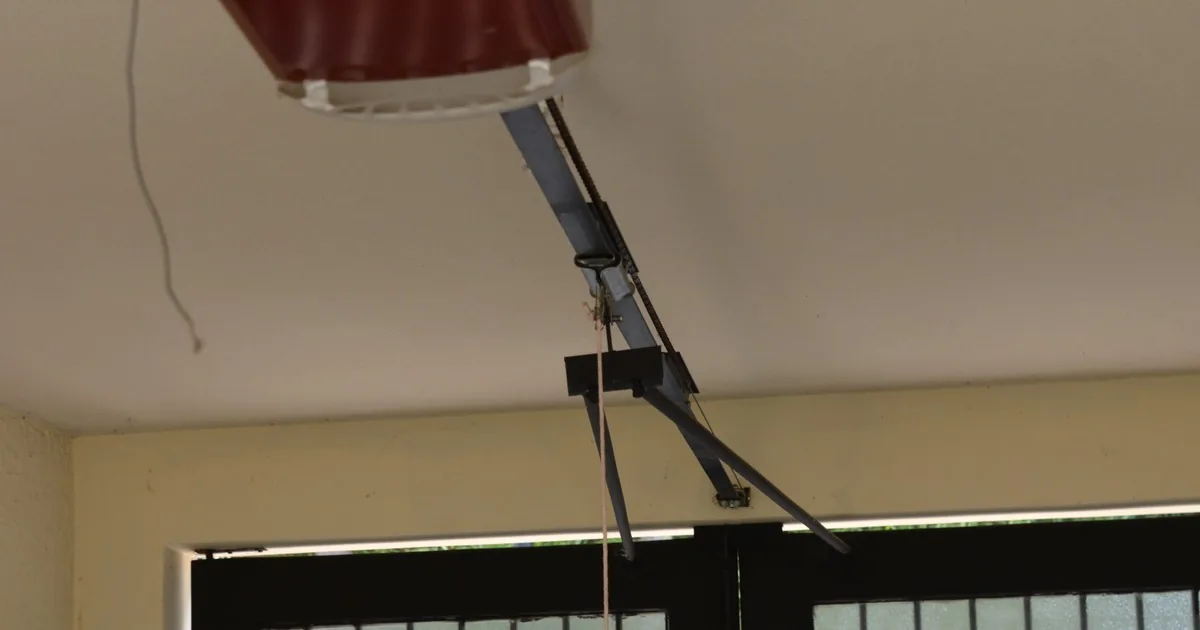
- Whether the system uses a ceiling-mounted trolley opener or wall-mounted opener
- Current door position and whether the vehicle is trapped inside or outside
- Sound description, location, direction, timing, and visible movement
- Recent impact, repair, power interruption, or manual operation
- Photos or video received, plus the safe camera position used
- Access notes, gate code, parking limits, pets, and the decision-maker who will attend
Do not ask the caller to climb a ladder for a model number. A photo already stored from an earlier visit is better than a risky close-up. If the label cannot be read from the floor, write “model unavailable” and move on.
Route by movement and visible condition
The sound category should not control priority by itself. Door behavior and visible condition are stronger routing signals.
A stable door that completes a full cycle while making a repeatable squeak or rattle may fit a standard inspection slot under company policy. A door that binds, hangs crooked, shudders violently, has loose cable, or changed operation after a loud bang needs faster review. A door off its track belongs in the garage-door emergency intake flow, even if the caller describes the noise as mild.
The office should avoid promising a tune-up, roller replacement, opener repair, or spring job before inspection. Those labels affect truck stock and customer expectations. Use a neutral appointment type such as “noise and operation assessment” if the scheduling system permits it.
A clear handoff might read:
“Double residential sectional door, ceiling-mounted opener. New grinding described on left side during closing only. Begins halfway down and repeats three times. Door shudders at the same point, then closes level. No impact reported. Caller recorded video from driveway. No loose cable or crooked section visible. Vehicle outside; adult decision-maker home after 3 p.m.”
That note lets dispatch choose the right technician and gives the technician something concrete to verify. It also preserves what remains unknown.
Give the caller a safe next step
End the call with the appointment window, access plan, and a plain operating instruction based on company policy. If the door appears unstable or changed movement after a bang, tell the caller to leave it alone until the technician arrives. If it remains stable and the company permits use, avoid inventing a safety guarantee. Say that the technician will inspect the sound and operation onsite.
An AI receptionist can collect the same location and cycle questions after hours, then pass the record to the on-call person or next-day dispatcher. The script still needs the same boundaries: no part diagnosis, no spring or cable instructions, and no request for another cycle when the door looks unsafe.
The best noisy-door work order sounds almost like a short field observation: “left side, halfway down, repeated scrape, door shudders, then closes level.” Five concrete details beat a confident guess about the part every time.