A caller says, “My son has asthma, so we need allergy-safe cleaning. Can your team do that?” The phrase sounds specific until the receptionist tries to build the job. Does the family want every scented product excluded? Did a clinician name a chemical to avoid? Are they asking for dust removal in two bedrooms, or a whole-house deep clean? Will anyone be home while the crew works?
The office needs those answers before it offers a slot.
An allergy-sensitive cleaning request should become a written record with seven parts: the caller’s exact restriction, the affected rooms and surfaces, approved products, prohibited substitutions, requested equipment or methods, occupancy and ventilation instructions, and a named person who can approve a change. Staff should never diagnose the sensitivity or promise an allergen-free home. Their job is to capture boundaries that the company can review and the crew can follow.
Keep the caller’s words, then ask for the operational rule
Start with a neutral prompt: “Tell me what you need us to avoid or handle differently.” Record the reply as reported. A customer might say “no fragrance,” “do not use bleach,” “use only the bottle under the sink,” “HEPA vacuum requested,” or “please do the child’s room first while he is out.” Each statement creates a different work order.
Do not convert “allergy” into a medical conclusion. Ask who supplied the restriction. It may come from the customer, a parent, a building manager, a clinician, a product label, or the cleaning company’s own safety policy. The source matters because the receptionist should know who can clarify it and who may change it later.
EPA’s fragrance and asthma guidance uses careful language. It notes scientific controversy and individual variation, while recognizing that fragrance exposure can cause asthma episodes and other adverse effects in some sensitive people. That is enough reason to take a fragrance request seriously. It is not permission for a cleaning company to predict a health result.
Ask whether the request concerns a diagnosed condition, past reaction, odor preference, skin contact, infant or older-adult exposure, or another concern only when the distinction changes the work. The receptionist does not need a medical history. A usable note sounds like this: “Customer reports that scented cleaners have caused breathing symptoms before. Exclude products with added fragrance from the upstairs bedrooms. Customer will be away during service and wants a text before reentry.”
Make “fragrance-free” and “green” verifiable
Marketing terms are poor work-order fields. “Natural,” “non-toxic,” “eco-friendly,” “hypoallergenic,” and “green” can mean different things across brands and callers. Ask for an exact product name, a clear label photo, or the specific ingredient or fragrance rule the customer wants the company to review.
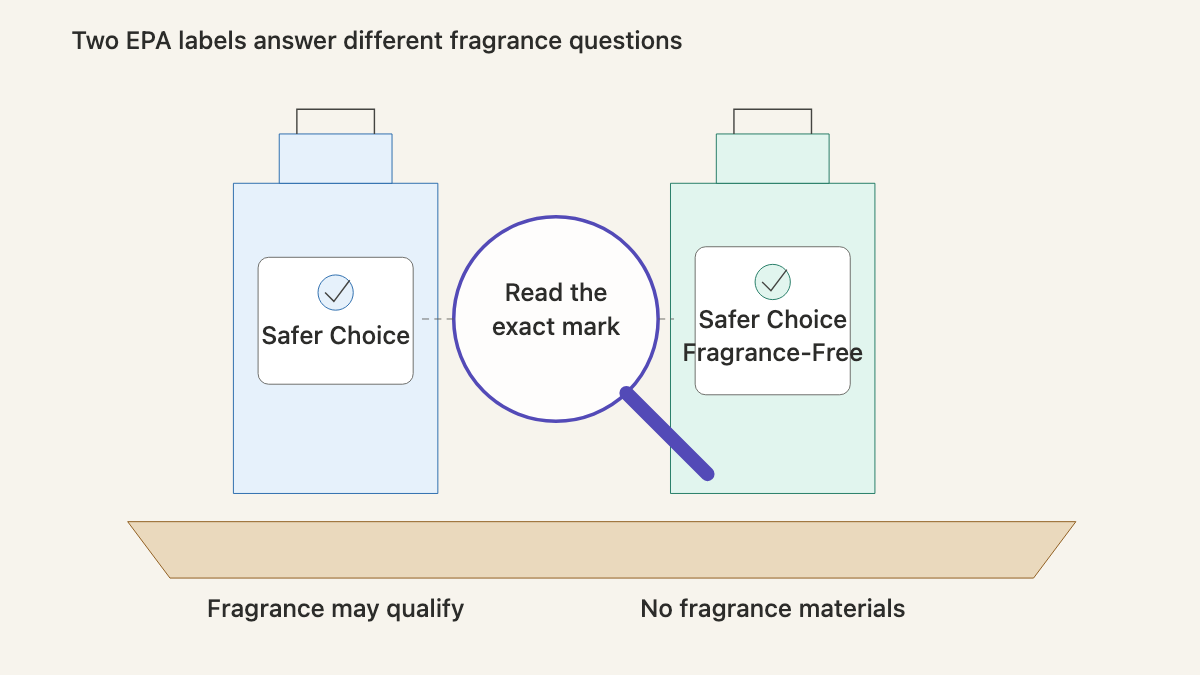
A useful distinction comes from EPA’s Safer Choice Standard. Products may meet the general Safer Choice criteria and still contain fragrance materials that satisfy the program’s fragrance rules. EPA’s separate Fragrance-Free label has added criteria and requires that the product contain no fragrance materials. So “Safer Choice” and “Fragrance-Free Safer Choice” should not be treated as synonyms.
The office also needs to settle supply ownership. Will the company bring an approved product? Will the customer supply sealed, labeled containers? May the crew use a substitute if a bottle is empty? Who checks that the customer-supplied product is suitable for the named surface and allowed by company policy?
Never accept an unlabeled spray bottle. Never promise to mix a customer’s ingredients. Record any product already applied before the appointment, including its name, the surface, when it was used, and whether residue or odor remains. CDC/NIOSH’s worker guidance on cleaning chemicals notes that cleaning chemicals can cause skin injury, coughing, and asthma. It applies safety practices to products marketed as green too.
A simple approval line prevents improvisation: “Crew may use Product A on sealed counters and Product B on glass. No air freshener, scented floor product, or substitution. Call Morgan if either product is unavailable.”
Scope the rooms, surfaces, and dust reservoirs
“Reduce dust” still needs a boundary. Ask which rooms matter most and which surfaces are included. Bedding, upholstered furniture, rugs, blinds, vents, fan blades, open shelving, baseboards, stuffed toys, pet beds, and cluttered collections require different access, tools, and time. The office should separate routine reachable surfaces from high work, heavy item moving, laundering, HVAC service, mold remediation, pest cleanup, and other work the company does not include.
Ask about the current condition. Is there visible dust on open shelves? Has construction occurred? Are windows open during pollen season? Is there an active leak or visible growth? Does the customer want bedding laundered, and can they provide care instructions? Photos help with scope, but they cannot prove which allergen or chemical is present.
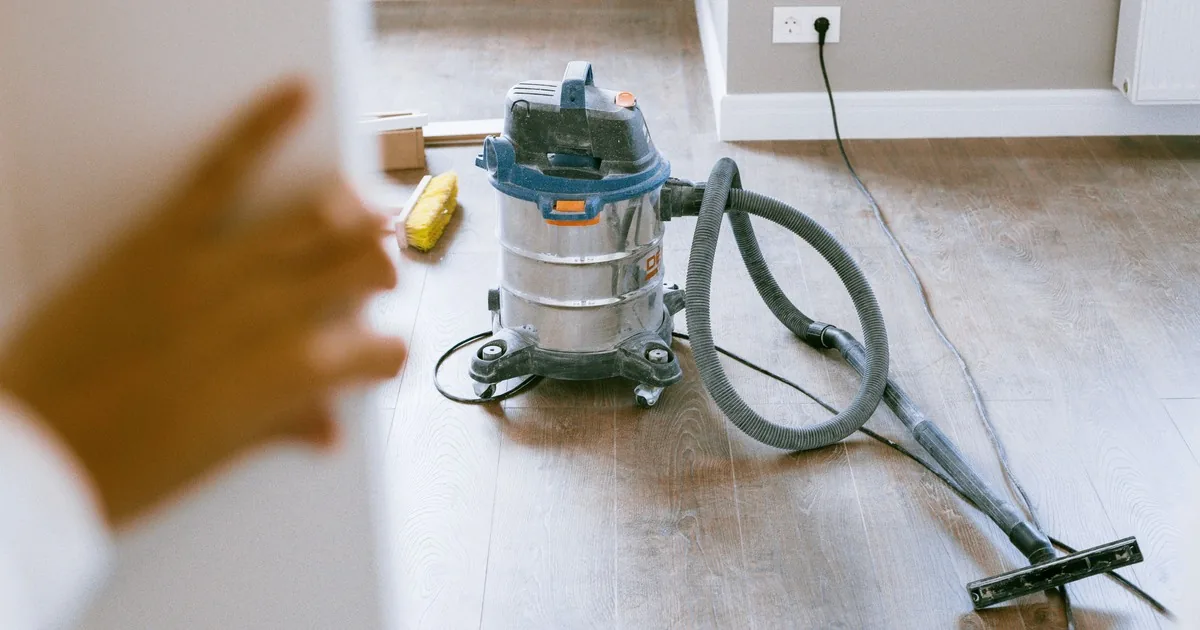
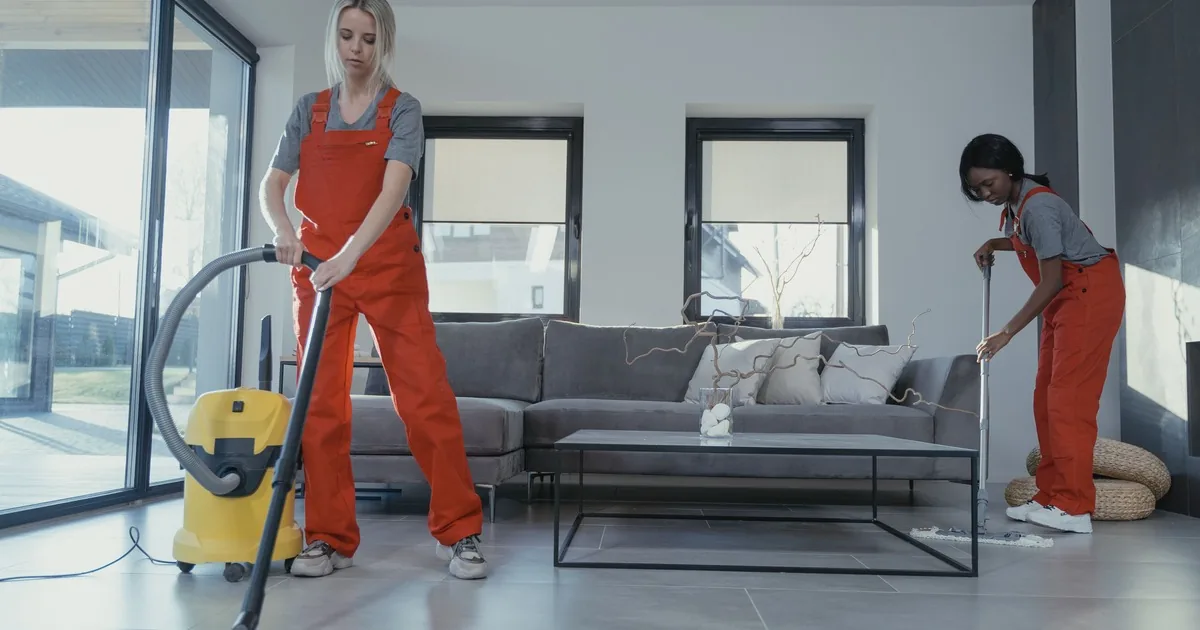
ATSDR’s archived asthma trigger guidance recommends a damp mop or rag for dust because dry wiping can stir up mite allergens. It also names a HEPA-filter vacuum or a double-layer microfilter bag as exposure-control options. A cleaning company can use that guidance to review its methods, but the booking agent should first confirm what equipment the company actually owns, maintains, and trains staff to use.
“HEPA vacuum requested” should trigger a capability check, not an automatic yes. Record the vacuum model or company standard if that detail matters, filter status, bag or bin handling, rooms included, and any company rules about customer-owned equipment. If the crew cannot meet the request, say so before arrival.
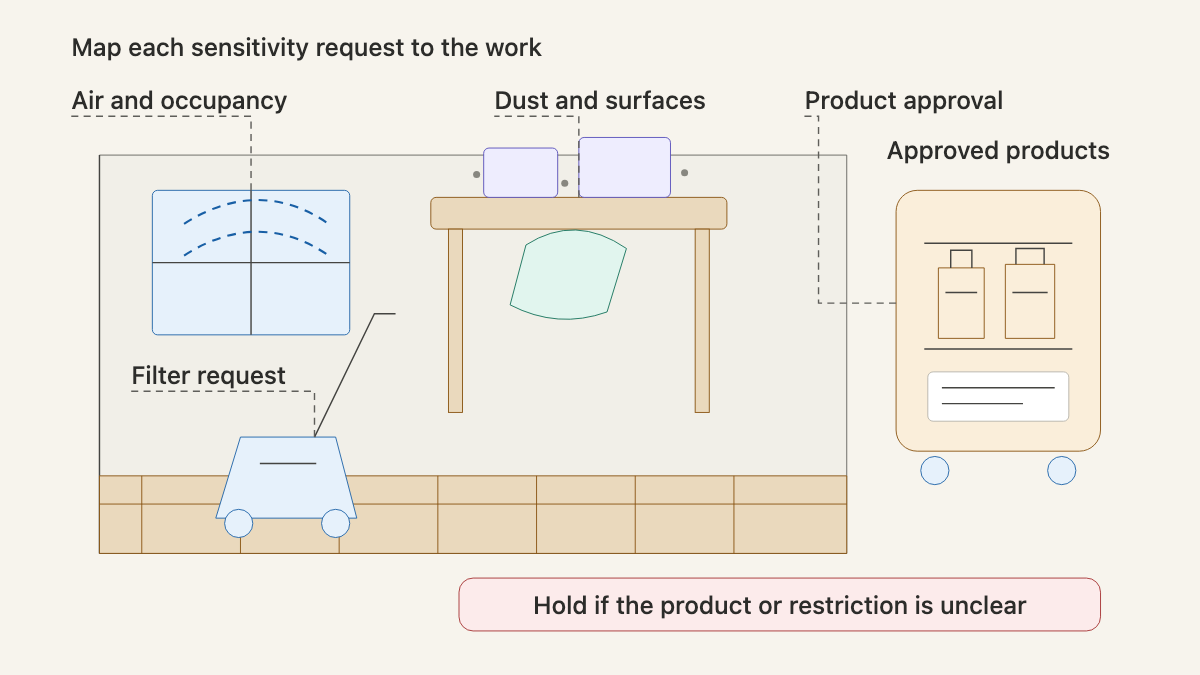
The room map exposes a common intake failure. Product restrictions get recorded, while the affected room, surface, equipment request, and occupancy plan stay in the caller’s head. The crew then arrives with half a plan.
Set the air, occupancy, and reentry plan
Ask who will be home during service, which rooms will be occupied, whether children or older adults are present, and whether anyone works or receives care in the home. The answer affects access and communication even when the company makes no medical recommendation.
Ventilation should be specific. “Air it out” does not tell the crew whether windows may be opened, whether outdoor pollen is a concern, whether the HVAC system should remain in its normal setting, or whether a product label requires a certain step. The American Lung Association’s cleaning-supplies guidance advises label reading, directed use, and ventilation during and after cleaning where feasible. The job record should name the actual rule for this home.
Reentry belongs to the customer and the applicable instructions. Some customers may leave for the entire appointment. Others may stay in an untouched room and move only after the crew confirms that a zone is complete. Record the agreed communication: a knock, text, phone call, or in-person handoff. Do not invent a universal waiting period.
If the caller requests a health guarantee, stop. A cleaning company can promise to follow an accepted scope and documented product restrictions. It cannot promise that a customer will have no symptoms, that every allergen will be removed, or that a home will become medically safe.
Give the crew a change-control rule
Sensitivity jobs break down when something changes on service day. The approved bottle is empty. A stone counter cannot take the requested product. The customer asks for a scented disinfectant in one bathroom. The cleaner finds an unlabeled chemical on a surface. A window cannot be opened.
Name one person who may approve a change. The work order should state what the crew can do without approval, what requires a call, and what causes a hold. Product-label instructions and company safety policy still apply even when the customer asks for a shortcut.
Use one bulleted intake list in the call script:
- Caller’s exact restriction and who supplied it.
- Affected person’s location during service, without collecting an unnecessary medical history.
- Included rooms, surfaces, textiles, and dust reservoirs.
- Approved products, prohibited products, and whether customer-supplied containers are sealed and labeled.
- Equipment or method requests, plus the company capability check.
- Ventilation, entry, occupancy, completion notice, and reentry instructions supplied by the customer or label.
- Named approver, substitution rule, and conditions that put the job on hold.
For a first visit where condition and room priorities drive most of the quote, use the first-time deep-cleaning intake guide. When the main decision is service cadence, use the recurring house-cleaning frequency guide and carry the approved sensitivity record into every visit.
Read the record back in plain language: “You want the two upstairs bedrooms and hall cleaned with the approved fragrance-free products in your file. No substitutions or air freshener. The crew will damp-wipe reachable shelving and use the company’s filtered vacuum after the equipment check. Windows stay closed because of outdoor pollen. You and your son will remain downstairs, and the lead cleaner will text before you enter the finished rooms. If an approved product is unavailable or a surface needs a different method, the crew calls you before proceeding.”
An AI receptionist can capture those fields after hours, but the cleaning company still approves the products, methods, and scope. That final readback is the real test. The crew should be able to open the job at the front door and know exactly what the customer asked them to avoid.