“The door closes, but the deadbolt will not go in.” That call needs one immediate distinction: does the bolt move normally while the door is open, then hit the frame when the door is closed? If so, the ticket should describe the contact between the bolt, strike, and pocket. It should not diagnose a bad lock.
Ask what the caller means by “will not latch.” Some people mean the spring latch will not hold the door closed. Others mean the deadbolt will not extend, the key will not turn, or the door is locked shut. Those are different service calls. Get the door position, the moving part, the point of resistance, and the current security condition into the first four lines of the ticket.
Name the action that fails
Begin with the state of the opening. Is the door open, closed but unlocked, closed and locked, or unable to close at all? Can the caller use another safe entrance? Can the property be secured while the customer waits?
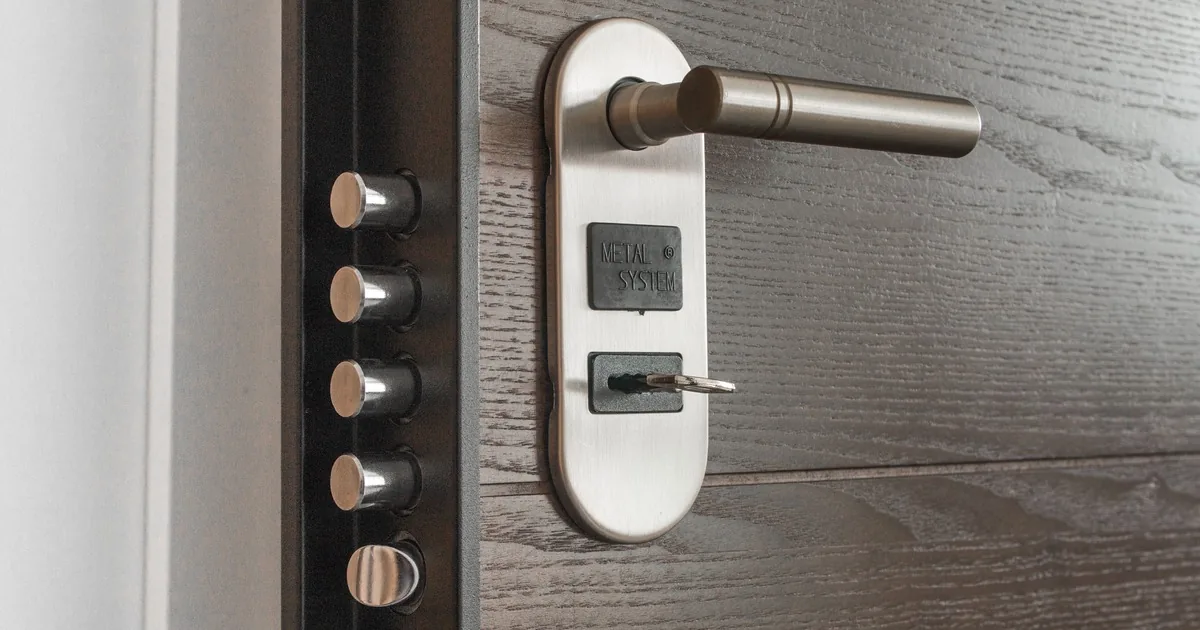
Then identify the hardware in ordinary terms. Is there a separate deadbolt above a knob or lever? Is it a handleset with a thumb latch, a mortise lock, a multipoint door, or an electronic deadbolt? A wide photo of the whole door and jamb plus a close photo of the lock and strike often answers that faster than a brand name read from memory.
Keep this intake separate from a lockout. A caller standing outside a locked door needs the emergency lockout workflow. A caller whose key rotates but the locked door stays shut has a different motion problem, covered in the key-turns service intake. This guide owns a door that can usually be opened but cannot be deadbolted normally when closed.
If there is smoke, a medical emergency, a child separated from a caregiver, or another immediate danger, follow the shop’s emergency policy and direct the caller to local emergency services where appropriate. Reception should not turn a safety event into a routine alignment appointment.
Compare the bolt with the door open and closed
The most useful observation is simple. Ask whether the deadbolt extends and retracts through its normal travel while the door is already open. Do not ask the caller to slam the door, force the key, or cycle loose hardware repeatedly.
When the bolt moves freely with the door open but meets resistance only after closing, the relationship among the door, strike plate, and bolt pocket becomes relevant. Schlage’s door alignment guidance separates bolt movement from strike contact and pocket clearance. That observation supports an inspection. It does not tell reception which part should move.
Record the answer in physical terms: “Bolt extends fully with door open. With door closed, thumbturn stops after about half its usual travel.” If the caller says the thumbturn or key is stiff even with the door open, note that too. The technician may be dealing with hardware behavior as well as door fit.
Ask whether the bolt is visible striking metal, wood, or an unknown surface. A fresh scrape, bright metal line, chipped paint, or compressed weather strip can help locate contact. The caller should describe what is already visible. Do not coach them to remove the strike, enlarge a hole, bend metal, or mark the bolt with a substance.
Record the witness mark, not a repair guess
A deadbolt can touch the top, bottom, inner, or outer edge of the strike opening. “It hits the plate” loses the useful part. “Fresh scrape on the lower edge of the deadbolt opening” gives the technician a location to inspect.
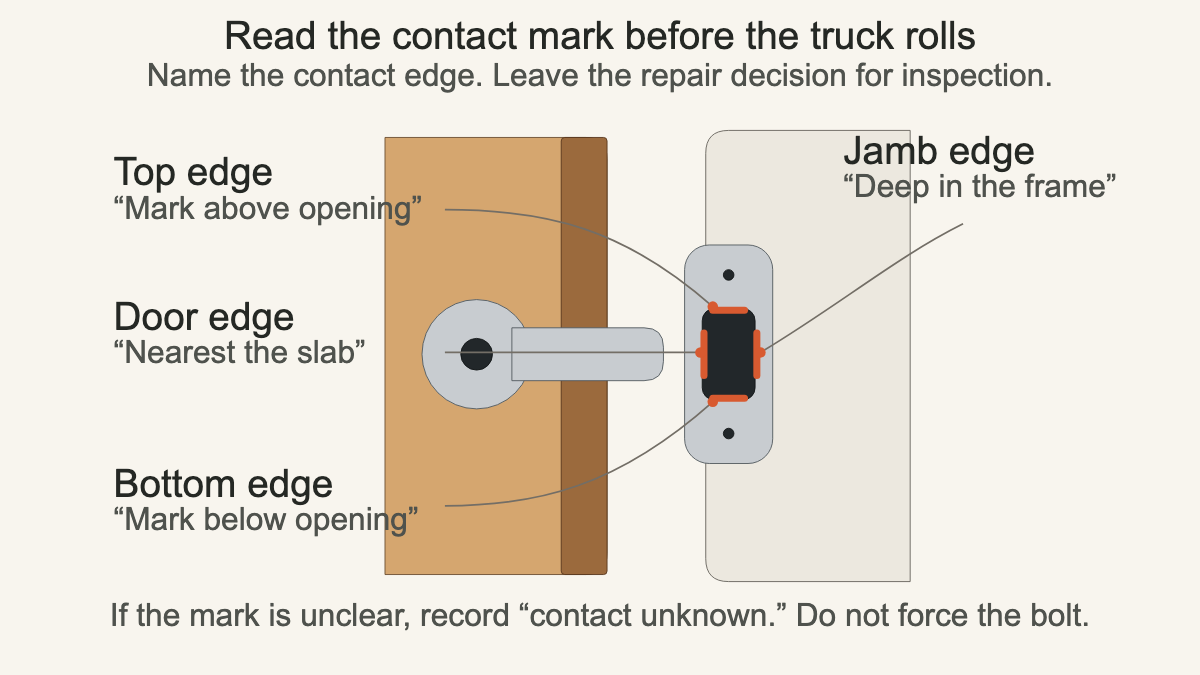
Ask the caller to use the clock-face or edge wording that feels easiest. “Top edge,” “bottom edge,” “side nearest the room,” and “side nearest the outside” are clear. If they cannot see the contact point, write “contact location unknown.” Never fill the blank with a likely cause.
This Old House lists scratches at the strike or frame and the need to lift or push the door as signs that a deadbolt may be out of alignment. Its deadbolt and strike guide also names settling, installation, loose hinges, temperature changes, and wear as possible contributors. Those are categories for inspection, not conclusions from one scrape.
Ask how pressure changes the symptom
Use one careful question: “Without forcing it, does gently pushing, pulling, or lifting the door change where the deadbolt stops?” Record the caller’s exact answer.
A customer may say the bolt turns only while they pull the door inward. Another may need to lift the handle slightly. Someone else may report no change at all. Schlage notes that hinge sag, weather stripping, seasonal movement, strike contact, and bolt-pocket depth can each affect how a lock meets the frame. The office should preserve the observation and leave the cause open.
Timing helps. Ask when the symptom first appeared and whether it is constant. Did it start after new weather stripping, fresh paint, a door closer adjustment, hinge work, a lock installation, a hard impact, or a move? Does it show up after heavy rain, during a freeze, or on hot afternoons? Avoid promising that the weather will reverse the problem. The door still needs to secure reliably.
Ask whether anyone has already tightened screws, moved the strike, filed metal, drilled or chiseled the pocket, added lubricant, or forced the key. Prior work changes the condition the locksmith will find. Loose trim, cracked wood, stripped screws, and a bent key deserve their own notes and photos.
Capture the whole opening
A tight photo of shiny hardware can hide the useful geometry. Request these views when the caller can take them safely:
- One straight, wide photo showing the full door in its frame
- One close photo of the deadbolt edge on the door
- One close photo of the strike plate and bolt pocket on the jamb
- One photo of any scrape, dent, loose screw, cracked wood, or compressed weather strip
- One interior photo showing the thumbturn or inside trim
Do not ask a locked-out caller to enter by an unsafe route for photos. Do not request alarm codes, door codes, key photos, or other credentials in an unapproved message channel.
Record the opening type and setting. A house front door, apartment unit, storefront, shared building entrance, fire-rated opening, and access-controlled door carry different access and authorization requirements. Note the door material if known, the lock brand or model if visible, and whether there is a closer, multipoint hardware, or connected alarm contact. Do not promise that a residential technician will have every commercial component on the truck.
Confirm authority and current security
Capture the service address, caller’s location, callback number, relationship to the property, and the name of the person who will meet the technician. Follow the locksmith’s identity and authorization policy. Reception explains the required documents. Authorized staff decide whether the caller and site contact satisfy the policy.
For a rental or managed property, record the tenant, unit, property manager, building contact, billing contact, and person allowed to approve work beyond the initial visit. If the door cannot be secured, route it under the company’s unsecured-opening policy. State what the customer should do while waiting based on that written policy, not improvised security advice.
A failed deadbolt can coexist with a spring latch that still holds the door closed. Do not describe that opening as fully secure. Write what works and what does not: “Spring latch holds. Deadbolt will not enter strike. Occupant remains inside. Rear door locks normally.”
Book an inspection with a clear boundary
The appointment should be scoped around inspection and authorized restoration of normal operation. Possible work may involve door alignment, hinges, weather strip, strike placement, pocket clearance, lock installation, or damaged hardware. The phone call does not choose among them.
Explain the visit charge, what the initial amount covers, how an estimate will be presented, and who must approve added work. The FTC’s contractor guidance recommends a written estimate that identifies the work, materials, timing, and price. That same clarity helps on a small lock and door call.
Read the ticket back: “Front entry door closes and the spring latch holds. The deadbolt extends fully while the door is open. With the door closed, the thumbturn stops halfway and the bolt leaves a bright mark on the lower edge of the strike opening. Gently lifting the handle changes the contact. New weather strip was installed last week. No parts have been removed. Homeowner will be present and can approve additional work after inspection.”
An AI receptionist can collect these fields after hours and route the call under the locksmith’s urgency, access, and authorization rules. It should never prescribe an adjustment or approve entry.
That final readback gives the technician a real opening, a real contact point, and a named approval owner before the truck leaves.