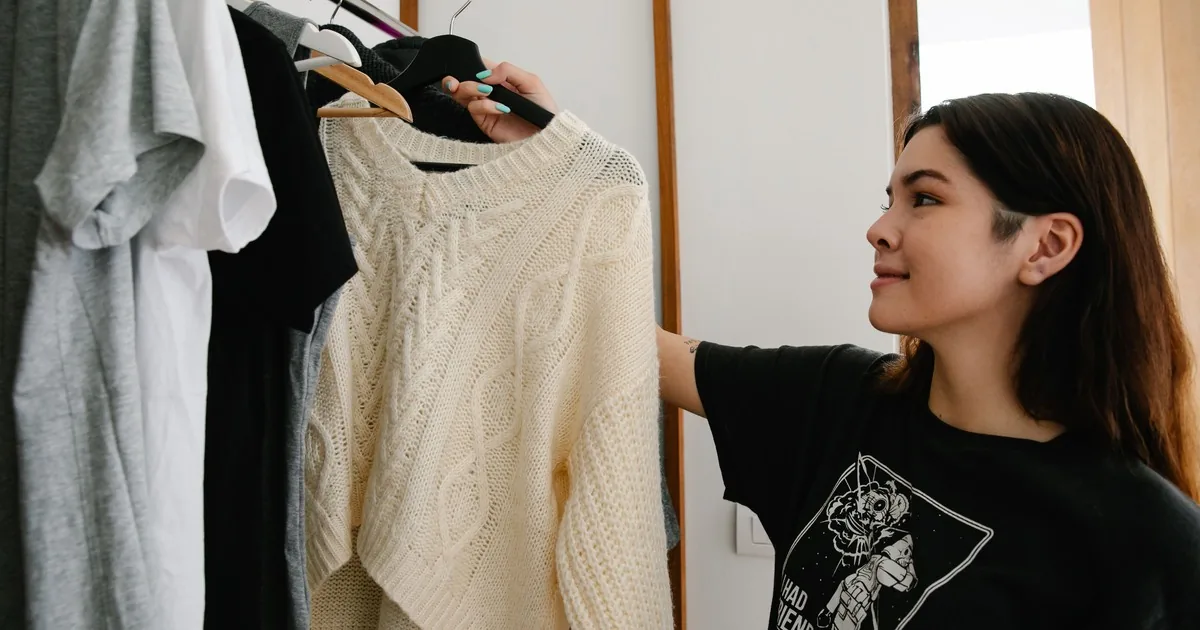
A caller pulls a wool coat from the back of a guest-room closet and finds two holes below the collar. A small tan moth fluttered near the floor last week. The coat has already been moved into the laundry room, three sweaters are sealed in trash bags, and mothballs are sitting loose on the closet shelf.
Book that as a fabric-pest inspection, not a confirmed clothes-moth treatment. Ask which item was damaged, its fiber and storage location, what the caller actually saw, whether rugs or upholstered furniture are involved, what has been moved or cleaned, which products were used, and which rooms the technician can inspect. The field professional still has to identify the pest and find the source.
Start with the object, then map the room
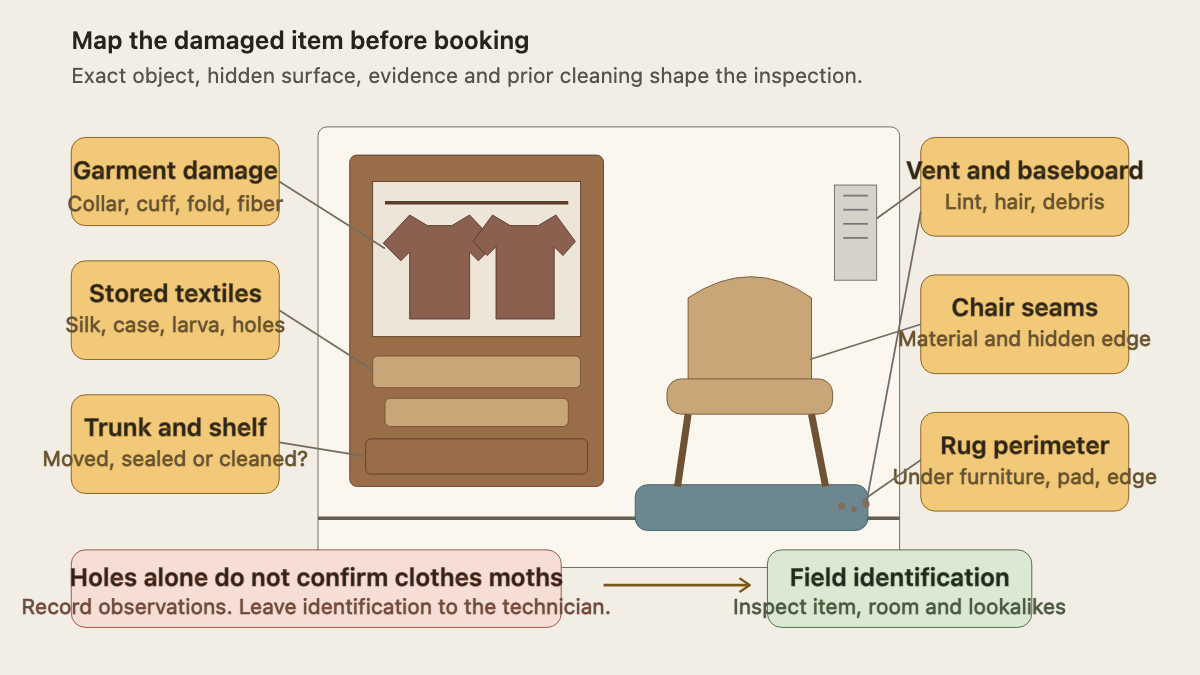
“Something ate my clothes” gives dispatch almost nothing. Begin with the first damaged object. Is it a wool coat, cashmere sweater, fur trim, feather pillow, felt hat, natural-bristle brush, rug, tapestry, piano felt, or upholstered chair? Ask for the care label when it is available, and record whether the item is pure wool, another animal fiber, a blend, or an unknown material.
Then pin the item to a place. “Back wall of the upstairs guest-room closet, lower hanging rail, inside a garment bag” is useful. “In the house” is not. Note the shelf, drawer, trunk, rug edge, furniture seam, baseboard, return vent, or storage box where evidence appeared.
This matters because clothes-moth larvae feed in quiet, hidden areas. UC IPM’s clothes moth guide lists wool clothing, rugs, upholstered furniture, fur, feathers, natural bristles, piano felt, and other animal-derived materials. Damage often sits beneath collars and cuffs, in upholstery crevices, or under furniture along carpeted edges. Penn State Extension also points to lint, pet hair, air-return vents, wall voids, and attics as possible feeding material or source areas.
Ask whether the property has other natural-fiber goods nearby. A damaged sweater may be the item that got noticed, while activity also sits in a wool rug under a dresser or pet hair packed behind a baseboard. The appointment needs access to the object and the room around it.
Record evidence without naming the insect
Holes alone do not confirm clothes moths. Ask what else the caller found: an adult moth, pale larva, silken tube, flat patch of webbing, portable case, surface grazing, clipped fur, loose fibers, pellets, or a bristly shed skin. Capture where each sign appeared and whether a clear photo exists.
The details help the technician set the search order. UC IPM describes webbing clothes-moth larvae that leave silken feeding tubes or patches behind. Casemaking clothes-moth larvae carry a cigar-shaped case that can take on the color of the material. Carpet beetle larvae can damage many of the same animal-fiber goods, but their bristly cast skins and lack of moth webbing create a different evidence pattern. Reception can record that pattern. It should not turn a phone description into a species diagnosis.
Adult location matters too. Ask whether the moth stayed near a dark closet or storage area, appeared around food cupboards, or flew near kitchen windows. The pantry question deserves a direct answer because food-infesting moths can be confused with clothes moths. If the activity centers on flour, cereal, nuts, pet food, birdseed, or other dry goods, use the company’s stored-product-pest workflow. Our guide to pantry moth service calls covers that separate intake.
Request one close photo and one wider room photo when company policy allows image intake. A safely collected specimen may help, but the office should use approved collection instructions. Do not ask a caller to dismantle furniture, pull carpet, open a vent, climb into an attic, or handle pesticide-contaminated material.
Ask what moved before the call
Movement changes the inspection. Record every item that left the original room and where it went. A coat moved to a laundry hamper, sweaters carried through a hallway, a rug rolled into the garage, or closet contents spread across a bed can widen the area the technician needs to review.
Ask what remains in place. Valuable garments, heirloom textiles, fur, rugs, upholstered pieces, taxidermy, feather-filled goods, and musical instruments may require handling by a dry cleaner, conservator, furniture specialist, storage firm, or another qualified professional. Reception should not promise that a textile can be saved or tell the customer to apply a product to it.
Cleaning needs the same detail. Did the caller vacuum one shelf or empty the whole closet? Were garments laundered or dry-cleaned? Was the rug vacuumed on top only, or were the edges and furniture area reached? Was lint removed from baseboards or a vent? Where did the vacuum contents go? Those facts tell the technician what evidence and harborages may still be available.
Avoid improvised preparation instructions. Emptying every closet before the inspection can erase the original pattern and scatter affected goods. Send the company’s approved preparation sheet when one exists. The general pest-treatment preparation guide explains why service-specific instructions should control the visit.
Put traps, sprays, and mothballs in the record
Ask about every trap, aerosol, dust, fogger, repellent, cedar product, and mothball. Record the product name, active ingredient if the label is available, amount used, exact placement, date, and whether the product remains in place. Note odors, staining, spills, and any concern involving a child, pet, or occupant.
Mothballs need special attention. The National Pesticide Information Center explains that mothballs are pesticides intended for closed, airtight containers so their vapors can build to the labeled concentration. Loose mothballs on an open closet shelf or around a room do not match that use pattern and can create exposure concerns. Reception should record the situation, direct urgent health questions to the appropriate medical or poison resource under company policy, and avoid inventing cleanup or reuse directions.
Pheromone traps also need precise notes. Ask for the trap brand or target pest, room, placement date, and catch count. UC IPM notes that clothes-moth pheromone traps are species-specific monitoring tools. A pantry-moth trap cannot establish clothes-moth activity, and a trap catch does not map every infested item. The technician needs the label and location.
Build an inspection appointment the field can use
Before choosing a slot, confirm the inspection scope. Count affected rooms and closets. Note wall-to-wall carpet, area rugs, upholstered furniture, storage trunks, attics, return vents, pet sleeping areas, and any locked or blocked space. Ask about stairs, parking, building access, elevator reservations, pets, children, and the person authorized to approve work.
Rentals need the tenant name, unit, property manager, authorization status, and reports from adjacent units or shared storage. A museum, theater wardrobe, rug dealer, dry cleaner, hotel, or clothing retailer belongs in the company’s commercial workflow because inventory handling and access differ sharply from a home closet.
A useful handoff reads like this: “Possible fabric pest in the upstairs guest room. Two holes and surface grazing on a wool coat from the lower rail, one small tan moth seen near the closet floor, and a silken patch photographed under the collar. Wool rug extends beneath a dresser. Three sweaters moved to sealed bags in the laundry room. Closet shelf was vacuumed yesterday. Loose mothballs remain on the top shelf. One dog in the home. Customer can provide access to the closet, rug, laundry room, return vent, and attic hatch.”
That note gives the technician objects, rooms, evidence, changes, product use, and access. An AI receptionist can collect the same approved fields after hours and flag mothball exposure concerns for review. Identification still happens on site, where the coat, rug edge, vent, and dark closet corners can be examined together.