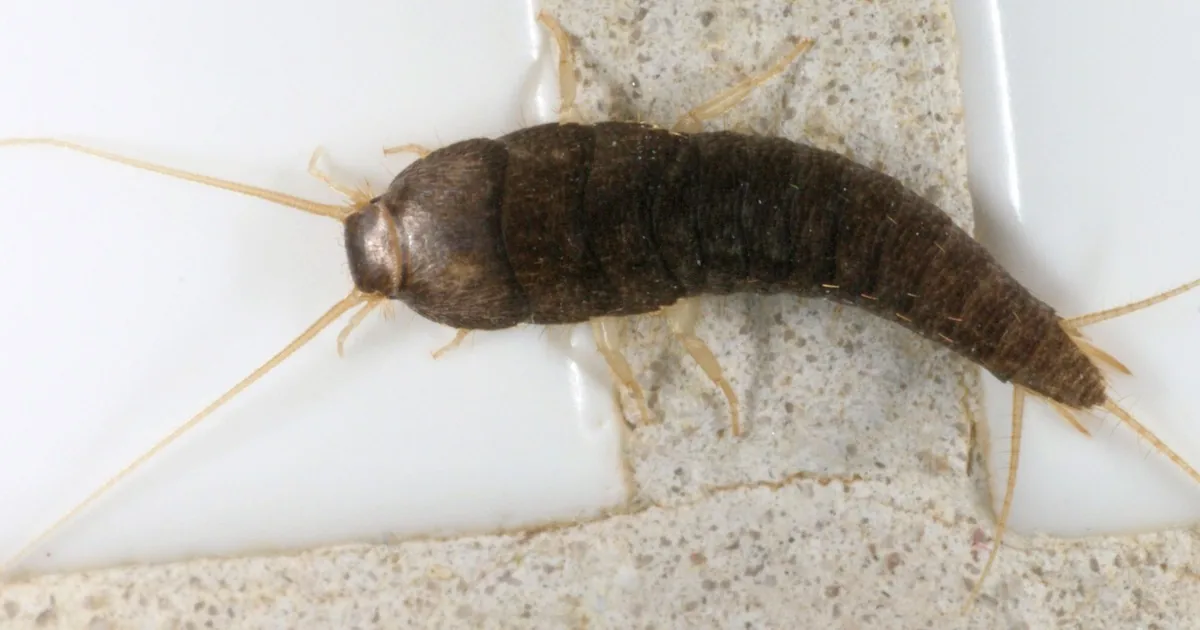
A caller sees a quick silver insect disappear behind the bathroom vanity at 11 p.m. The next morning, she finds another near cardboard boxes in the basement. She wants to know whether the house has silverfish, whether a leaking pipe caused them, and whether the technician can spray both rooms tomorrow.
The office should book an inspection from that call, not promise a diagnosis or treatment. Ask what the insect looked like, the exact room and surface, when and how often it appeared, whether the area is damp or unusually warm, what materials show damage, what the caller moved or sprayed, and which spaces the technician can reach. Those details give the field professional a search pattern without turning reception into an entomology desk.
Start with what the caller actually saw
“Small gray bug” can describe several household pests. Keep the first questions observational. What color was it under normal light? Was the body broad, round, or tapered? Did it appear flat? Did the caller notice long antennae or three tail-like appendages? How large was the body, apart from the antennae and tails?
Penn State Extension describes silverfish as having silvery metallic scales, antennae about as long as the body, and three appendages at the rear. The body can reach 12 millimeters. The University of Minnesota Extension silverfish guide gives a practical range of one-quarter to one-half inch. Those details help a technician review the call. They do not confirm the insect.
Ask how it moved and where it went. A note such as “ran along the bathroom baseboard and disappeared at the pipe opening under the vanity” is far better than “bug in bathroom.” Record whether the caller saw one insect, repeated sightings, or activity in several rooms. Capture the dates or general pattern, such as only at night or after a shower.
A clear photo helps when company policy allows image intake. Request one close photo and one wider shot showing the surface and room. If the caller has a specimen, use the company’s approved handling instructions. Do not tell someone to pull off trim, open a wall, reach behind an energized appliance, or climb into an attic to collect it.
Map the room, surface, moisture, and heat
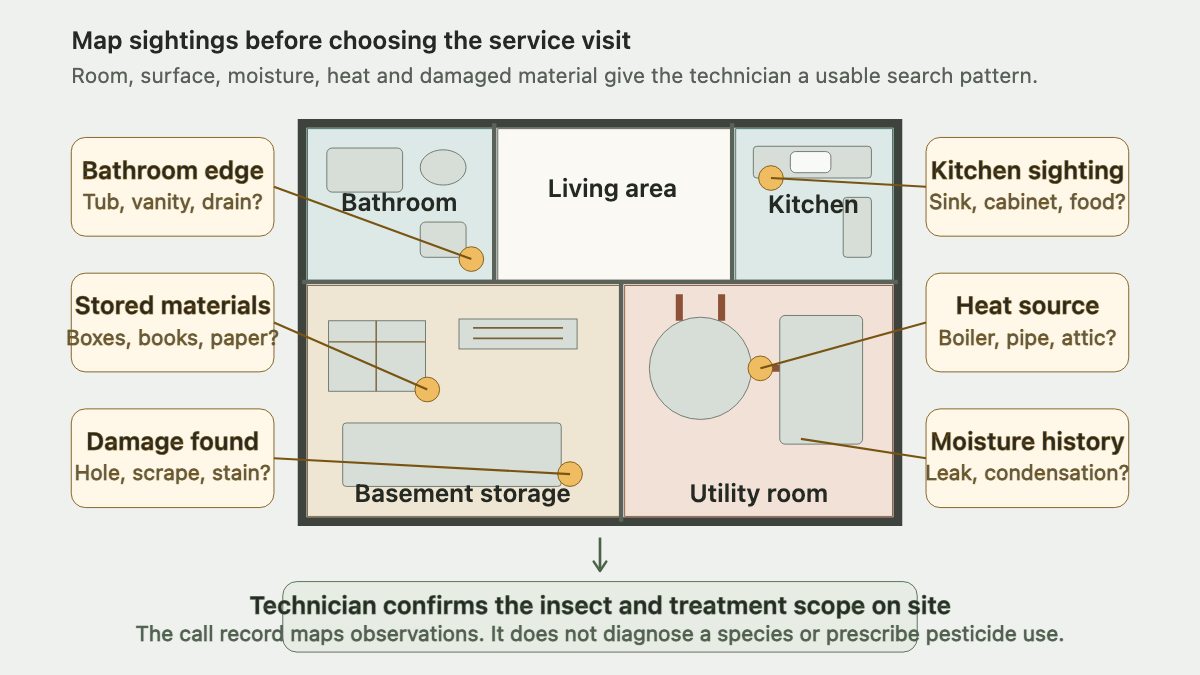
The location often tells the technician what to inspect first. Ask for the room, floor of the building, and exact surface: tub edge, vanity, sink cabinet, basement wall, bookshelf, cardboard carton, pantry shelf, laundry area, water-heater closet, attic hatch, or floor drain.
Then ask about conditions the caller can observe safely. Is there visible condensation? A musty odor? A recent leak, overflow, roof repair, or plumbing visit? Is a dehumidifier running? Are cardboard boxes sitting on a slab? Does the area feel cooler and damp, or does it sit beside a furnace, boiler, hot-water pipe, dryer, or other heat source?
This distinction matters because similar bristletails may favor different conditions. Penn State Extension’s bristletail guide associates silverfish with cooler, humid locations such as basements. Firebrats favor warmer areas and may occur near furnaces, hot-water pipes, attics, or roofing. Reception should record heat and moisture without choosing between the insects.
Avoid turning a sighting into a building diagnosis. Silverfish activity does not prove that a specific pipe leaks, a wall contains mold, or a drainage system has failed. The pest technician can inspect accessible conditions and may recommend that the customer contact a plumber, roofer, moisture specialist, or other trade if the evidence warrants it.
Record the material, damage, and storage conditions
Ask what was beside the sighting. Paper, books, wallpaper, cardboard, stored foods, pet food, fabric, insulation, and general debris all give the inspector context. Penn State notes that bristletails can damage cereals, books, papers, wallpaper, and other starchy materials. Minnesota describes silverfish as mostly a nuisance but notes possible paper damage.
The caller may report a scraped surface, irregular hole, yellowing, stain, loose fibers, or material that looks grazed. Record the description and request a photo. Do not promise that silverfish caused it. Damage to a book, box, wall covering, or stored food can have another source, and some sightings produce no visible damage at all.
Storage conditions deserve their own notes. Ask whether books and papers sit on open shelving or in cartons, whether boxes touch a basement wall or floor, and whether dry food or pet treats are open nearby. If the report centers on flour, cereal, nuts, birdseed, or webbing inside food packages, the company may need its stored-product-pest workflow. Our pantry moth call guide covers that separate intake.
Movement can erase the original pattern. Record boxes carried upstairs, books removed from shelves, pantry goods discarded, wallpaper peeled back, or bathroom items moved into another room. Ask what remains in place and what the technician can inspect. Reception should not tell a caller to empty a room before the company sends its approved preparation instructions.
Ask what was cleaned, dried, sealed, or repaired
Silverfish control may involve several parts of the property, so the service record should show what changed before the appointment. Ask whether the caller vacuumed baseboards, discarded cardboard, dried a wet area, repaired a leak, started a dehumidifier, sealed a crack, or moved stored goods into closed containers. Include the date and location of each action.
Penn State describes management as a combination of sanitation, moisture reduction, habitat modification, and, where appropriate, insecticides. The U.S. Environmental Protection Agency also advises reducing pest food, water, shelter, and breeding sites where practical. One action does not guarantee elimination. A dehumidifier in the basement, for example, says little about an uninspected wall void or warm utility chase.
Do not give a generic cleanup script that conflicts with the company’s inspection plan. Heavy vacuuming, sealing openings, or discarding objects before the visit can remove evidence the technician needs. Send the company’s service-specific instructions. The pest treatment preparation guide explains how to keep those instructions tied to the actual service.
Put every pesticide and trap in the record
Ask whether the caller used an aerosol, fogger, dust, bait, sticky monitor, desiccant, household cleaner, or unlabeled home remedy. Record the product name, active ingredient when visible on the label, room, placement, date, amount if known, and whether residue or devices remain. Note children, pets, uncovered food, ventilation concerns, and any reported exposure.
The EPA’s pesticide safety guidance tells users to read and follow label directions, use products only for pests named on the label, and follow precautions involving children, pets, and food. Reception should not calculate a dose, recommend extra product, or tell the caller to reuse or relocate a pesticide. Follow company policy for exposure concerns and emergency referrals.
Sticky monitors can add context, but the office needs the location and date. “Two insects on a trap behind the basement bookshelf since Saturday” is useful. “Trap caught bugs” is not. A trap photo may support review, while field inspection still determines the pest and scope.
Build a dispatch-ready inspection note
Before choosing a time, confirm access. Count the affected rooms and floors. Ask about basements, crawlspaces, attics, utility closets, locked storage, built-in cabinets, occupied bedrooms, pets, parking, gates, elevators, and the person authorized to approve work. For rentals, record the tenant, unit, property manager, entry permission, and any reports from adjacent units or shared storage.
A complete handoff should include:
- appearance, estimated body size, movement, photo status, and number of sightings;
- room, exact surface, time of day, moisture history, and nearby heat;
- damaged or stored materials, food proximity, and items moved or discarded;
- cleaning, drying, repairs, sealing, pesticide use, traps, and access constraints.
The finished note might read: “Possible bristletail activity in first-floor bath and basement storage. Caller saw one silver, tapered insect with long antennae and three rear filaments beside the vanity pipe opening last night. A second was photographed on a cardboard carton near the basement wall this morning. Basement feels damp after recent rain; dehumidifier started today. No visible pipe leak. Two books in the carton have surface scraping, cause unconfirmed. Caller vacuumed the bathroom baseboard and used one sticky monitor downstairs. No pesticide applied. Technician can access both rooms, the water-heater closet, and the storage wall. One cat will be secured.”
That record gives the technician a place to begin and keeps the office inside its role. An AI receptionist can collect the same approved fields after hours, then flag pesticide exposure, unsafe access, or uncertain service scope for staff review. Identification still happens where the insect, room, moisture, stored materials, and warm equipment can be examined together.