“My liner is wrinkled and I need a price” gives a pool company two useful facts: the caller sees wrinkles, and the caller expects a replacement quote. It does not identify the pool, prove that replacement is the right repair, or tell an estimator what must be measured on site.
A good first call captures the pool type and location, approximate shape and size, steps, fittings, attachment system, visible symptoms, suspected water loss, prior work, access, timing, and the person who can approve the project. Then the office schedules the right next step. A custom liner still needs a field inspection and measurements by the contractor.
Treat the call as a site-map interview. Price comes later.
Start with pool identity, not a price
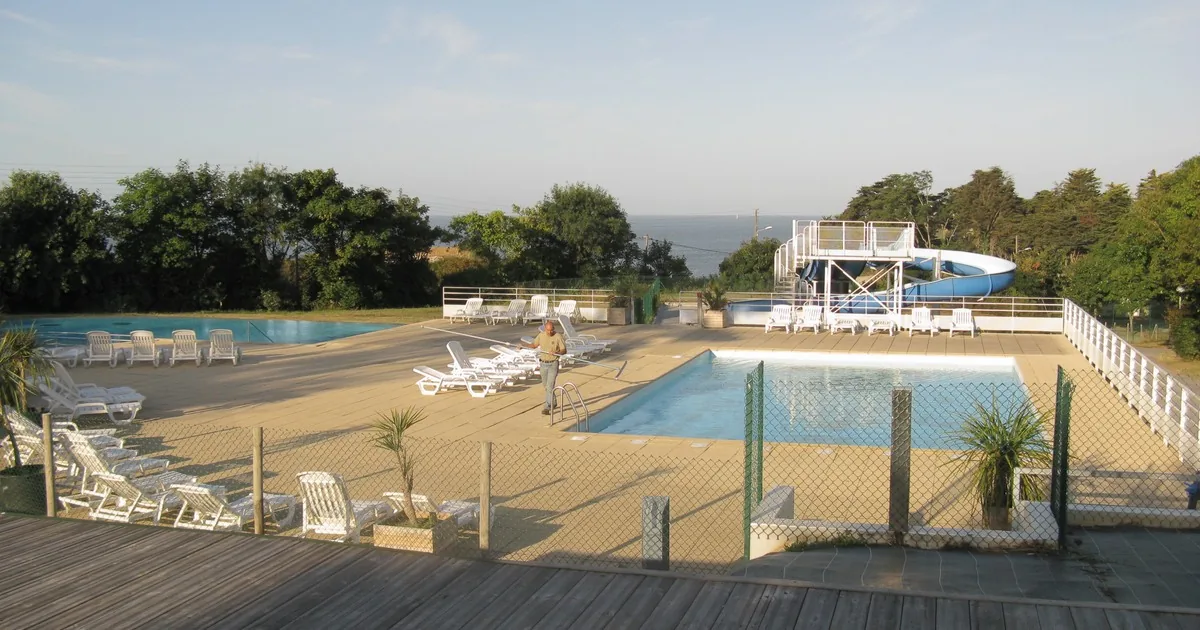
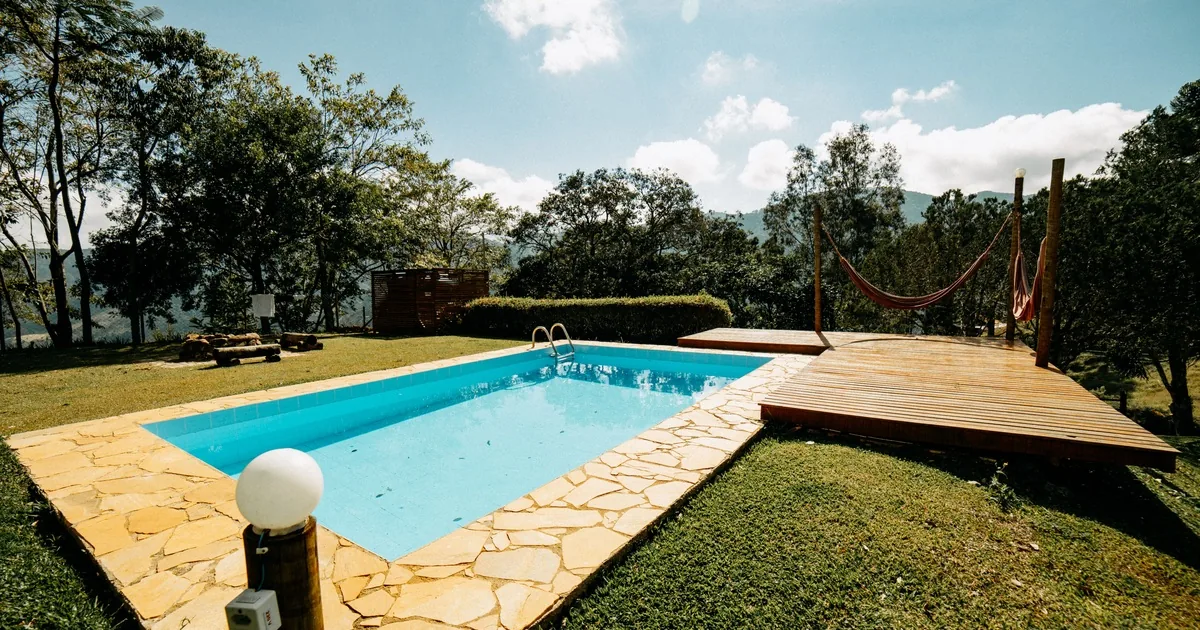
Ask for the service address and whether the pool is inground or above ground. Then ask whether the customer knows the shell is vinyl-lined. Homeowners sometimes call any blue pool surface a liner, even when the pool is fiberglass or finished with plaster. A wide photograph of the pool, deck, and coping can settle the basic category without forcing the caller to use trade terms.
Record the shape in plain language: rectangle, oval, kidney, L-shape, or freeform. Note an approximate length and width if the caller knows them. Label those dimensions as customer estimates. They help the office distinguish a small above-ground pool from a large custom inground pool, but they are not manufacturing measurements.
Current measurements matter even when the owner has the original plans. Royal Swimming Pools advises measuring the existing pool because the built dimensions may differ from the design documents. A receptionist should never convert “I think it is 18 by 36” into an order-ready size.
Ask who installed the current liner and whether the customer has an old proposal, measurement sheet, liner label, warranty record, or pattern name. Old paperwork can identify the manufacturer, bead style, material, and prior scope. It is supporting evidence. The estimator still confirms the actual pool.
Record what the liner is doing
Let the caller describe the problem before naming a solution. “Loose at the northeast corner after heavy rain” carries more information than “bad liner.” So does “one patched tear behind the ladder is leaking again.”
Useful observations include fading, cracks or tears, recurring punctures, unexplained water loss, new wrinkles, sagging, separation at the coping track, and vinyl that feels stiff near the waterline. LOOP-LOC lists those conditions as warning signs that can support replacement planning. The same guidance notes that a small tear may sometimes be repairable. The office should document the symptom and route it. Diagnosis belongs with the technician.
Ask when the customer first noticed the condition and whether it changed after a storm, a drop in water level, groundwater, recent service, chemical treatment, winter closing, or pool opening. Record the sequence without assigning cause. “Wrinkles appeared after the pool reopened” is a clean observation. “Groundwater floated the liner” is a field conclusion.
Water loss needs its own path. Ask how the customer noticed it, where the water level seems to stop, and whether wet soil, washout, or soft ground is visible nearby. Do not promise that the liner is leaking. Plumbing, fittings, equipment, splash-out, and evaporation can produce a different job. The pool leak detection call guide covers the evidence needed when the leak source remains unknown.
Map every feature the new liner must fit
A replacement liner follows the pool that was built, including the parts a caller may barely notice. Latham's replacement liner overview describes custom shapes and sizes, several step systems, different liner thicknesses, and upgrades that may require structural work beneath the liner.
Ask about steps first. Are they molded white steps outside the liner, vinyl-over steps inside the shell, a corner stair, a full-width stair, a bench, or a sun ledge? Request one wide photo and one photo taken across the steps. Never ask the caller to enter the pool for a better angle.
Next, record visible openings and fittings: skimmers, wall returns, main drains, lights, vacuum ports, cleaner lines, and any attached spa or water feature. Ask whether faceplates, gaskets, covers, or trim look cracked, stained, loose, or missing. The office does not need the caller to remove anything. Photos taken safely from the deck are enough for the initial review.
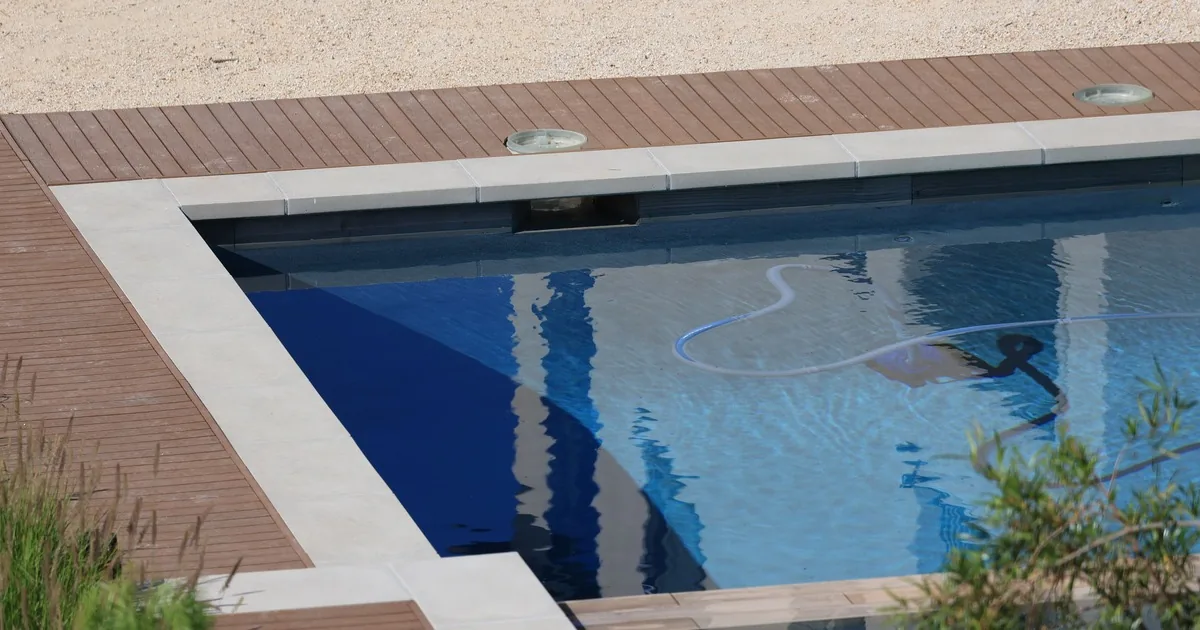
Ask how the top edge of the liner meets the coping. A customer may know that it uses a bead track, overlap, or another attachment. If not, have them send a close photograph from the deck. Do not tell them to pull at a loose corner or push the liner back into place.
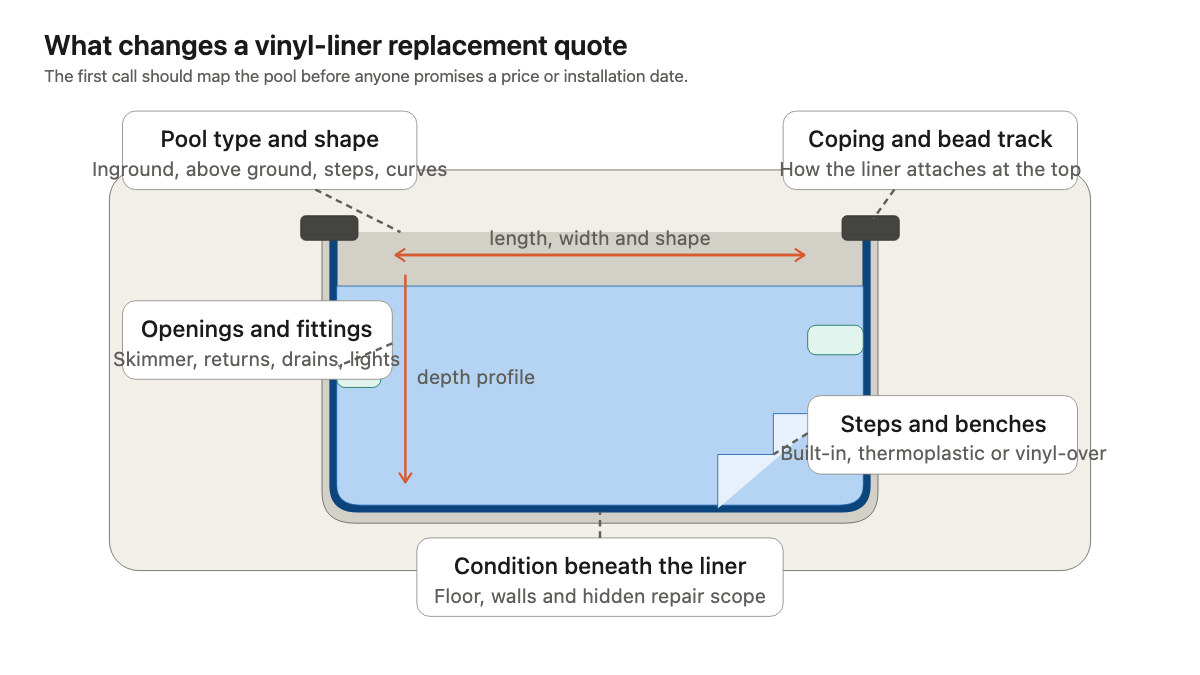
The age and condition of the coping, walls, floor, steps, and fittings can affect what happens after the old liner comes out. The office cannot see that hidden scope on a call. Put any known soft spots, rust, previous floor patches, wall repairs, coping movement, or recurring groundwater issues into the estimate notes. Mark the condition as unverified.
Keep draining and diagnosis in the field
A caller may offer to empty the pool before the estimator arrives. Stop that plan and follow the company's policy. Latham warns that improper draining can damage the liner or pool structure because water pressure outside the shell can push upward. The risk depends on pool construction and site conditions, which a receptionist cannot evaluate remotely.
Use a simple boundary: “Please leave the water level where it is unless our technician gives you site-specific instructions.” Record the current level and any rapid change. Do not coach the customer through pumping, liner removal, fitting removal, or temporary bracing.
Screen for immediate hazards. Ask whether the deck or coping feels unstable, electrical parts are exposed, water is approaching electrical equipment, a large section of wall appears displaced, or the surrounding ground is washing out. Follow the company's urgent-routing policy when any answer is positive. Keep people and pets away from an unsafe area. Office staff should not ask a caller to test equipment or enter a drained shell.
Separate equipment complaints too. A pump that will not prime, a leaking filter, or a tripping breaker may need a repair visit before the liner estimate proceeds. Use the pump and filter repair intake guide for that scope.
Capture access, timing, and authorization
The estimator needs a clear route to the pool. Record gate width if the customer knows it, locked gates, steep grades, stairs, narrow side yards, soft lawn, retaining walls, pets, parking limits, and neighborhood access rules. Ask whether equipment or materials would need to pass through the house. Photos of the route can prevent a wasted visit.
Ask who owns the property and who can approve the work. Rental homes, managed properties, inherited homes, and houses under contract often involve several people. The person meeting the estimator may not control the budget or pattern choice. Put the decision-maker's name and contact details on the ticket according to company policy.
Timing deserves a specific question: “Is there an event, closing date, travel date, or planned pool opening behind your requested deadline?” Record the date and reason, then describe it as requested until measurement, product availability, site condition, and crew capacity are reviewed. Do not promise an installation date during the first call.
If the customer is considering changes, capture them now. New steps, a bench, a ledge, altered lighting, coping work, deck work, or accessibility changes may turn a straightforward replacement into a renovation. Route those requests to someone who can assess structural and permit implications.
Read back a field-ready estimate ticket
A useful read-back sounds like this:
“Owner requests an inground vinyl-liner replacement estimate at a residential property. Freeform pool, customer estimates about 32 feet long, with molded entry steps, one skimmer, three visible returns, one light, and a main drain. Liner has new wrinkles along the shallow-end wall and a patched tear near the ladder. Customer reports adding water more often but has not identified the source. Water remains at operating level. Old proposal and six photos are attached. Access is through a narrow side gate; estimator should review width before scheduling. Owner wants the pool ready for a family event in June and understands timing is pending inspection, measurement, product selection, and crew availability.”
That note gives the estimator a physical picture and preserves every uncertainty. If the caller cannot identify the pool type, steps, or attachment, schedule a site assessment instead of forcing the request into a phone-price workflow.
The pool service resource hub has related intake guides for seasonal work, equipment, and recurring maintenance. An AI receptionist can collect the same liner-replacement fields after hours if it uses the company's language, requests safe deck-level photos, and escalates hazards. The final prompt should stay concrete: “Please send one wide pool photo, close photos of the problem areas, the steps, and the top edge of the liner, plus any old liner paperwork you can find.”