“I need a bigger pressure tank” sounds like a quote request. It may be one. It may also be a short-cycling complaint, a failed tank, a weak well, a leak, or a pressure problem that tank size will not fix.
A useful call record starts with the system, not a gallon recommendation. Capture the pump capacity, pressure-switch cut-in and cut-out, current tank make and model, available drawdown data, well records, recent demand changes, symptoms, controls, treatment equipment, and physical access. Then let the contractor verify the measurements and select from the exact manufacturer table.
First, learn why the caller wants a different tank
Ask what happened before asking what size they want. Someone replacing a corroded tank has a different job from a homeowner adding irrigation. A caller who hears the pump start every few seconds needs symptom intake, not a sales answer.
Use the caller’s own observations. Does the pressure rise and fall at every fixture? Does the pump start during a single toilet refill? Is water leaking around the tank tee, relief valve, piping, or shell? Did a breaker trip more than once? Is there a burned odor, buzzing, smoke, unusual heat, or standing water near electrical equipment?
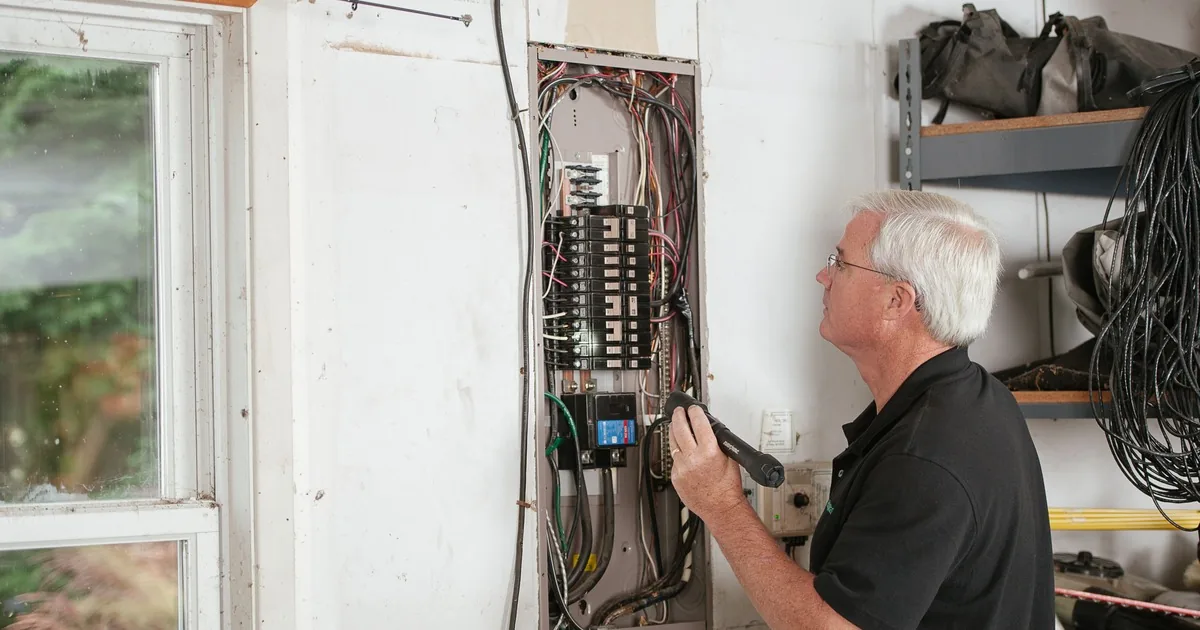
Electrical and active-leak observations move the call into the company’s safety and dispatch procedure. Reception should never ask a caller to remove a pressure-switch cover, test voltage, touch wet equipment, or keep resetting a breaker. WellOwner.org advises owners to bring pressure changes, frequent pump cycling, burned odors, and repeat breaker trips to qualified professionals.
If the main complaint is rapid starts and stops, use the short-cycling intake guide to preserve the timeline. If the caller reports weak flow, identify whether the issue affects one fixture, one branch, or the whole property with the low-water-pressure call guide. A tank-sizing consultation can follow once urgent faults and other causes are separated.
Collect the numbers that control the selection
The Water Systems Council’s pressure-tank sizing guide names three core inputs: system demand, pump capacity, and well capacity. The front desk may not have all three. The job is to find what exists, note what does not, and avoid filling gaps with guesses.
Start with the pump. Ask for the pump installation invoice, well completion report, pump model, rated capacity, horsepower, installation date, and recent flow-test results. A photo of an accessible equipment label can help if it can be taken from a dry, safe standing position. Horsepower alone does not supply the operating flow needed for tank selection.
Next, record the pressure-control information. Ask whether the caller knows the cut-in and cut-out settings, often written as a pair. Do not have an unqualified caller open a switch to find them. A clear photo of an externally visible label, an old service invoice, or the contractor’s prior work order may answer the question safely.
The current tank record matters too. Ask for the manufacturer, model number, nominal gallon rating, installation date, and any drawdown specification in the manual. WellOwner.org recommends keeping manuals and records for the pump, controls, pressure tank, and related equipment. Those documents save the technician from identifying every component from a hurried phone description.
The gallon label does not tell you the usable water
A nominal tank rating describes total internal volume. It does not equal the water delivered before the pump starts again. That delivered amount is drawdown.
Water leaves the tank as the compressed air cushion expands and system pressure falls toward the switch’s cut-in point. The pump then starts, pressure rises, and the tank takes water until cut-out. The usable water between those two states is what the sizing calculation needs.
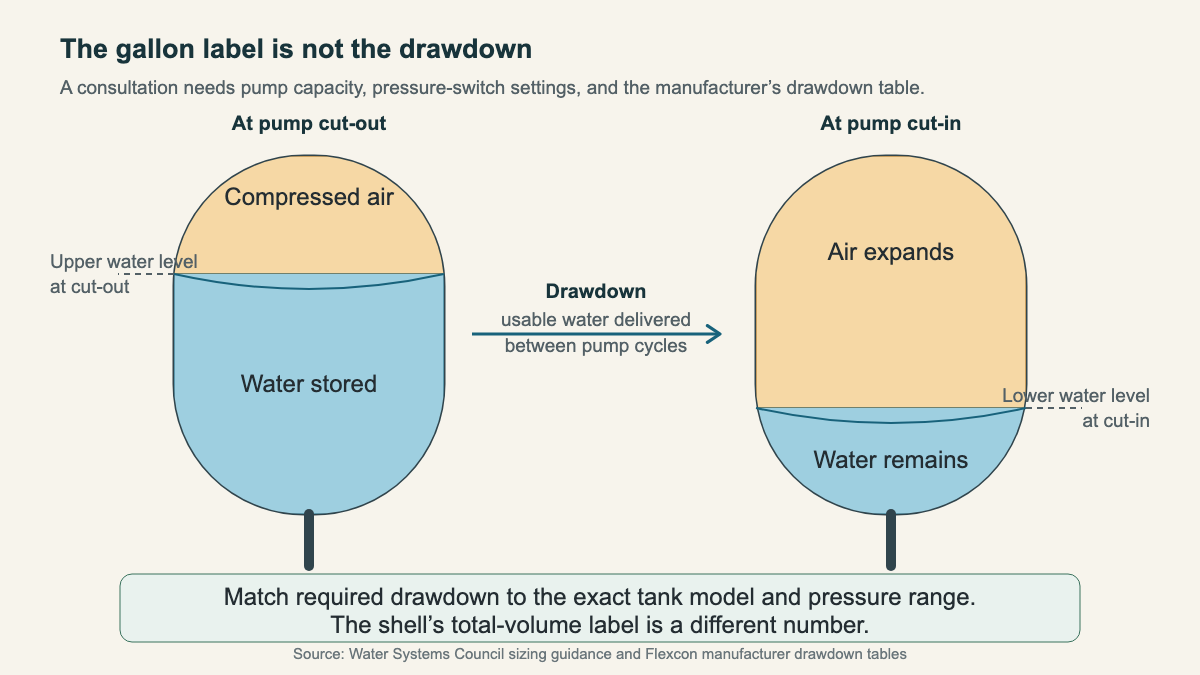
The distinction matters because pressure settings change drawdown. Flexcon’s manufacturer sizing guide lists separate drawdown values for the same model at different cut-in and cut-out ranges. A call taker who reads only the large gallon number on the shell can hand the contractor the wrong figure.
Do not turn that point into a universal multiplier. Tank construction, pressure range, precharge, pump controls, and manufacturer data all affect the final selection. Constant-pressure and variable-speed systems also follow equipment-specific instructions. The field technician should identify the control method before anyone assumes a conventional pressure-switch setup.
Add the way the property actually uses water
A technically complete equipment list can still miss why the system is being changed. Ask what is different now.
The caller may have added a bathroom, high-flow tub, irrigation zone, livestock watering point, accessory dwelling unit, workshop, treatment backwash cycle, or another building. A shared well may serve households whose peak use overlaps. Record each use and when it runs. “Four bedrooms” is less useful than “two showers and the irrigation zone lose pressure when they operate together.”
Also ask whether the existing pump and well have ever kept up with that demand. The Water Systems Council separates system demand, pump capacity, and well capacity because one component cannot erase another component’s limit. A larger tank may change cycling and pressurized storage. It does not prove that the well can sustain the requested flow or that the pump can deliver it at the required pressure.
Treatment equipment belongs on the ticket. Softeners, filters, aeration systems, storage cisterns, booster pumps, and other controls can change the arrangement and service sequence. Ask for model numbers and regeneration or backwash schedules where relevant. Do not promise that the new tank will cure pressure loss across a clogged filter or treatment valve.
Measure access before quoting a model
A tank has to fit through the route to its installed position. Ask where the current tank sits and how a technician reaches it. A basement stair with a tight turn, low crawlspace hatch, finished utility closet, buried vault, wet pit, or locked pump house changes the work.
Collect doorway and hatch dimensions only when the caller can measure them safely. Note ceiling height, floor condition, drainage, nearby electrical equipment, pipe connection location, and whether the old tank can leave by the same route. Photos should show the room and access path, along with a clear close-up of the label.
Access questions are operational. They are not an invitation to design the installation by phone. Local code, manufacturer clearances, support, freeze protection, pressure relief, electrical requirements, and service space still need professional review.
Build the consultation ticket in one pass
A complete intake can stay concise. Gather these fields when they apply:
- Reason for the call, current symptoms, when they began, and whether the system is usable now
- Pump make, model, capacity records, horsepower, installation date, control type, and recent test results
- Pressure-switch or control settings from safe external records, plus current gauge observations reported by the caller
- Existing tank manufacturer, model, nominal volume, drawdown table or manual, age, leaks, corrosion, and service history
- Well completion report, reported yield or recovery information, and any newer professional measurements
- Property uses, peak-use conflicts, recent additions, shared users, irrigation, livestock, and treatment cycles
- Treatment, storage, booster, constant-pressure, or variable-speed equipment in the system
- Room location, access dimensions, stairs or hatches, drainage, wet areas, electrical hazards, and photos available
A strong handoff might read:
“Owner requests a pressure-tank replacement and asks whether a larger model is appropriate. Current tank label shows manufacturer and model; manual is available. Pump invoice lists the model and rated capacity. Existing service record identifies the pressure-control range. Caller reports the pump now starts repeatedly during one shower, beginning this week. No active leak, standing water, smoke, sparks, burning odor, unusual heat, or repeat breaker trip reported. A new irrigation zone was added this summer. Tank is in a basement utility room through a 29-inch doorway and one straight stair. Water softener sits downstream. Well log and photos are ready for review. Contractor to verify pump output, well capacity, controls, precharge, drawdown requirement, fault condition, and model selection on site.”
That note gives the contractor records, symptoms, demand changes, equipment, and access. It does not pretend the office has already sized the tank.
An AI receptionist can collect the same fields after hours and stop the script when an active leak or electrical symptom appears. The best closing line remains practical: “Please send the tank label, pump record, pressure-control record, and one wide photo of the installation if you can do so safely.”