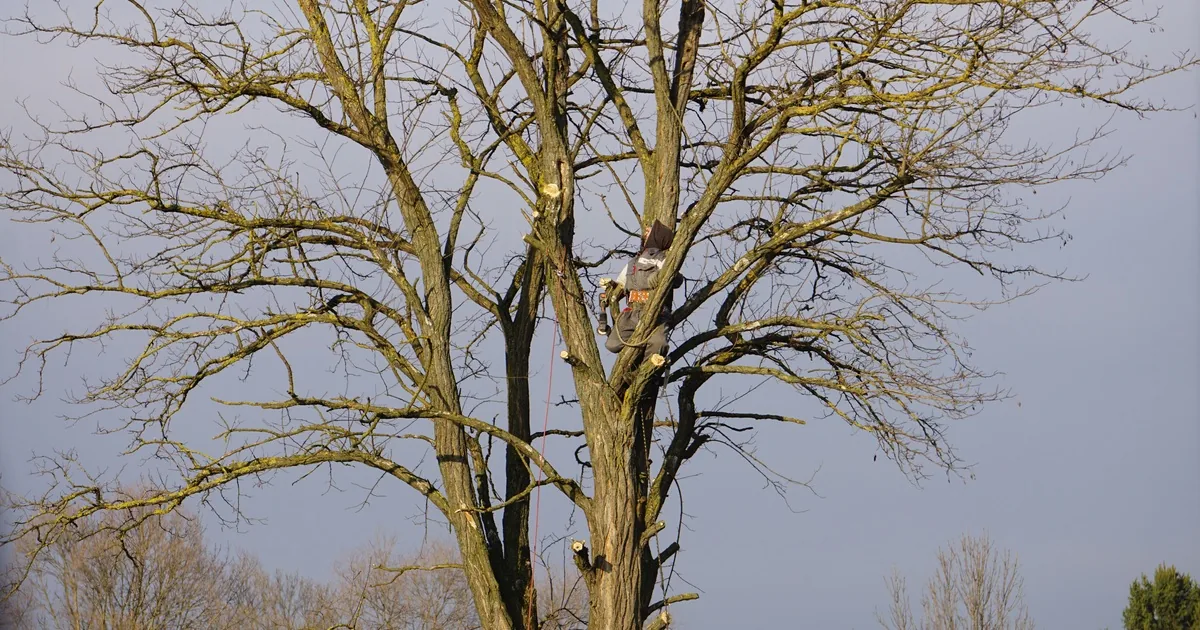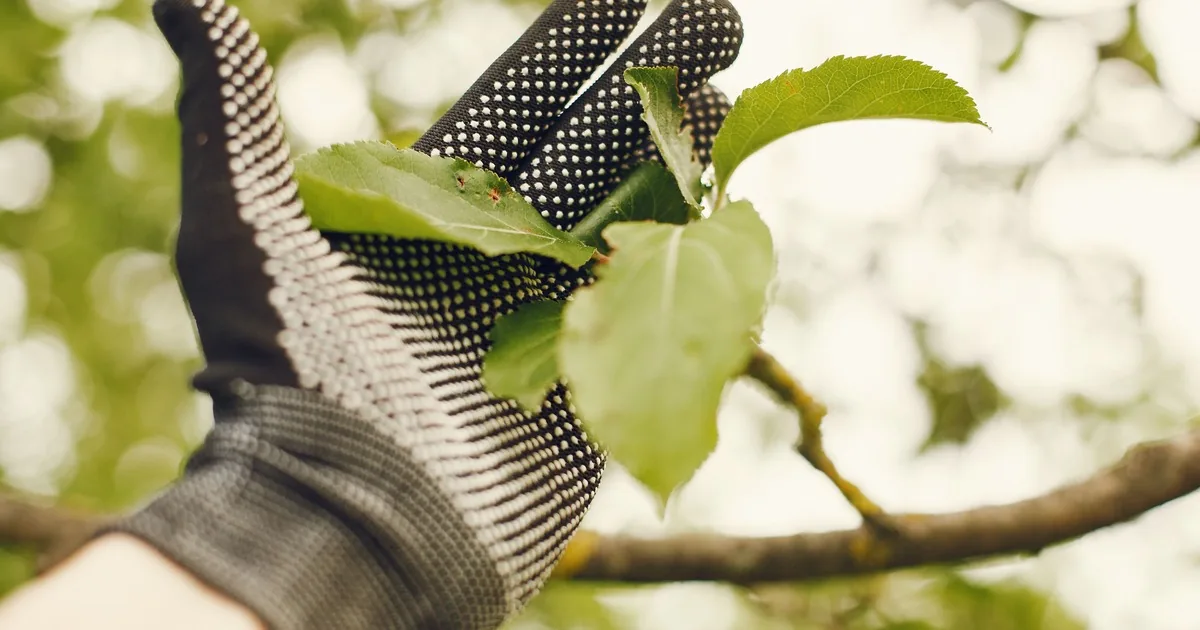
A caller says, “My maple has black spots, little holes, and dead branches. Is it a fungus or bugs?” She has one close photo of a leaf on her phone. The tree stands beside a driveway that was repaved last year, and two nearby maples look normal.
The office should book the problem, not name it. Record the tree species if known, where the symptoms appear, how they are distributed, when the caller first noticed them, and what changed around the site. Request a safe set of wide and close photographs. Then schedule the right arborist or plant-health visit under the company’s service policy.
That approach gives the field professional useful evidence while keeping diagnosis where it belongs. A spotted leaf may matter. So may drainage, root disturbance, weather, irrigation, pruning, chemical exposure, or a second problem that the caller cannot see.
Keep the caller’s diagnosis in quotation marks
People search photos and arrive with a label: oak wilt, emerald ash borer, scale, canker, anthracnose, root rot. Record it as the caller’s concern. “Caller suspects oak wilt after an online search” is accurate. “Oak wilt present” is a company finding and should not appear before a qualified assessment or test.
Penn State Extension groups plant problems into four broad sources: the plant’s environment, its care, insects and other animal pests, and infectious disease. A tree can have more than one issue. That is why a phone script built around “Which disease is it?” starts in the wrong place.
The same restraint applies when the caller sees an insect. Penn State distinguishes a sign, physical evidence such as an insect, frass, or fungal structure, from a symptom such as dieback, wilt, or discoloration. The insect in a photograph may be involved, incidental, or beneficial.
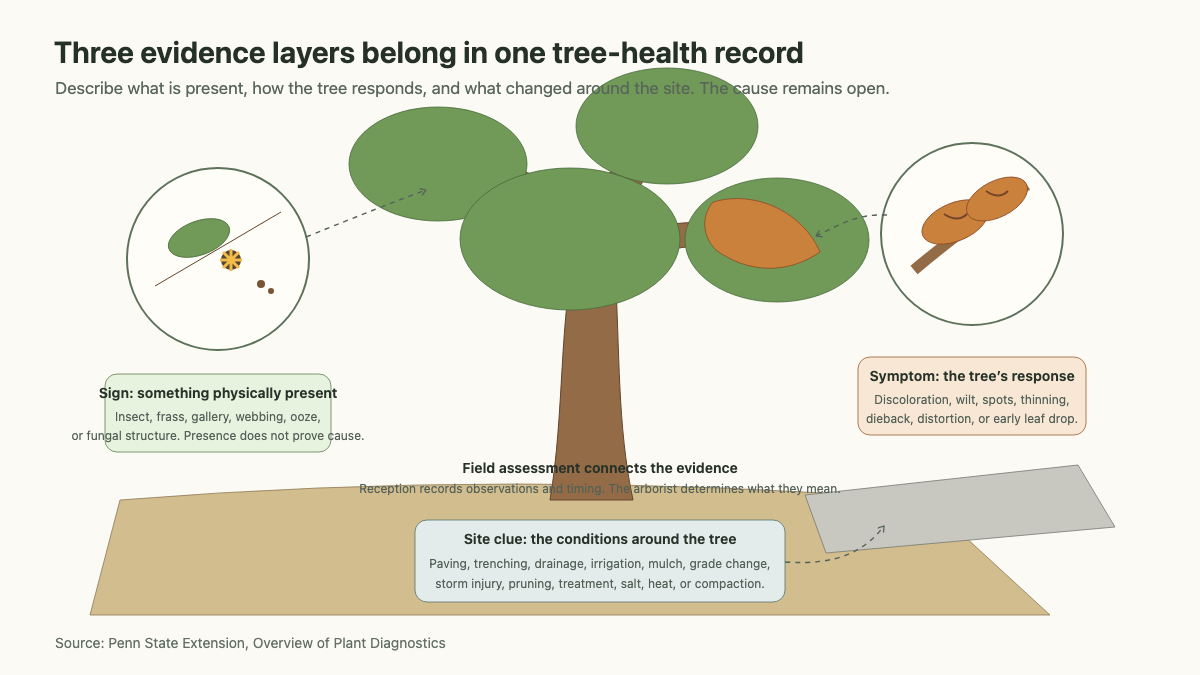
A useful response sounds like this: “I’ll record what you’re seeing and help our arborist get the context needed for the visit. We won’t identify the cause or recommend treatment from the front desk.”
Identify the tree before organizing the symptoms
Species changes the list of plausible problems and the meaning of normal features. Ask what kind of tree it is and how certain the caller feels. If they do not know, collect clues without turning reception into a tree-identification service: deciduous or evergreen, leaf or needle shape, bark appearance, flowers, fruit, cones, and whether similar trees grow nearby.
A plant tag, invoice, or landscape plan may supply a name. Treat an identification app as a clue. Photos of the whole tree, bark, foliage, buds, and fruit can help the arborist verify it.
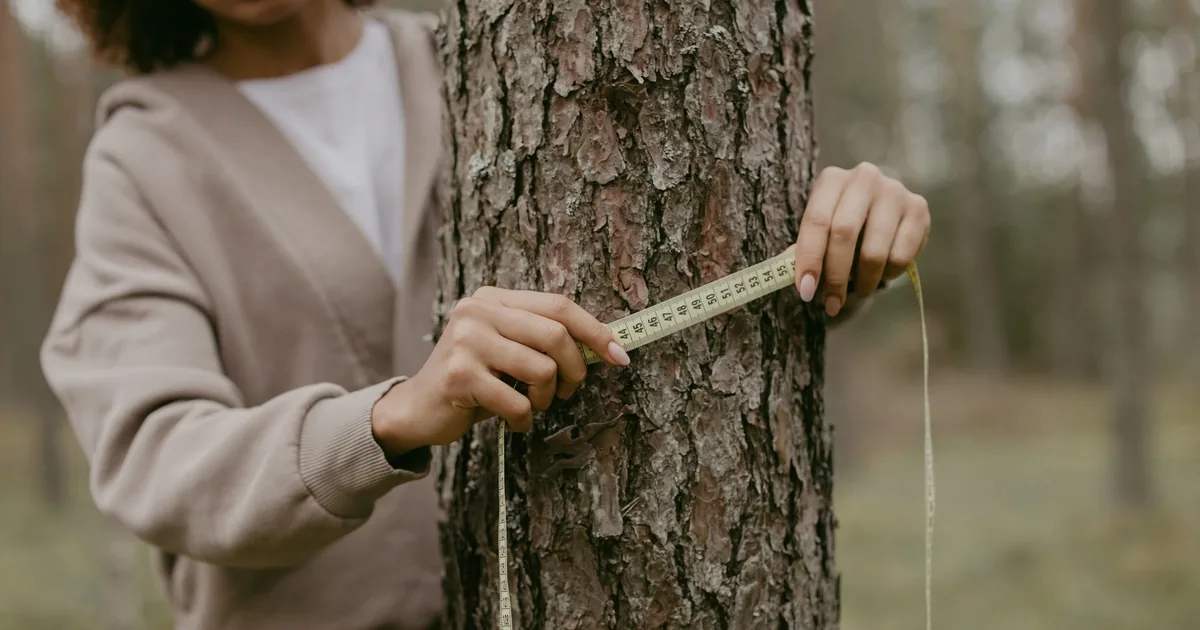
Give each tree a simple identifier. “Red maple by west driveway” is better than “the sick tree.” For a row or grove, ask how many show the same change and whether the pattern starts at one end, follows a road, or appears across more than one species.
That last detail can redirect the site history. Penn State notes that a similar pattern across multiple species may point toward a nonliving cause such as weather. It remains a clue, not a diagnosis.
Capture pattern and timeline in ordinary language
Ask the caller to describe where the change began and where it appears now. Reception needs distribution, not botanical vocabulary.
- Which part is affected: leaves or needles, new shoots, branch tips, scattered limbs, trunk, bark, roots, or the whole crown?
- Is it on one side, at the top, low and inside, along the outer edge, or spread throughout?
- What is visible: spots, holes, chewing, curled leaves, early color, leaf drop, thinning, dead twigs, loose bark, cracks, sap, sawdust-like material, mushrooms, webbing, or insects?
- When was it first noticed, and did it change suddenly or over weeks, months, or seasons?
- Are nearby trees or shrubs showing the same pattern?
Do not translate “sawdust” into “borer frass” or “mushroom” into “root decay” in the job note. Preserve the caller’s words: “tan granular material reported at the base on the driveway side.”
Ask whether the concern is new this season or visible in older photographs. A street-view image, real-estate listing, annual family photo, or pre-construction picture may show whether crown thinning or branch loss predates the current complaint.
Add the site history that a close-up cannot show
A leaf fills the camera frame, but the cause may sit under the driveway. Penn State’s diagnostic guidance asks about slope, drainage, soil, irrigation, light, wind, nearby buildings, pavement, road salt, planting, mulch, treatments, pruning, and construction.
Reception does not need a soil report. It does need a short change history. Ask about trenching, utility work, grade changes, new paving, excavation, equipment traffic over the root area, storm injury, irrigation failures, standing water, drought, deicing salt, herbicide or pesticide use, recent fertilization, heavy mulch, and pruning.
Get dates where the caller can provide them. “Driveway widened last spring; symptoms first noticed this July” is more useful than “construction nearby.” Record who performed recent treatments and whether the caller has product names, invoices, or application records. Never tell the caller to apply another product while waiting for the visit.
Also ask whether the tree was planted recently. The arborist may need to inspect planting depth, root flare, staking, watering, and establishment history. A five-year-old tree can still carry a planting problem that only became obvious after heat or drought.
Request five safe photo views
One sharp leaf photo shows detail but removes the pattern. Purdue’s Plant and Pest Diagnostic Laboratory asks for whole-tree views, close-ups of dieback, the trunk from several sides, and the base at the soil line when reviewing suspected oak wilt. The same photo logic improves general plant-health intake because it links a symptom to the tree and site.
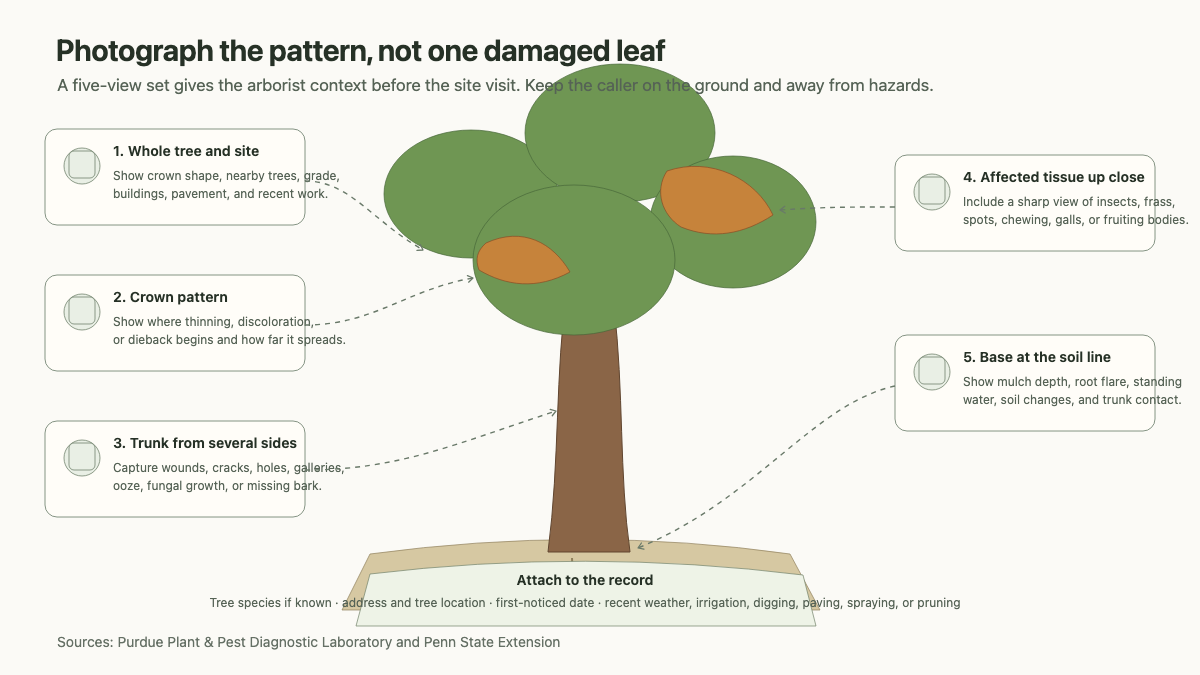
Ask for these views:
- The whole tree and enough surroundings to show grade, pavement, structures, nearby trees, and recent site work.
- The full crown from a safe distance, with the affected area visible in relation to healthy foliage.
- The trunk from accessible sides, including wounds, holes, missing bark, cracks, ooze, or visible fungal growth.
- A sharp close-up of the affected leaf, needle, twig, bark, insect, webbing, gallery, or granular material, plus a hand or common object nearby for scale when safe.
- The base at the soil line, including root flare, mulch, trunk guards, standing water, soil changes, and nearby hardscape.
Name each file with the address, tree identifier, view, and date. Keep the original image when possible because message apps can compress detail. If the company accepts video, a slow ground-level walk from the whole tree toward the affected area can preserve orientation.
Safety outranks the photograph. Do not ask anyone to climb, use a ladder, peel bark, cut branches, collect overhead material, walk beneath hanging wood, enter traffic, cross property without permission, or approach a line. “Crown close-up unavailable from the ground” is a useful note.
Keep samples out of casual intake
Callers sometimes offer to cut a limb, scrape bark, bag insects, or bring leaves to the office. Use the company or diagnostic laboratory’s exact sample policy. Sample type, size, condition, packaging, timing, and shipping rules vary with the suspected problem and the lab.
Purdue’s oak-wilt publication, for example, requires specific living branch material, cooling, same-day handling, and supporting photographs. Those instructions belong to that test. They should not become a universal branch-sampling script.
Until a qualified person requests a sample, tell the caller to leave the tree intact and retain material that has already fallen only if company policy permits. Do not ask them to create a wound, expose tissue, touch an unknown organism, or transport regulated material.
Route active hazards before routine plant health
Discoloration and insect damage usually enter a plant-health queue. A broken hanging limb, active trunk movement, fresh major crack, sudden lean, lifting soil, blocked road, or material falling now follows the company’s urgent tree protocol. The leaning-tree assessment guide covers change, targets, and escalation.
Electrical exposure is a separate stop. Ask whether any branch touches a wire and whether the caller sees a downed line, arcing, sparks, smoke, or fire. Do not ask the caller to identify the conductor or move closer. Follow the local utility and emergency process for the service address.
Keep health and risk as separate fields. “Leaves browning on upper crown” does not prove the tree is likely to fail. “Large branch hanging over occupied walkway” needs urgent routing even when nobody knows why it broke.
If the request remains broad after intake, schedule a certified arborist consultation. If the customer already has a defined pruning objective, the tree trimming and pruning scheduling guide can capture access, debris, and timing after the health concern has been routed correctly.
Read back a field-ready note
A complete handoff could read:
“Caller requests plant-health assessment for one red maple, species caller-reported, beside west driveway at 42 Sample Street. Black leaf spots and small holes reported across lower inner crown; dead tips reported on two upper branches. First noticed three weeks ago and gradually more visible. Two nearby maples reportedly unaffected. Driveway was widened on tree side in May last year. Irrigation reaches lawn twice weekly; schedule unknown. No recent pesticide, fertilizer, or pruning reported. No active movement, hanging branch, fresh major crack, falling material, blocked access, or reported electrical contact. Whole-tree, crown, trunk, soil-line, and leaf close-up photos attached and dated. Office made no pest, disease, treatment, or risk finding. Arborist to verify species, pattern, site conditions, need for samples or testing, appointment scope, and next step.”
Read the note back. The caller can correct the date, tree location, affected area, or site history before dispatch inherits a vague message.
An AI receptionist can collect the same observations after hours if its script preserves caller-reported language and moves hazard answers into the company’s escalation path. The most useful closing question stays simple: “What changed around this tree before you noticed the problem?” That answer often gives the arborist more context than another zoomed-in leaf.
Sources
- Penn State Extension: Overview of Plant Diagnostics
- Purdue Extension: Tree Diseases, Oak Wilt in Indiana
- University of Minnesota Extension: Yard and Garden Problems
- International Society of Arboriculture: Insect and Disease Problems